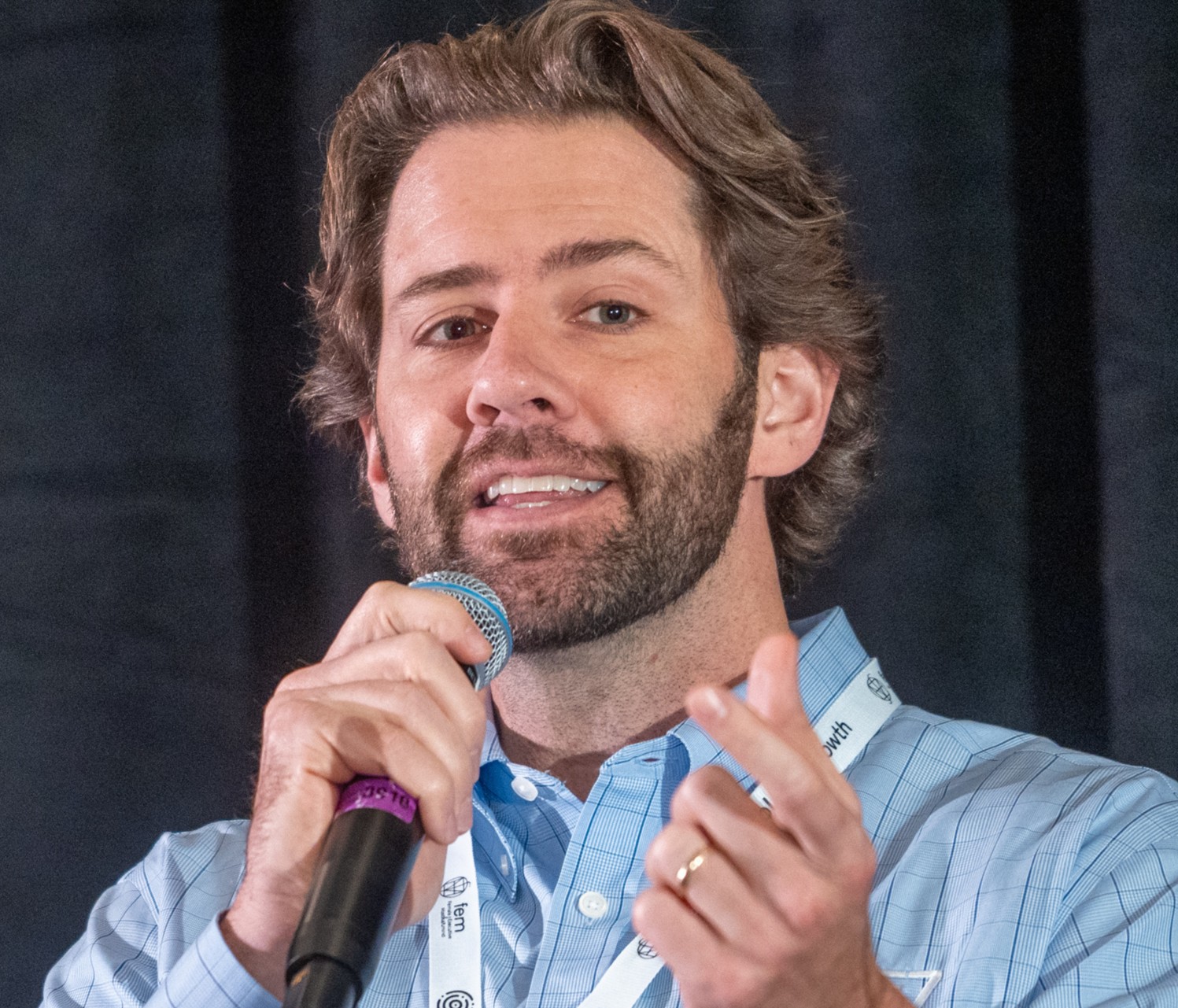
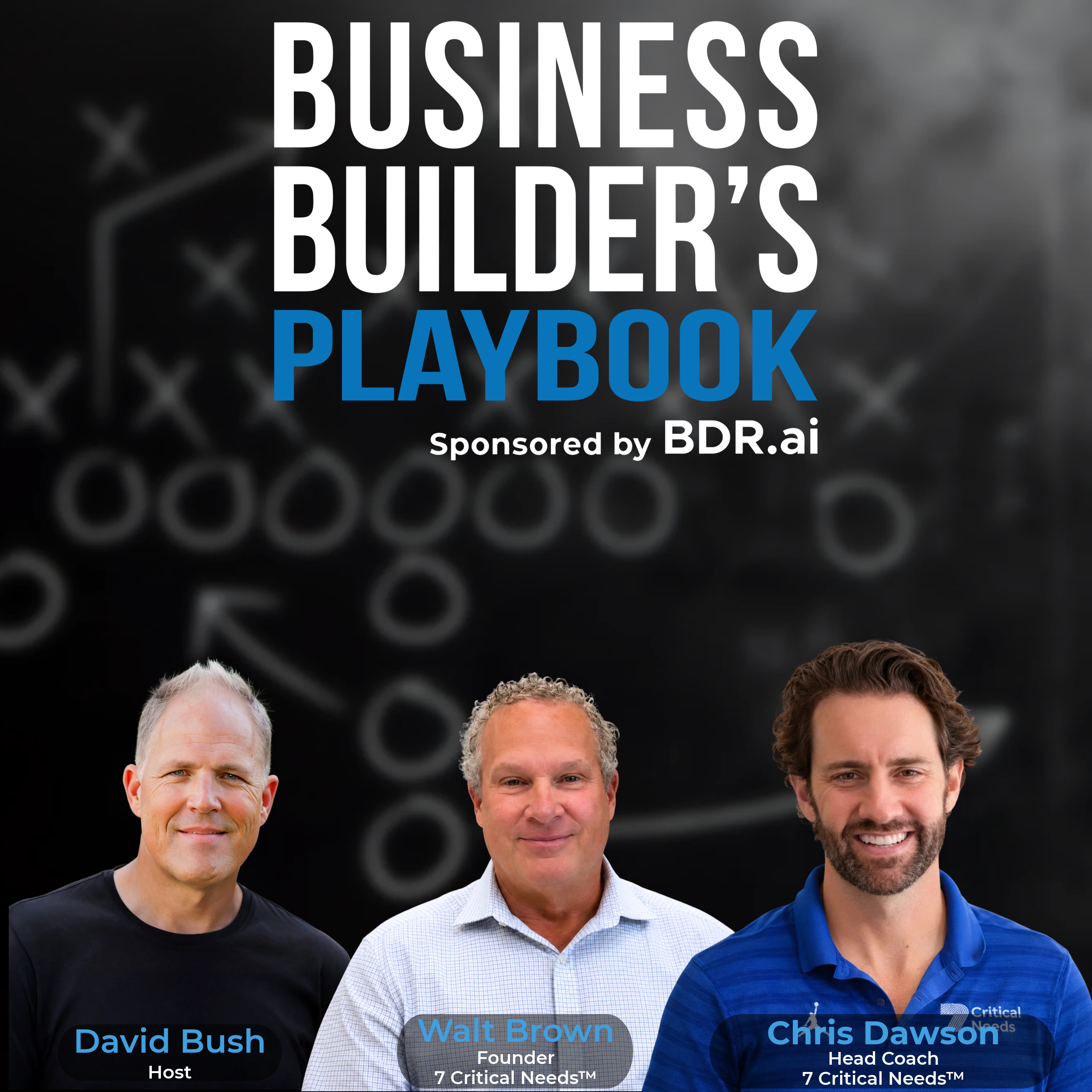
Chris Dawson and Walt Brown—The 7 Critical Needs of a Healthy Organization: How to Build More Trust, Accountability, & Engagement

How many great employees does it take to cancel out one unhappy one?
In this episode of the Business Builder's Playbook, host David Bush sits down with Chris Dawson, head coach for Seven Critical Needs and a former high school English teacher and football coach, and Walt Brown, an EOS Implementer and the creator of the Seven Critical Needs framework. Walt's answer comes from Gallup's statistics: one for one. Walt and Chris explain that many of the "bad whos" in a company are the right people with a need nobody is meeting, and they show how to find that need, fix it, and measure the result.
Walt shares how the framework grew out of his Gallup training and focus groups with millennials, and Chris walks through the seven needs: belong, believe, accountable, measured, heard, developed, and balanced. They cover the BITE index (buy-in, trust, and engagement), the twice-a-year survey behind it, and a distribution company whose score moved from 42 to 62 while its bottom line doubled.
Here's what you'll learn by watching or listening to this full episode:
- How to measure buy-in, trust, and engagement with the BITE index, which subtracts the percentage of negative survey responses from the percentage of positive ones.
- Why one disengaged employee offsets one engaged employee, and how to tell a wrong fit from the right person with an unmet need.
- How to check which of the seven needs is missing when someone is frustrated, before you build a new tool.
- How to describe the seven needs as promises your organization makes, your people accept, and your systems keep.
- How to make people feel heard without turning every decision into a vote, and when an "I'm not heard" complaint is really a belief problem.
- How to run the survey twice a year, pick one to three issues, choose a proven tool, assign accountability, and share the plan with everyone who took the survey.
- Why scores stall when leaders act on feedback and never tell their team about it.
- Why accountability scores usually drop on the first survey, and why you should keep the questions the same.
- What a score moving from 42 to 62 did for a distribution business: double the bottom line, gross margin up from 29% to 32.2%, and $500,000 freed up in inventory.
- Why a healthy team outperforms a team of smart people over time.
Walt Brown 0:00
And think about a promise. A promise only has power if it's accepted. So, as an organization, you actually bring them on board. You make a promise to them. They recognize it. They accept it. And through through systems, you keep the promise.
David Bush 0:15
Welcome to the Business Builders Playbook, the show that breaks down the systems and strategies behind predictable revenue growth to win in business. In each episode, we're diving into the proven strategies that separate the winners who scale from the losers who fail. This show is sponsored by BDR AI, the AI-powered business development platform that automates your outbound prospecting, so you can focus in on closing deals instead of chasing leads. Let's get started. All right. Well, welcome everybody. My name is David Bush with BDR AI, and I get a chance to be your host and moderator for this exciting Q and A conversation. I've got a great show for all of you today. We're going to be talking about the seven critical needs of a healthy organization to build trust, accountability, and engagement, and if that resonates with you, I am super excited that you're listening, watching, or participating live because we're going to be talking about how to uncover the people problems that are quietly costing you performance, profit, and most likely your best employees. And today, I'm joined by two esteemed guests. These two gentlemen have done some amazing things in this particular area. It's a quite of a unique niche area that I have found that has become very very popular in the the ecosystem of business owners that are dealing with drama, trauma, lack of accountability, participation issues. So super excited to get a chance to open up this conversation with Chris Dawson and Uncle Walt, Walt Brown has been a pioneer of so many different organizations when it comes down to this particular topic. And Chris is the head coach for Seven Critical Needs. And today we get a chance to dive in and kind of pick their brains on some of the questions that were submitted prior to this session. So, Chris, Walt, thanks for joining me today.
Walt Brown 2:05
Thank you for having us, David. That was good introduction, David. Thank you. Outstanding.
David Bush 2:10
Yeah, I don't know if I could have written it better myself, but that that was a good one. But let's let's jump in. And Chris, why don't you start off and talk a little bit about your past and your background and what brought you to the place that you're right now working with these organizations on the seven critical needs framework.
Chris Dawson 2:29
Yeah, well, very briefly, this is sort of a second act for me professionally. I started out, spent 17 years as a high school English teacher and football coach. I also coached some basketball. I was in Baltimore for 10 years teaching and coaching, and then in 2016 I moved back to Raleigh, where I grew up, to take my dream job, which was to be the head football coach at Needham Broughton High School, which is not only where I went to high school, but where Uncle Walt went to high school, and that's what ultimately led to this second act in my professional career. Walt and I met because he was a an assistant JV football coach. He worked with the O line in my second year back in Raleigh, and you know that was in 2017. My last season of coaching was in 2022, and when I decided it was time to leave the school world, Walt and I, we never totally lost connection, but we reconnected, and I really learned about what he did, and was super interested in it. I thought what he was doing was awesome, and he invited me to come help him out with this thing he'd been working on for with you know with clients for years and years. So that's my backstory.
David Bush 3:53
Wonderful. So we're not going to be using the coach Nick Saban do your job as the coaching strategy around seven critical needs, are we? That's not going to be the coaching that we give everybody. Do your job.
Chris Dawson 4:06
Do your job. And I, I actually think Bill Belichick has that on that. Those are signs that he has up all around his facilities.
David Bush 4:18
Yeah, it seems like it's working for both of those guys. But let's let's navigate over to Walt. Walt, you have been from the very early days. You've been involved in the EOS worldwide system. You're an expert EOS implementer, and now you've become the author and the creator of the Seven Critical Needs framework. And excited to hear a little bit more about what got you into your journey with EOS, and then what led you to really focusing in on the seven critical needs framework.
Walt Brown 4:49
Okay, it's long story. I've always been a team guy. You know, you win as a team, strength of the team wins type stuff. All the old line coaches are like that, right? It's all about the team, and you're right, line. Yeah, it's totally yes. Everybody be on the same page, and yeah, absolutely. You know, if I was a I was a center, which you know, like the slowest guy on the team, right? So I saw, but yeah, after selling my companies, I started. I bought a thing called the Tab of Tab franchise. 48 CEO clients had them in peer boards, and then I got recruited in by Gallup back in 2006, and was trained pretty deeply in their whole 12 questions of employee engagement. I'm a statistics guy from the past, and so was really interested in all of that and applying. And then got pulled into EOS in 2008, and you know just started working through. I'm at like 216 clients now, coming to one 2000 days, but when you start doing sets and reps, and you have a framework like the Q 12, I could never map the Q 12 to the tools of EOS. And then we did a lot of started doing a lot of work with millennials to figure out what it was that was breaking the mold, and we did focus groups with those folks, and that led to the this rubric that the millennials were looking through the world through, and it was just the seven critical needs. They were asking, "Is this a company where I belong and believe am I accountable?" They were heard to develop balance to kind of go through them really quickly, and they were using those. It was like a go/no-go rubric, and that was back in I would say 2014. So that the model's been in place for over 12 years, and we've been working with the companies, and it's just evolved over the years to simplify and be able to tie it into the tools of any operating system. You know, EOS is just the one that I'm most familiar with, but so it ends up as not only being a a measure. So now now CEOs have a have a KPI on their freaking scorecard or on the EOS language on the VTO thing we call a bite index, which is buy-in, trust, and engagement, and a number of how bought-in your folks are, how much trust level they have, what engagement. It's kind of pretty cool. One good metric gets done, and then you take action through the tools of the system. So it's just sort of this elegant circle, just discovery over however many years that is that I just described. It's
David Bush 7:06
yeah,
Walt Brown 7:06
you know, and then working super closely with your clients who advance it and move it forward, and then the whole whole idea it's a who not how Chris Dawson shows up and has just been a ton of energy into the the whole cycle. So that's here we are today.
David Bush 7:23
Wow, that's awesome. Well, I'm excited to dive in, and you know that love the the book Who Not How. Dan Sullivan and Benjamin, Dr. Benjamin Hardy, have that great book, and it's obviously there's so many companies that have a lot of really good who's, and they have a lot of really good hows in terms of business systems, but they still struggle with people systems or people problems. So I'm curious to know what your perspective is on that, and then I'll I'll get some more feedback from mr.
Walt Brown 7:51
Dawson on my side. Right. So a lot of this work comes from a lot of the statistical stuff around Gallup, where they're talking about engaged employees and not engaged employees. We're kind of staying away from engagement, really. But you think about your great who's, and they bring energy every day, and they're putting energy all day long. Great who's, great who's, great who's, and then we have bad who's. And you know, you ask the question to clients: How many bad whos, how many good who's are offset by one bad who? What do you think the answer is, Dave? Give me give you number four to one, four to one, three to one, three to one, two to what? What's the number? One to one to one. It's 100%. One bad apple ruins
David Bush 8:30
the whole bunch. Is my take.
Walt Brown 8:31
Yeah, and that's what most people say. Gallup from the statistics say is a one to one. So that's kind of where the bite index comes from. Is we take your good who's, we give those a plus, and we take a percentage of the bad who's and give them the negative, and that gives you your net power energy that comes out. So it's like a recognizing how much you're carrying around,
David Bush 8:55
you know. So it's yeah, the the math the math maths quite easily, I'm sure. Once you start to put measurement to it. I'm curious, Chris. Do you see from a statistical average how many organizations have you know bad numbers, bad ratios, and they didn't even really notice it or identify it as such? Like it wasn't really something that was tangible. It was just this weird feeling, like, hey, we just don't have the right people on the bus. We need to maybe get some people off the bus. What would you say then? Yeah,
Chris Dawson 9:30
I mean, I could give you a number of all the had several 100 companies take the seven critical needs assessment at this point. The average bite index score for a first survey is about 57 or 58, and we're again, like Walt said, we're subtracting the percentage of negative responses from percentage of positive responses to come up with that number. But Walt mentioned just to go back real quick. Walt mentioned bad. Who's and sometimes it really just is the wrong person for the organization. Their values aren't aligned. They don't believe in what you're doing. But a lot of times it's the right who. They could be a tremendous asset for your organization. They should be a tremendous asset for the organization. But they have a critical need or seven critical several critical needs that aren't being met. Right? You talked about people problems. It's really the result of unmet needs. And so, what we want to unearth from the the survey feedback is: well, what what needs aren't being met? Let's get clear on those. Let's solve for those, and then we're going to take folks who are frustrated, disengaged, pissed off, ready to quit, and turn them around so that they become enthusiastic, bought in, problem solving. You know, doing great work, being great teammates, and and that's the process. It's just it's just an iterative process. We solve one issue at a time. We remeasure. We find another issue we want to solve. We remeasure, and we just keep getting stronger as an organization. The
David Bush 11:12
key point
Walt Brown 11:13
there is David. What he's pointing out. Thank you, Chris. That's why we're a good team.
Speaker 1 11:16
Is
Walt Brown 11:17
a lot of times you can have somebody super balled in, but something sort of pisses them off, and they can actually drop to the quote-unquote bad who, and we have an opportunity to bring them back over, or honor them and let them self-select out. You know, it's sort of that's the name of the book: attract or repel. Be super clear on what it means to be aligned to these seven critical needs. Put the systems in place, measure it, honor them, compute them, communicate, and you know you can bring them over, so really important. We don't need to just because you're quote bad or you know negative doesn't mean you can't be brought over. And people flop. You know you can lose your most engaged people to disengagement faster than the neutrals move. Are
David Bush 11:58
you finding that these organizations that are taking the time to go through these seven critical needs. They're measuring them. They're coaching through them. They're getting guided through the process of progress and development. That they're outperforming maybe more talented who's just because of the dynamics of the team. Maybe they're taking more average or ordinary who's and turning them into an extraordinary group.
Walt Brown 12:23
So let me drop. So let's use Lincioni's word: a smarter who's
David Bush 12:27
smarter who's because
Walt Brown 12:28
he talks about healthy beats smart.
Chris Dawson 12:31
You know, bunch of smart folks not working well. It's a great team. Nice. Yeah, that's great. Yeah, yeah. I think over time, healthy outperforms smart, right? Like if you you can you can have a group of the smartest, most capable people with the most expertise in a certain area, but if they're not aligned and working together as a team, then they're not they might not be sharing the great ideas. They're they're working at cross purposes. They get frustrated. They shut down. They just decide like it's you know it's not worth it, and they only end up you know that group becomes less than the sum is less than how does that work the the the total is greater than the sum of its parts. This is the opposite, right? The whole is less than the sum of its parts because no one's all the way bought in. Whereas, you know, if you have a really smart organization, I'm sorry, healthy, really healthy organization where people are bought in and they're constantly learning and developing and solving problems, they're going to get smarter over time and get better over time, and that you know, in the long run, is going to far outperform an unhealthy team with really talented players.
Walt Brown 13:50
We see it in the numbers too, David. You know, I'm a financial guy, so it drops the bottom line.
David Bush 13:57
Yeah,
Walt Brown 13:58
as it as a bite score goes up, all your other numbers go up. So,
David Bush 14:04
what did you say, Walter? That CEO that's listening or watching this, and they're saying, "We've got employee satisfaction surveys. You know, I mean, team is pretty good. You know, they're they're they're telling me things, and we're always going to have issues. And I don't know if I can actually improve these particular issues. I just have to, you know, keep putting the right people on the bus. How would you respond to somebody that reacted that way? And what what are they missing?
Walt Brown 14:30
You mean without being obnoxious? Yeah the the blind spots are obviously for most leaders is that you know it's it's not what they know that gets them into trouble. It's all the things that they know for absolute certain that just aren't so. Yeah. So I'm curious to know that what would you say to reveal a blind spot in a in a CEO or owner that's like, hey, we've got tools, we've got things in place, and we're getting pretty good feedback from the management team. Isn't that enough? Yeah, and and so. I'm going to kind of go nerd on you here a little bit, just studying this stuff. So maybe they do have some kind of measurement, right? So maybe they're kind of putting some kind of benchmark in place. And there's other benchmarks out there. You know, we think the seven critical needs and the bite index is the one. But this is what you discover over time: is is the traps that capture the current systems you have in place is one. I guarantee you that that engagement survey or whatever they're using or that employee engagement survey is changing every 90 days or changing every year, and it becomes way too complex, right? And then the organization doesn't have a great way to respond, so the employees see you see you as doing it to them as opposed to for them, and the idea of why this fits so well is you have the you have the seven critical needs, which is the measurement and the goals and what we're trying to get to, and then you have an operating system that has the tools, and you should be able to map all of the tools in your operating system. Should be able to not all of them, but tools in your operating system should be able to directly support each of the seven critical needs. And so you can come back, and when you have that loop, you're able to say, "Hey guys, you know I'm hearing you're low on herd. I would like to remind you that every single week we run this thing called a level 10 meeting, and you're able to put issues on the issues list. That channel opens every week for an hour, and that's where we are listening. Tune in, and when you can get super direct like that, that's that's the missing link. They might have a measurement, but they don't have a response methodology. And when you can, you hear, you communicate, you come back with a response, not a complicated response. A whole organization leans into that response. They see that it works. You build more trust, and it just sort of ends up as a. So it's not just one number; it's the number with the response mechanism is the important part of the whole seven critical needs framework.
David Bush 16:53
Yeah, Chris, do you want to walk us through the seven critical needs, and then I'll dig into Walt on why they have such a large impact individually?
Chris Dawson 17:01
Yeah, absolutely. So what we've discovered, what Walt discovered, and I've discovered working with clients as well, and it also I know is true from from 17 years as a coach, is that regardless of the industry you're in or the your job type within the company, there's seven things you need to thrive and do great work, right? And and I believe, and I think most people, if they really think about it, no matter how cynical they are, if they really think about it, they would have to agree. Most people would prefer to do great work and be great teammates and love their work than they would to you know half-ass things and and be and hate their jobs, right? People want to do good work and and and really like their work, but there are certain things they need, certain conditions that have to be in place in order to thrive. So here are the seven that we think are most important, right? Number one, I need to belong. It is a after food and shelter, a human's most important need. We define that as my personal core values align with the company's core values, right? The the behaviors that are connected to those values are the way that I like to behave, and I like to be surrounded by other people who behave that way, and I'm treated well here, right? I know that I'm appreciated and valued. Second, I believe I believe in the why of our organization, why we exist, our mission. I believe in the work that we do for our clients and customers. I believe in our vision, where we're going, how we're getting there, and how I contribute to that. Third, I know exactly what I'm accountable for thinking and doing in each of my roles. Fourth, I'm well measured. I'm getting timely, actionable feedback on my work that keeps me on the right path and helps me to do good work. Fifth, I'm heard in a meaningful way. Right, I am a smart, engaged person. I have great ideas. I have serious concerns. Those things are taken seriously here. Six, I'm being developed. Right, I want to grow. I want to learn. I want to stretch, and I'm supported in doing those things here. And then finally, seventh, I'm balanced, right? This fits my life in a healthy, sustainable way. And I'll let Walt speak more to this. But each of these things are a two-way street, right? In order to meet these needs, the organization has responsibilities, and I have responsibilities, and we have to be super clear on where we meet on those things.
David Bush 19:29
Yeah, yeah, and it takes a conscious leader to actually buy into the definition of what you just said, because there's people out there that are unconsciously the victim, or they're the villain. They're always the person that's not doing enough, and or they've just you know kind of fallen into a hero complex. And so I'm kind of curious as to what that process is of you know bringing people to a state of consciousness where they're actually admitting the fact that. Maybe they have some subconscious beliefs about the company or about things being to them or for them or whatever. So, well, walk us through that a little bit and just kind of maybe give us some relevance to why these seven needs are the ones that are having such an impact on performance.
Walt Brown 20:16
You're talking about the individuals, not the CEO, right now. We just flipped it over to that side, right?
David Bush 20:20
Right.
Walt Brown 20:21
Yeah, and and so a lot of this comes from just the discovery of EOS. You know, we talk about vision, traction, healthy. Well, vision and traction can feel a whole lot like a steamroller, and you start using these tools and and introducing them. You know, change efforts, and employees feel like EOS is being done to them, force on them, and we haven't given them the why. Why are we doing this? And so, you know, it takes the full-on, full-heart, conscious effort of leadership. You know, starting at the visionary, starting at the CEO, to really recognize that this is a place that they always wanted to work too. When you, when you really peel it back, that entrepreneur started a business because his his seven critical needs weren't getting met, or his or her. I mean, really, that's I hate working here. I want to create a place that's awesome. And a lot of times, what happens is they start with that in mind, and then it sort of drifts, you know. And so then they lead, and and so we actually use the seven critical needs as a way to describe to people this this operating system we're installing is being done to you for you, not to you. We want you to be positively aligned with these seven things, and so it's and a lot of times they just aren't aware that this is the this is basically their checklist that they got.
David Bush 21:34
Yeah, I don't
Walt Brown 21:35
know if I answered that question there or not, David, but it's just put
David Bush 21:37
it
Walt Brown 21:38
out as simply as possible.
David Bush 21:40
So I've I've obviously had an opportunity to work with a lot of different CEOs, and it sounds like that these seven critical needs are things that oftentimes are connected back to feelings or emotions. And I know that there's a lot of CEOs out there that they didn't get into the business of being a business owner because they wanted to understand everybody's feelings to make money, and they wanted to have independence, or they wanted to create freedom, or they wanted to do something that they were passionate about. So, is this kind of an awakening to leadership where they're like, "Hey, you're going to struggle to create the things that you wanted to create when you started this business, unless you address these issues and unless you get real with them and start making measurable progress, your business is going to just keep hitting its head against the complexity of the seven critical needs
Walt Brown 22:33
all day long. Now that's that's maybe directed at me, but so the cool thing about it is is you can also look at them as like promises, David. Okay, so so you're you're recruiting people into the organization. You don't have to go through. It's not something that you're constantly reinventing. You're describing what it means to belong, and you're inviting people in, and you're describing what you're asking them to believe in, and you're inviting them in, and you're describing this is what you're accountable for, especially as it aligns to what we're asking to believe in, and this is how you're measured in terms of getting to your occupancy. What I mean, you you define it, and you when you invite people in as a promise, and think about a promise. A promise only has power if it's accepted. So, as an organization, you actually bring them on board. You make a promise to them. They recognize it. They accept it, and through through systems, you keep the promise. And what's cool is is once those promises start being accepted and kept, it's not just see it's just it's not leadership to to individuals is individual to individual. And then you start ending up with this like self fulfilling machine that becomes your culture. So it's not like actually something you have to work on every day in a conscious effort. You actually turn it into a system, and the system runs the need matching. Then you measure against how well your system is working through the index, and then you take adjustment through the tools. So that makes sort of your yeah. It is got demonstrated outcomes, and outcomes can be predictable if you actually have a system that's duplicatable and measurable. And so, I'm on board with that. Yeah, like an emotion system. It kind of
David Bush 24:09
is. Yeah, without having to try to be a psychotherapist or psychologist, that's you know breaking all those things down. It actually
Walt Brown 24:17
works really great with our pragmatic, logical CEOs. Oh, I get that. Yeah, I don't have to come up with a new script every every quarter to say things. You know,
David Bush 24:28
and you could, and it's something you could delegate. It's something you can implement, and then over time you could delegate it to somebody that's maybe better to measure it with with
Walt Brown 24:38
easy teaching. Like if you're if you're a leader and somebody's a manager has a problem with a person, and the person is crying, the baby's crying. What's the first thing you do when the baby's crying? Check the diaper.
David Bush 24:50
Check the diaper. Okay.
Walt Brown 24:51
And I guarantee it's one of the seven things in there is rubbing it.
David Bush 24:54
Yeah.
Walt Brown 24:55
And you know, I'm sorry, Chris, you're laughing.
Chris Dawson 24:59
I was checking. Diaper metaphor, yeah. So it's a heavy dirty diaper. Is he framework? Is she hungry? Is she you know? Is he sleepy? Does he need a nap? Yeah. But for us, it's do they? Well, is it a something they don't believe in, or is it because they're not being measured clearly, or they feel like no one cares about their development? It's one of those things on that list, and we have a tool that should be solving it. If we if we have a comprehensive, solid business operating system, there's a tool, or in a lot of cases, there's more than one tool that can address that need. Why isn't it working? Right? We need that's that's what we need to investigate. We don't have to invent a new tool. We just need to figure out why the tool we have isn't isn't working in this in this particular instance, or or maybe a significant group of people aren't having this need met, which means we're not using the tool the right way, organization wide.
David Bush 25:54
So if this show is resonating with you and you're ready to take action because you want to scale your business faster, smarter with more AI and technology and less labor. Check out BDR AI. We help entrepreneurs and executive sales leaders to automate the grind of prospecting, so you can focus your time on closing deals and growing revenue where you should be spending your time. With AI-powered data, digital outreach automation, and done-for-you prospecting systems, you'll connect with more qualified leads, book more appointments, and build predictable revenue without adding more hours to your week or the week of your staff. Visit BDR today and discover how our AI prospect finder and digital BDR agents can help you to build your pipeline and your profits. Visit BDR AI, where business builders learn how to automate and scale their playbook. As we as we flip the script on a or flip the page onto a new month and a new quarter, even a new year here in just a little while, depending on when people are watching this, is that what would be your methodical way, Chris, to be able to check the diaper for organizations to kind of determine, you know, where they're at in terms of the their ability to meet these seven critical needs? Is it the assessment? Is it a call? Is it a conversation? Is it somebody coming in and doing a workshop? Like, what is the best way to be able to in Walt's world check the diaper to kind of figure out what's going on here?
Chris Dawson 27:28
Yeah, yeah. Well, everything we do starts with the assessment and is built onto the assessment, and it responds to the results of the assessment. But that doesn't
David Bush 27:39
create the baseline. That's the base lesson. Yeah, yeah.
Chris Dawson 27:42
And so we have a really simple. You said methodology. Ours is super simple. We recommend that you run the survey twice a year. The leadership team sits down with the report. There are scores, right, so they can compare progress and not just progress of this survey compared to the last survey, but also this department compared to that department, or this job type compared to that job type. So they can really be concrete with the numbers, but they're also reading all of the comments and looking for patterns, and then those creating issues lists from those patterns. So give the assessment. Leadership team meets, analyzes the assessment. They prioritize the issue or two issues, or maybe at most three issues that they want to solve over the next six months. There might be 10 legitimate issues that need solving, but if they try to solve all 10 at once, they're going to solve zero. Right. So less is more. Once we've identified the issues we want to solve, what's the simplest way to really move the needle? It's not inventing a whole new system or plan or whatever. It is using a proven best practice. If you're using EOS, there are 20 proven best practices packaged together in a really effective way. Okay, let's let's figure out which tool we want to laser in on over the next six months. Come up with a plan, assign accountability around it, and then finally we need to share it. Right, so we're going to share with everyone who took the survey the results of the survey. Thank you so much for your time and your thoughtfulness. We got great feedback. Every member of this leadership team read that feedback, discussed this that feedback, and here's what we heard. Here's what's going great, and that's a credit to you guys for buying in and bringing your best effort each day. But here's some of the issues. There's there's areas where we can improve, and here's what we heard. Now here's where we're starting. Right, we're not going to solve all these things at once. Here's where we're going to start, and here's how the tool we're going to use to address that issue. And then finally, right? So measure, create a plan, share the plan, and this last part is really, really important, and it's one of the, it's one of. Places where I see a lot of our clients fall down most frequently, and it causes them to be really frustrated when they survey again and their scores don't go up. It's not because they didn't do anything as a result of this the last survey. It's because they didn't communicate about it, right? So it's not enough to just talk about it in one state of the company and then not mention again until the six months later, when you survey again, you need to be constantly updating, right? Like, hey, remember that feedback you gave and the issue that we promised to solve? Here's where we are. We're using this thing, and you're constantly making this connection. We're we're making this change, or we're refining the way we do this thing because of your feedback. We're we're doing this thing differently because of your feedback. We made this change because of your feedback, and you constantly make that connection so that people appreciate what you're doing to help them thrive. And then the next time they take a survey, they're much more likely to give thoughtful feedback because they see that you know the leadership team is taking action on
Walt Brown 31:01
it. Normally, you know, David, from the standpoint of EOS, these things form a form into a a series of rocks that cascade out. So the leaders and the managers all have rocks, and you're keeping them on track. And that's sort of the mechanism we use to make sure that you're doing the full execution of the plan and the promises that you make. So it's you know, Chris is kind of describing it sounding more like it's a individual like effort. Nah, it's just a rock.
David Bush 31:27
Yeah, you know, just take discussion.
Walt Brown 31:29
Yeah, take plan, take take action through the through the 90 day rock commitments. So it's yeah.
David Bush 31:34
I'm kind of curious. Is that I imagine that as they become more awakened to the power within, they could actually become harder on themselves, or their scores could actually go down just because they're more awakened to what's possible. So that could maybe have a reflection on the progress or improvement. Is that an issue for companies?
Walt Brown 31:55
Yeah, and one of the specific ones is accountable. The first time they read the question, accountable, we're saying, "Do you understand? Embrace what you're accountable, blah blah, and they're going, yeah, I'm accountable. We're not asking that. We're saying, do you really understand what you're accountable for? So that actually goes down almost always.
Chris Dawson 32:10
Okay, yeah,
Walt Brown 32:11
you know, but it just takes a couple rounds before they start. The employees start getting it. The teammates start getting it. That's one of the really important reasons why you don't change the questions, they learn over time what it means, and it is a communication tool. Remember, I kind of I used to we used to call the seven questions, seven promises, David, and then we moved to the seven critical needs when Ben Bell published the book. But it's uh you know being consistent so they do understand it year after year after year.
David Bush 32:42
Yeah, yeah. I'm curious if you could share maybe a story and give people some perspective with obviously anonymity without calling any any business out. But oh yeah, you know I know that there's some CEOs that are listening to this right now, and my brother has this this comment quite regularly. He says, "Dave, show me the baby. Don't tell me about the labor and all the things I got to do. Just show me the baby. So talk to me about the outcomes of an example of a company that may have had low trust. You know, they were not necessarily seeing the growth in the business that they wanted to, and then they implemented the seven, and then yeah, sudden things started changing from a business standpoint,
Walt Brown 33:21
yeah, and I've got yeah. So I go to like the thing we call the the apples to apples study. It's actually in the book, and it's pretty cool. And it was this goes back to a company. It's a it's a distribution company, which kind of has you know blue collar type stuff in it also. And we had a millennial integrator back in the day, and so we have two companies. One company is like 160 people; they're all in the same business, and then other companies like 40 people; they're all in the same kind of company. And what's really interesting is, is you, you know, you you bring the the as long as all the seats are filled, and you start and you score. So the first time they typically score, like if a company hasn't been running on EOS, they normally score around a 42. If a company has been using EOS for a while, they're scoring around a 62, and then we try to get them like to an 80 or better. And what's really cool is you can like when you when you look at this distribution company, they're talking they're going to be talking about gross margins, they're going to be talking about day sales outstanding, they're going to be talking about you know on-time delivery, full delivery, and all those kind of numbers, and they're going to be talking about like bottom line. So, like a squeezing the bottom line out of a janitorial supply distribution business, which is normally like industry standard 2%, you start going from that 42 to 62, and they start seeing like double the bottom line. They start seeing going from 29% gross margin to 32.2% gross margin. I mean, really significant numbers. Inventory turns. You know, people are engaged. The person who's doing the inventory buying is paying attention. Next thing you know, you've got five days less inventory on hand. You've freed up $500,000. You know, so it's and and you can that department is stronger, and you see it come. From the numbers, so yes, direct correlation. This is the cool thing: is is in. I'm just using EOS language, but it's you have visionaries and integrators. Well, the integrator is in charge of the operating system, and the integrator really is in charge of the of the byte index. The visionary can set the vision, but in terms of executing and living up into the bite index, right? That's the integrator, and so this 42 person company, all of a sudden you got the integrator sitting here, and all of her seats are filled. Well, somebody drops out a smaller company. The integrator drops ends up dropping down into that functional daily seat, and and and and it's not totally on the integrator, but all of a sudden you've lost somebody who's you know standing on the pedals of the seven critical needs, and they're in off of the pedals, and the bite index drops, and their numbers start to drop. I mean, it's like it's it's it's just it's amazing. It's like a direct correlation. I don't want to make I want to make sure it doesn't sound like it's individual based, but those are just some of the real world numbers that we've been able to watch, and that was that was ah probably the most apples to apples, absolutely same businesses, absolutely the same buying network, two different southern markets, but big enough. It was that was kind of you know. Then there's just tons of other examples like that, but is that what we're looking for a little bit? Um,
David Bush 36:23
absolutely, yeah, I love it. Yeah, the revenue the revenue has to show up to make it justify the expense of investing in the strategies and toolbox to improve it. So that's great to hear. Yeah, Chris, one of the seven critical needs is the being heard, and and I have a question about this because this can become a a democracy of people that have desires or things that need to be heard, but don't have enough context to the situation to actually understand the complexity of what they're trying to accomplish with what they're saying. So I'm curious that how do you allow a person to be heard without necessarily turning it into, you know, everybody's got a decision that can change the course of the company?
Chris Dawson 37:09
Yeah, what a great question. And I, I think at the root of being heard is most people want reasonable people understand that not every idea I have is going to be implemented here, and also that if every decision in the organization were left up to consensus and voting, we would never make any decisions. Right. So people understand the rationale for a chain of command, and they can respect it. What they really want is just to be acknowledged. Yes, I hear you. Yes, I see where you're coming from. Yes, I can understand why that bothers you. Sometimes that may lead to some change being made, like the idea that they're bringing to their manager, their leadership team, whomever gets adopted. And what a man isn't that great when that happens, you you you talk about having a person who's now even more bought in. But what they really just want to hear back is, yes, I hear you, and here's why we can't change this. This is just a a fact of life in this industry. Here's the reason this policy exists. Maybe you didn't understand sort of the whole picture, and this is why we can't make this change. Or hey, what a great idea! Now's not the right time for it. Let's reconsider this again a year from now. They just want to hear something back that lets you know that they've been heard and that you you respect them and respect that they're a smart person with good ideas and real concerns. You know, if a person who, if you have a person who is who just can't stand it that they're bringing ideas and those ideas aren't not every single one of them is being implemented, then it's it's probably not the right place for them. Well, well, but hang on, even more taking on this, David is is that
Walt Brown 39:00
you know. So the question is: understand and embrace how my organization listens, and understand how I'm heard. In other words, you know, the systems need to be: we hear you, and let's make sure you understand the way the loop works. You know, this is the way we make decisions. This is our cycle of decision making. This is where it goes, and this is the way the full feedback where loop's going to work. So, you know, you have to have the. We hear you. No, that's that's very that's healthy. Yeah. But then the other side, and if they're going, I'm not heard. You don't see where we don't. You can't see the future. You're not listening to me. I can see the path. That's not a heard question. That's a belief question. That's they don't they don't believe in in the direction of the company, and it's going to wear them freaking out. It's not a hurt. It's not a hurt. It's not a herd problem. I mean, right? It's it's it's that sort of the the load of like communicating to people about what we're believing in the organization and making sure that they. They understand it and they can align to it. That effort is on leadership, you know. So, so it's not these things can't really be taken in isolation. I guess is what I'm trying to say. There, you know, one sort of symptom in one of them might be well. That's actually more of a belief. This person really isn't bought into where we're trying to go to, and they're trying to change change it. And you know, and maybe maybe we need to be honest with them and say, you know, we're not going to be changing directions. Don't want to hold you to a spot where you don't really believe. Yeah, does that
David Bush 40:30
help at all? Very much. It seems like that the seven critical needs, and I'm and I'm kind of curious of how it stopped at seven or how it got to seven. Ah,
Walt Brown 40:38
oh yeah, Alan, dog. That was just you know the the trial and error. You know, Chris was talking about the number of companies we have on the seven critical needs platform. We've got a bunch of people on the 7q 7p platform to seven critical needs. I think we're up to around 2020 some 1000 surveys, but you know, you start looking for number seven or number eight. It's like, well, no, we don't need number eight. You know, no, there's not. It's not six. It's seven. It just was sort of that iterative, over time testing it and working on it. And you know, it's not just millennials; it's everybody. So it's just, you know, I don't know if that answer. Do you think
David Bush 41:22
that time changes it? Do you think that time changes the seven, or do you think that it stays pretty constant, like principles?
Walt Brown 41:29
I think it's pretty constant. I mean, you know, if you're if you're a person of faith, it's you can go kind of into the biblical side of it too if you talk to Chat GPT and Claude some. But sorry, that was a little bit of a tangent. So yeah, always I'm always testing stuff and wondering and we're thinking about it. But yeah, it's it's sort of just basic needs.
David Bush 41:48
Yeah, I'm curious to know, and and I know that this would be hard, and I'm I'm curious to know Chris's answer, unbiased. So come up with your answer and commit to your answer, Chris, before we get to you, but if I'm going to write it down and put it on a piece of paper, then I'll hold it. Oh, there you go. It's a magic trick that I can prove I didn't change anything. Yes. Okay. My question is: is that you're given one critical need, and you can only fix one, and you have to apply it across 100 different businesses from various different industries, sizes, revenue, and going back to more of a biblical framework is that there is one commandment that's above all else, right? So there, there you could narrow it down to one that could be a great starting point for all. I'm just curious, could you, as the creator of the framework, could you actually come up with one that actually would be applicable? Don't ask me.
Walt Brown 42:48
So you first, well, oh really? I mean, I've already got first. I think you're kind of in order, David. Okay, so you got to belong first. You you you know. So we talk about so this is the like a book, Healthy Matters, and I'll kind of go through them really quickly. But it's like they want to belong to a group whose values align with their own, and then they want to believe in the mission and the strategy for achieving it. Then they want to be accountable for something meaningful. And once all that lines up, they want to be measured fairly. Then they want to be heard honestly, and then developed intentionally, and then balanced sustainably. It's kind of like you know, belong believe. Those are very first two things, and you got to lay that out. Then you work down through what they're getting clear on what they're accountable for. So it's it's that's the order, you know, what you got to get right first, and moving through is kind of start with a why, right type thing. So it's yeah, values, mission, purpose. Does that become a bigger issue for for when you're talking to organizations? The larger that they are, or do you feel like that it's a common problem for small companies as well? Ask that more clearly because I think I know what you're asking, but I think I have an answer. Well,
David Bush 44:03
if you come into an organization that has 20 people, it might be a faster path to belonging than coming into an organization with 2,000 or 5,000 people. So, do you find that the belonging critical factor is oftentimes more prevalent in larger companies than smaller companies.
Walt Brown 44:23
You know, the smaller companies we go 714, 2856, 128 is the way I think about the step function of companies. And once you get past that 28, is it just kind of almost becomes a big company no matter what? The 56, 128. Sorry, y'all, I'm numbers person, but ah, you know you can you can wrangle it at 20, you can wrangle it easier at 50, where you know they might not. A lot of these bigger companies have already gone through like a mission, vision, values type stuff, but it's all convoluted and it's not clear, and you're you can't turn those things into. Well, it's cost so much. No, you just need to put most of the effort and belong and believe, and like 60% of the effort in terms of accountable and measured, and then you're hoping this person is going to bring their heart and brain to the game, and they're going to fill the rest of it in. So, sort of, does that help a little bit, David? With like,
David Bush 50:17
yeah, yeah, yeah. I was I was committing to my answer before you guys got to it, just based on my own personal experiences, and you guys gave me a different perspective of of where belong fits into that relationship with the credit the seven critical needs. Because I was going to say believe is that if you because my experience has been is that the word believe has the word lie right in the middle, and so many people have believed in a lie or a story that other employees have told them, or story that they fabricated about what the company wants for them. And so, if you can get the lies to be dispelled with actual truth, and you could transfer truth into people, and they believed in what the company was doing and why they were doing it. It would seem like that they would feel like that they would belong more. But yeah, outside perspective, you guys got a lot more experience than me, so you educated me today. If somebody wants to get their team healthier and they want to have a more self-managing organization, where do they start, Chris? SevenCriticalNees.com
Walt Brown 51:22
and the
Chris Dawson 51:23
number seven and we both showed this but you can download the PDF of this from the website and this really does a great job of like in five minutes distilling down what is essential about this this framework and this process and then ultimately we would love to talk to you. I'd love to talk to people. chris@sevencriticalneeds.com is an easy way to get in touch with me. So let's start there.
David Bush 51:51
Yeah, we'll put all that in the show notes and make sure that everybody can access the website and the free download. Walt, if you were to give a business leader one practical tip, besides going down and downloading the free tools and taking that next step, just if you could give everybody a casting step as to, hey, if you want to shift your organization to the next level of growth and opportunity and profitability, what would be your one step that you'd go to. So, so two answers. Then, so we talk about in the world of EOS, vision, traction, healthy, and people aren't measuring healthy.
Walt Brown 52:30
Again, and the other thing comes from Pink Floyd. 10 years it's got behind you. No one told you when to run. You miss a starting gun. Sooner you start with this, the sooner you're going to get to that 10 years. So it's like, don't ignore it. You can't you can't smart your way through it. Only way through it is healthy.
David Bush 52:47
Love it,
Walt Brown 52:48
guys. Thank you. Well, I
David Bush 52:49
I do take a little bit of an issue with Walt's statement when we first got started. He said that the centers are the slowest guys in the team. I played offensive center Walt, and nothing happened on the offense until we hiked the ball. That's right. So we were the most valuable players on the team. I don't know if Chris treated the centers as the most valuable players, but most he knows notches. I know. I know. David, David, tell Walt and everyone listening who you snapped the ball to that they may have heard of. Oh, John Jones from no, I'm just joking. So I hiked the ball to Kurt Warner. So had the ball never been released from my butt talks upon the wild hands of Kurt Warner, he never would have been the greatest show on Turf. Never would have happened had it not been for me. So I'm taking that heck yeah, and yeah, I've I've got some litigation about Kurt and his climb to success. He's given a lot of you know credit to God, but not a whole lot of credit to me. And had it not been, I don't know if that miracle or the what is it the American underdog story would have ever happened. But if you ever get a chance to watch the movie, I'm in the movie number six five. Got my jersey right up there, man. I am African American in a movie, so he used a little bit of cinematic license, and I told him, I said, "The Rock or somebody to play me?" And he thought maybe Kevin Kevin James would have been a more likely character for me. But
Walt Brown 54:18
that is so cool, though that that center that center spot's a special spot. No, I tell you, learn about teamwork, and man, you look across at your line. Yeah, it's just yeah, it's just yeah. Those days, a lot of guys have
David Bush 54:30
that responsibility to do all those things and make sure that the defense is called out, that the ball is tight, and the ball is delivered, and snap count is remembered, and what everybody else is doing so. Yeah, it was a a good opportunity for me, and that's why we called the Business Builder Playbook, which is the name of our podcast. Is that we knew that there was going to be plays and strategies and tactics and tools that could come from great coaches like you. Yeah, help business owners to build a better playbook. And thanks for joining me today. It was great chatting. You all. Thank you, David. Appreciate it, man. Thank you, David. Thanks for tuning in to the Business Builders Playbook. If this episode gave you some plays that you can start running in your business today, hit subscribe and share with another revenue leader who's tired of the pipeline grind. Building predictable revenue isn't something you figure out alone. Whether you're looking to automate your prospecting with BDR AI, or you just want to talk through the growth challenges you're facing, reach out. We help business leaders just like you to build systems that actually scale. And if you're ready to stop being your company's highest-paid prospector, let's have a conversation. Reach out to us at BDR AI. Until next time, let's keep building.