Cruz Gamboa—The Hidden $150K in Your Business (And Why Your Financials Are Lying to You)

In this eye-opening episode of Business Builder's Playbook, host David Bush sits down with ex-GE executive turned scaling expert Cruz Gamboa to expose the financial blind spots quietly killing your profits...
And the simple shifts that unlock $50K-$150K in hidden cash.
Cruz breaks down his "Profit Leak Process" – showing you exactly which numbers actually matter (hint: it's NOT the 50 metrics you're tracking now)...
How to build a CEO dashboard that gives you clarity in under 10 minutes a week...
And why "not being a numbers person" is costing you millions in enterprise value.
You'll learn:
• The 10-15 metrics world-class CEOs obsess over (and which ones are just noise)
• How 2% tweaks in pricing and costs can boost profits by 18%
• Why messy financials destroy your valuation – even if you're profitable
• The "Operator to CEO" identity shift that separates stuck businesses from scalable ones
• How AI is changing the game for financial clarity and decision-making
Whether you're grinding toward your first million or stuck between $3-10M... this episode gives you the playbook to stop leaving money on the table.
David and Cruz don't hold back – this is raw, actionable insight from two builders who've been in the trenches.
Hit play. Take notes. Then go find YOUR hidden $150K.
Cruz Gamboa 0:00
The more clear picture that you can provide to somebody who's evaluating your company. If you go in and your financials are a mess, they're going to low volume because they have no trust on your numbers, the cleaner your books are, the cleaner your data room is. People put a price to trust, and trust comes from clarity and from predictability.
David Bush 0:25
Welcome to the Business Builders playbook, the show that breaks down the systems and strategies behind Predictable Revenue Growth to win in business. In each episode, we're diving into the proven strategies that separate the winners who scale from the losers who fail. This show is sponsored by bdr.ai the AI powered business development platform that automates your outbound prospecting so you can focus in on closing deals instead of chasing leads. Let's get started. Welcome everybody. My name is David bush, and I am so stinking excited about what we're about to talk about. We're going to be getting a chance to introduce you to my friend Cruz Gamboa and man this this individual is doing some extraordinary things, helping others to scale and to become an amazing numbers what do you want to call them? Numbers expert and helping them to scale, utilizing their numbers from their business and learning how to unlock Hidden Profit and financial control. So Cruz, I am so excited to dive in here and and get some of these questions answered, because we have collected some questions from all of our registrants that are in my mind just absolutely game changers when you share the answers to them.
Cruz Gamboa 1:38
Well, first of all, thank you for hosting me. I'm also very excited to be here today in this in this show, with you. I've been looking forward to it. We've been talking now for weeks that we wanted to do this, so we finally made it happen. So thank you so much.
David Bush 1:52
Yeah, you bet. Well, for those of you that have just joined us, if you have questions, put them into the chat. If you have if you're watching a recording of this, you can end up just leaving a comment, and we'll make sure that you get answers to your questions, because we're really excited about the contents that we're about to share. So Cruz, as we get things kicked off here today, let's just kind of give everybody a high level overview of what brought you to the point of where you're at today, and some of the experiences and the expertise that you learned along the way. Great.
Cruz Gamboa 2:23
So look, let me just start by giving you a little bit of a background on like, who am I, right? So my name is Chris Gamboa, and I'm the CEO of ascent growth ventures. I'm the founder of the company. I am an ex General Electric executive. I spent almost 22 years at General Electric. So that was quite a career. I did a ton of stuff, mostly initially, like the first part of my career, it was just finance. Then it just kind of like one thing led me to the next, and then I started doing more, like corporate finance, which is not the same as just sort of being a finance manager, so to speak. And then after that, I went more into business development, capital markets, sales. I led the sales for a region of one of the, basically the gas power division at General Electric in Latin America. I also work here in the US for a long time. I worked on clean tech for General Electric, so I've done a ton of stuff, man. And at some point, and it's, this is like a long process, I don't I don't know whether we have time to get really into it, but at some point, it's just like the corporate career was, I just had this realization that it wasn't for me, right? And I didn't know what was on the other side of this question. And I just kept looking, and eventually had an opportunity to leave the company on a startup. It wasn't really what I was looking for. And then I found myself kind of asking whether I wanted to do something on my own or not. And quite frankly, the whole reason why I left GE, and what I had this itch to do something different, is because in deep inside, I was an entrepreneur, and I just was somehow kind of like in denial and resistance on that thought for the longest time, I just kept looking to or wanting to do something for myself, and I just didn't have the courage to Do it, until I, you know, life put me in a place where I didn't have any
David Bush 4:25
options, where this this whole show, is about helping business builders to design a better playbook, to help them to scale efficiently and to help them to achieve the life that they ultimately want to achieve, not just to build the business, but to build the meaning behind the Business of what it is that they want to accomplish. Want to accomplish and what they want to be do and have. And I know one of the things that you're really passionate about is helping CEOs, or helping business owners to get out of the operator mindset and get into the CEO mindset. And based on some of the experiences and the testimonials of the clients that. You worked with, you've been able to find somewhere in the ballpark of 50 to 150,000 and Hidden Profit because of that CEO land. Do you want to talk a
Cruz Gamboa 5:08
little bit about that? Yeah, honestly, it just sounds like it's, it's a lot of money, 50 to $150,000 through my profit league process. But I'll tell you, this is like the simplest thing in the world, because once you know where to look, you'll find right and so we have a process that we run through some of our clients, and literally within 30 minute conversation, we have a pretty good idea on what needs to happen in the company for you to be able to generate that much, to free up that much more, that kind of money in either profits or cash, and it's all about it's really a simple concept, if you think about it, it's like where a lot of us as entrepreneurs, we're looking to create the next million or millions, right? But we forget the power of stocking up small adjustments. So if you actually like, did like, for example, the math that I always do, and I actually use it in some of my landing pages, is that if you have a company with a $5 million $5 million in revenue, maybe a 20, 20% profit margin, if you just make a 2% increase in pricing, and a 2% reduction in variable costs that results in an 18% increase in profits. You're like, wait, I need to see that. Yeah. I mean, I'm happy to walk you through the math, but the math works, and what I think that so the bottom line of this, of this, of my point is that what we do is we just look for the small adjustment here and there, the small tweaks. We actually create financial models as well to be able to help us, you know, kind of like identify with more precision where this can be done. Because sometimes it is just about making us a change in the way that you price something, or in the way that you that you the payment terms that you give to certain clients, and like how you word it, the context that you provide to the clients. Sometimes it's just about maybe doing a process a little different, where you actually don't have to incur that cost. And when you put all of that together, $200,000 for a million dollar company, it's easy peasy, you know, so, but you have to have kind of, like, the discipline and the time and the mindset and the intention to to make that happen. So that's what, that's what we do for our clients.
David Bush 7:30
Yeah, well, sometimes we get so busy as business owners that, you know, we are buying apples for a dime and selling them for a nickel, and thinking that we're going to make it up in volume. You know, it's just not good math. It's just one of those things where business owners just sometimes have a hard time of really looking at the numbers, because there's so many of them sometimes, and they don't know which numbers and which financial signals to actually look at that make the biggest difference. So what are the actual numbers that you encourage your CEOs and business owners to move towards to say, Hey, these are the ones that are going to drive clarity and confidence and help you to scale, and these are the ones that you can safely ignore.
Cruz Gamboa 8:12
Yeah, so, so to me, you know, when I, when I start working on a in an engagement with a client, and I asked them to, kind of like, show me their KPIs, they show me a list of like, 50 things and like, and that's and, I mean, don't I mean, if this is you, please don't feel bad. I mean, you the listener. Don't feel bad. Because, in the end, nobody, nobody taught us that you, you don't need 50 metrics to really manage a business, right? You need maybe 1015, probably tops, and that's it. You just need to know which ones are the right ones. It's kind of like the question that you're asking me. So I will say that one of them is obviously revenue, because you need to know, like, whether money is coming in or not, right. But before revenue, you actually want to, you want to know. You want to kind of like, track how the leads, how the opportunities are coming in. So you also want to have some kind of a pulse on what is the pipeline that you are generating. So it's like pipeline, then conversion, which would be revenue, then gross margin, then net profit. And then you don't stop there. You keep going now and you do like something like operating cash flow. So it's basically your your basically what it is, is your operating margin, minus the change in working capital, right? Also, you want to know what is your cash conversion cycle. How long is it taking to you? Is taking you to collect? How much inventory do you have in terms of days, how many days of inventory Do you have, right? How quickly are you paying? Should be you should you take longer to pay your suppliers? These are very basic things that any anyone needs to know. And then you get into some of the other unit economics metrics, such as your client acquisition costs, you know, if you like, your marketing spend. Divide. It by the number of new clients that you're generating in a period, and then, more importantly, if you are actually spending in marketing, and that's part of your acquisition costs, is what is the long term value, the gross profit of long term value, what is called the LTV, GP, right, divided by your client acquisition cost, so that that's telling you whether you're actually, like, making money based on how much is is basically the ROI on your investment in acquiring new clients. These are metrics that every CEO needs to know, right? But more importantly, what, what I, what I, what I stress, is that we need to know how much money are we generating, and what is our runway? And, you know, people ask me, How many months? What is an adequate runway? And, you know, some people say it's like more than six months of cash to be able to, sort of like, if something were to happen in the market or with your company, or you got sick, or whatever, whatever happened, you got enough cash to kind of like, you know, like Bear, like, go through a storm. But I will say that if you really want to be world class, you want to be closer to one and one and a half years of cash. Because when you do that, think about it. Now you are, you have options. So if you have one of your competitors who is all of a sudden maybe not doing so well, boom, you can buy them right like there's it gives you so many more options. And if you actually think about the biggest companies right now, like Apple and Google and Microsoft, they have an abundant supply of cash, probably years worth of cash. And that is by design.
David Bush 11:44
One of Ray Croft favorite lines is, you know, what would what would you do if your competitor was drowning? Put a hose in his mouth, correct? So you could buy them or bury them or drown them? I guess you'd be the two options. So if this show is resonating with you and you're ready to take action because you want to scale your business faster, smarter with more AI and technology and less labor, check out. Bdr.ai, we help entrepreneurs and executive sales leaders to automate the grind of prospecting so you can focus your time on closing deals and growing revenue where you should be spending your time with AI powered data, digital outreach, automation and done for you prospecting systems, you'll connect with more qualified leads, book more appointments and build Predictable Revenue without adding more hours to your week or the week of your staff. Visit BDR today and discover how our AI prospect finder and digital BDR agents can help you to build your pipeline and your profits. Visit bdr.ai where business builders learn how to automate and scale their playbook. There is a lot of business owners out there that are just out of control with their finances, and their biggest reason of why they don't, you know, take control is that they're just not a numbers person, and so they kind of do management by abdication rather than by delegation. So what is the simple frameworks that you use to turn, you know, confusion into insight without getting into spreadsheets and jargon for somebody that's just not a numbers person?
Cruz Gamboa 13:24
Yeah, well, first of all, not being a numbers person is something that I've heard a lot, and I can assure you that that is just a plain mindset issue. Okay, whether that, I mean, I'm not going to get into like, the reasons why that is a mindset issue, but let's say it could be anything from like, you have an abundance block. You have an, I'm like, a money block. You have, like, certain fears, something that happened, like in your household, and now you don't, you don't want to look at the numbers, because maybe you think money is dirty, or some, I mean, who knows? Right? Like, it's different for everyone. But I will tell you this, like, after having been a General Electric and having seen GMs, you know, coos, like super like, high caliber CEOs of companies of this level, I can assure you that all of them, they all spoke finance. So if the best of the best take the time to learn finance and to learn their numbers so that they can articulate it in front of leadership, in front of the board, in front of the investors, right? I mean, it shouldn't you hold yourself to kind of like the same standard. I mean, so it's kind of like what's expected with the job. I mean, you don't have to be a CFO. That's not what we're talking about here, but you should have you should basically, either if you believe that you have a blind spot when it comes to finance, then you need to surround yourselves with people that can actually make it simple and make it easy. See, so that you know what are the metrics that you need to know, and that you're never caught off guard, and you know exactly what it is that you need to do in the business. And you're not just looking at what happened, you know, maybe a quarter from now, you're actually looking at your financials, because you want to know what you want to do next, right? So your finance, your financials, it's basically your scoreboard. If you're not, if you're not managing with that mindset, then you're not managing your company correctly, and therefore that may explain why you're not scaling your business.
David Bush 15:31
Yeah, so good. And there are, you know, there's a ton of little places where, you know, profit and cash flow can leak out and hide. And so you found a couple of different blind spots that you have just shared consistently with business owners to say, Hey, these are the things that are going to erode your margins. They're going to erode your time, and they're going to erode your valuation as a company. You need to be aware of these blind spots. So what's a couple of those blind spots that you could share with our our viewers and our listeners,
Cruz Gamboa 16:01
yeah, and I will say the first one, one simple blind spot is just not knowing your unit economics or your profitability by by product lines. So say you have 510, different products, and you can't have an idea, because at some point when you created the product, you you know, you looked at it and you kind of like, knew that it was like a 40% or 50% but you never go back and check right, because you look at the financials. The most financials, when you get them from your bookkeeper, they are set up for tax purposes, for like, you know, for the accountant to be able to look at them and then convert them into, you know, tax preparation work. That's not what you want. You want financials that are actually aligned with the way that you drive your business. So that, if you have three or four segments in your business, you want to know the profitability of each one of them, when you're looking at your income statement, right, think about that, right? Because then, then, once you do that, and you're looking at your gross profit by product line, you're like, holy cow, you know, one of my most profitable service lines, all of a sudden, you know, it's like, I'm like, half of the contribution margin. What happened? Right? So you need to start asking yourself those questions, and then you start learning, what are some of the inefficiencies and things that you know as a business owner, you sometimes don't have the ability to see because as you scale, you start having all these different things that are happening, people you know, selling things, moving things, buying things. And you you, I mean, your brain doesn't have the ability to, kind of like see them all and process them all. And the only way that we have, the only, you know, sort of scientific way to get to the bottom is by looking at your financials.
David Bush 17:50
And I want you to, I want you to dive in a little bit deeper to that CEO dashboard that you help business owners to create that really gives them a simplified view of their business. And maybe give an example of a of somebody that you actually helped to create their bit, their their dashboard, and then what was the impact after you installed the dashboard and move them from operator to CEO mindset and share a little success story with us? Yeah.
Cruz Gamboa 18:19
So, so dashboards for me are, it's something that is super fun, because every time that I get into a new client, I have this sort of process that I that I run with them, which is, I take all of their metrics, I asked them, like, what are the metrics that they believe that are important? And then as I take him through this process, we actually come up with a conclusion that there may be other metrics that are also important, okay, based on their objectives, their growth objectives, and what they want to do with a company that are not being measured or tracked or understood, right? So what I do is like we I actually taking I go back to basics with them, and I say, we're going to, you know, there's like, four categories that I use, and then we manually tracked all of those metrics for over a six month period, two quarters. Okay? Why? I mean, even, even if the thing can be automated, the fact that you go in there and manually input the numbers. It helps you, kind of, like, gain, like, more understanding of what the number is, the volatility of it, and where is information coming from. And then as you start understanding where the information is coming from, then you also start asking more questions, like, why is this not automated? Why are you having to do a spreadsheet to give me that number. In fact, that should be like, literally, like downloading a report, so it actually gives you visibility as to what are some of the inefficient processes that you have in your business today. Then after six months, I give them a pass, and I tell them, like, you can go ahead and automate now, because now we. Ascertain that those are the right metrics, right? We make sure that by, you know, looking at them on a weekly basis, we drove decisions, and now we're ready to automate. But one of the for example, one example is one of my clients. He's out of Miami, and he has a real estate company. And these guys, they have all sorts of metrics. Okay, they have more metrics than you can imagine, and my work with him has been to actually identify the ones that matter, and also sort of like making sure that they're not just looking at the operational stuff, but they're also looking at the those metrics that have to do with cash flow. Because for them, you know, it's kind of a it's a little bit of a financial business. So in to when you free up more cash, you can now take that cash, redeploy it into more marketing, and they grow, grow the company even more. So I basically show them that trade on how, you know, doing less of something and focusing on cash, and how much cash is actually getting in, and then how, what is the conversion of that cash into, you know, more clients, into new clients. How is, how that is a better investment. Is kind of like an investment play, right where you free up cash here, you measure how much is going in this direction, and then you inject it back into the business. And we now are actually making the the client acquisition more efficient. So it becomes sort of a a self funded a acquisition strategy.
David Bush 21:43
I love the simplicity of that and just where that can go from an arbitrage leverage standpoint, and just how you can end up capitalizing on that growth and opportunity. And I know that you're you're really focusing in on transferring the belief system that financial clarity increases enterprise value. It's not just in the profits, it's in the exit. It's in the, you know, interest rates that you're getting from lenders. It's, you know, working with investors. I mean, talk a little bit more about the correlation of financial clarity to enterprise value, because a lot of the people are watching or listening or just like, you know, I'm already kind of, you know, busy, and I've got a lot of things to work on. I don't have the time to focus in on this. Tie this back to the reward that comes when you gain financial clarity
Cruz Gamboa 22:33
well, and you, you, you know that when somebody is buying a company, right? What they're buying is the cash flows of the company and the in the present value of the growth opportunities of the company. That's what they're buying, right? And then some of them, they're like, Well, you know, and the synergies, they layer that on top, right? What I will say is that there's several aspects to this. The first one is that when we focus on running a business to be more profitable, okay, the multiplier effect it gets exponent we see it exponentially more clearly in the valuation of the company, because most, many a times, you don't have a lot of room to to change the multiple. The multiple is kind of the multiple for your industry and for your size. And that's actually people. I mean, if somebody, if an investment banker, is looking at your company, they're going to be like, Okay, you are in general manufacturing five to six, you know, there and boom, you're, you're, you're stamped with a five to six, and you're not going to be they're not gonna give you any more credit for that. But what you can control is a profit. So the more profitable that you are, the higher the EBITDA, the the higher the valuation, because now with the same multiple, you have more profit, and therefore the valuation of the company goes up. So that's one aspect, I will say, the other aspect, which is very important, and it's actually misunderstood by people who have not gone through an acquisition process, because if you go in as a person that is trying to acquire a company, and your financials are a mess. Guess what they're going to give you? They're going to low volume because they have no trust on your numbers. So the the cleaner your books are, the cleaner your data room is, the sort of the the more clear picture that you can provide to somebody who's evaluating your company. And by the way, this doesn't apply just to when you're selling or buying a company, but it also applies when you're actually just getting a loan from a lender. It's the same thing. So people, people you know, put a price to trust, and trust comes from clarity. And from predictability. So the more clear your books are, the more the cleaner they are. You know, the simpler they are to understand, the more aligned that they are with your with your business. Just, you're just going to get more credit for that. You're going to get credit and credibility as well. So it would it positions, positions you to just to be able to negotiate in better terms, because they know that you have a company that is well run.
David Bush 25:29
Yeah, it's hitting hard right now, just starting to think about some of the business owners and CEOs that we're talking to. I mean, obviously this is an area that all of us can improve on, right? I mean, none of us are rocking every aspect of this perfectly. We can always be leveling up. But, you know, one of the things that you have challenged just in my conversations with you, is just the whole identity shift that you're really challenging business owners to make as a part of this, increasing their enterprise value and increasing their profitability. And that's that shift of moving from, you know, operator driven business owner to CEO level. And you know, many of us, we use the tile CEO quite flippantly, and it's like, soon as we have our own company, we're the CEO. But you know, the chief executive officer is somebody that is making executive decisions around the growth and development of the company. So what are some of the things that you've identified as, hey, when I start seeing this, the business owners making these shifts, I can see that they're going to start scaling their business. And it's not going to stay stuck at, you know, three to 10 million, it's going to start scaling to being a sizable business. I mean, three to 10 is pretty good sized business, but business, but if you start seeing growth beyond that, you know that somebody has
Cruz Gamboa 26:46
really shifted, yeah, so making the transition from the chief everything officer to a chief executive officer, right? It's really all about relinquishing control, but in increasing your vision and your strategic inputs into the company, it's about just removing tasks from your to do list that can be done better by others, or not necessarily better, not even I mean, sometimes you could be The one that could do them better, but they can be sufficiently well done by somebody else that is getting paid less than you are, right? And it's all about being comfortable with people making mistakes, your management team making mistakes, team members making mistakes and holding space for them to be able to grow in the company. That's super hard, by the way. That's super hard because as an entrepreneur, and I can speak about this, because I'm also an entrepreneur, you it's your baby, right? All of a sudden, you created this company, and it was a grind for a while, and it was really hard, and all of a sudden, is being successful, but you have that fear that you are one quarter away from having to close a company. And like anybody who's seen the one to $10 million they know what I'm talking about, because they probably have felt it. They probably have felt that, that fear. And so it really comes back to starting to look at your company, looking at yourself first, as the your company is being an extension of who you are. So if you see yourself as being the person that that leads by example, okay? And you need to lead by example, meaning like you need to trust others, you need to empower others, and you need to become a leader for others. Okay? And some people are, maybe they don't, they don't have it in them. That's not their desire. Maybe they just wanted to build amazing products. Maybe they just want to be selling because that's what they they're really good at, and they enjoy it. And my advice in those scenarios is that at some point, what you want to do, especially if you're one of those CEOs who doesn't see yourself as a CEO, is to just basically be frank with yourself, be honest. It's like, you know what? I do not want to be the CEO of my company. I hate it, and it's okay, you know? And if that is the case, then we can organize, we can restructure your business to be able to run with a professional management team. Okay, with you at the head as the visionary, okay? But, but you don't have to feel in continuous resistance. You can be in your son of genius, whether that's, you know, innovating with new products or selling or doing the thing that you actually you're good at, okay, and then also being holding space for the rest of the team, to to be able to grow and to be able to. To manage the business on a day to day, it is absolutely okay to do that. Okay? So you don't have to do it alone. There are options, okay? So don't get stuck in that concept that if you're not a good CEO, you're a failure. That is head trash. Okay, 100% head trash. So I don't know if that answers your question, but that's my message
David Bush 30:23
for sure. Yeah, and it's a tough shift, right? I mean, it's a tough shift to just, you know, go, but it just goes from making a decision to say, I'm no longer going to be the operator of this business, I'm going to become the chief executing officer, which means I'm going to start making some decisions, and one of them is going to be around, do I want to be the CEO? And if I don't, I need to find the right team to surround me so that I don't have to do those things. And if I do want to become the CEO, and I wanted to receive the benefits of becoming the CEO, I need to start making those decisions to move me forward. And one of those decisions is, you know, partnering up with a person like yourself who's going to be able to help them to develop their financial intelligence. And so tell them a little bit more about what it is that you're doing with the CEO financial intelligence, operating system and south and how you're guiding and supporting business owners to gain financial clarity. Yeah. So, so
Cruz Gamboa 31:19
my company is really a tech and financial consulting company. And what we do is we, we help founders between one and $10 million in revenue scale and and I'm, and there's a reason why I'm very deliberate about focusing on that demographics, because they, you know, people between one and $2 million in revenues tend to have similar problems, similar systems, similar team sizes. So maybe one has three more, two more. It doesn't matter, but it's it's very similar and and so I a lot of my the IP and a lot of the tools and a lot of the systems that we use cater to this kind of, this kind of client, this kind of founders. And I will say that when I first started my company, my company started as sort of as a fractional CFO firm, where I was just literally, I was just trading my my time for money. I was just like, hey, I'll be your CFO, you know. And I had, you know, one on one clients that I was I was serving, and that was great. That was awesome. But I also, I was also scaling up, I certify myself as a scaling up coach. And I started, like, coaching a couple of clients, and then I realized, wait a second, so if, I mean, I know that I want to scale this company, but this model of doing like one to one is not scalable, right? Because it depends on me. So I can't be coaching people to just be, you know, like is scaling gurus in their own companies, if I'm not even doing it with myself. So then I started flipping the script in my head, and I said, Well, what would it take for my company to become a company that can be scaled and, you know, after many cloud and chat GPT conversations, I realized that it was all about it was all about systems. It was all about processes and algorithms, and it was all about the team, okay? And the end, frankly, the business model and the type of clients that I serve. So, so what I do right now is that we, we still do fractional CFO, but it's not like the regular fractional CFO. We do more like scaling fractional CFO, which is completely different. And I know people are gonna be like, Well, how is that different? That different? And it's different, because what we're doing is we're looking at your financials from the standpoint on how aligned and how and, you know, How clean is it, from the standpoint of growing your business. Do you have the you know, are you managing your financials in the way that you run your business, what is your sort of your strategy for growth? And we're always solving for the things that are either becoming a constraint or becoming enablers within the business. We're always trying to solve for that and just give you as much input and as much as many recommendations so that you can maximize your financials, and also you have the ability to scale profitably. And you know, the other side of this is that we're also starting to run more specific programs, like group programs. I run workshops for founders, and then I also for now, we're running sort of a scaling up partnership model, where we we basically embed ourselves into your business, and we become sort of your scaling up partners. So that's also something that we're doing as well. And when, when it comes to that, it's not just your financials, it's your team. And you know is your, you know, sort of your strategy, okay? And it's your systems, and it's your you're looking at your funnels, and it's helping you find the right, you know, sort of consultants and the right, sort of a combination of strategies that are going to allow you to get your scalable offer in leverage that so that you can grow the business. And it's really all about, in the end, it's all about removing things. It's not about adding, you know, and it sounds for some people that, I'm sure people understand this, but many a times, we just, we just think that we need to be doing all these things, and what we really need to be doing is less things, but do them really well. And some people have a hard time. Some of my clients have a hard time, kind of saying no to certain things that they need to stop doing. And then that's also part of the process. It's also working through the mindset shifts that need to happen in order for you to have the clarity to know what is your next best move to scale the business and and in in doing all of that, we realized that we needed systems. So now all of my, you know, have a system to run all of my engagements. And you know, soon enough, I will be taking that system to the next level so that I can increase exponentially my team and and also, we also were in the middle of creating a system for our clients. So a lot of the questions and things that they're asking us, they can just basically, they have, they have a sort of an AI driven system that is connected to all of their, you know, peripheral, peripheral systems, and you can, basically, they can work with it live 24/7, if they wanted to. So they don't have to necessarily call me at 2am to ask me a question, right? I mean, that doesn't happen, but we just want to make sure that it doesn't. So yeah, so that's what we're doing. We're basically creating we're starting to use tech as our biggest differentiation in our company, and not only for our own benefit, but also for the benefit of our clients.
David Bush 37:07
Yeah, well, you can find Cruz Gamboa, by his name on LinkedIn. We'll also have his link to his LinkedIn profile in the show notes, and we'll also provide a link to the website ascend growth ventures.com. Is the best place to send people?
Cruz Gamboa 37:22
Yes, absolutely. And I, you know, I'm super active on LinkedIn, so if you want to DM me on LinkedIn, I'm definitely going to be able to to respond to you very quickly.
David Bush 37:32
Yeah, well, 81,000 followers on LinkedIn can't be wrong. There's a reason why they're following Cruz, and as you can tell, just from his amazing conversation and in the answers he gave to some really important questions, it's very, very obvious why you are being followed and connected by so many people that are influential people. And I want to just ask one final question as we wrap things up, Cruz, and that is, and it's, I know that it's a bigger picture, but you talked about it at the very end, when you talk about what you were doing, how many opportunities are you seeing with AI helping business owners to gain more financial clarity, and then also finding more profit and enterprise value by integrating AI into their businesses.
Cruz Gamboa 38:25
Well, that that's actually, that's the basis of the system that I was just describing to you. That's basically, it's taking, is taking the algorithms, everything that we do for our clients, and and putting them into into an AI tool. But I would say that there's, there's just so many systems out there that are using AI, and what I see as well is that some of them are are either way too complex, so it's more like for the for the people that are in in the finance department to make their jobs easier, or they're overly simplistic, and they just basically do one specific thing, and they do it really well, but they don't do anything else right. And then there's like, there's kind of like this gap in the middle where you could have a system that could be almost like an ERP, like an enterprise system, where you can just look at the different aspects of running your your operation, and then integrating them into one. And I think this is where you know the biggest opportunity for growth is going to be, and it's going to probably, I'm not going to be the only one. I'm sure there's going to be other companies competing in this space, and that's great, because that breeds innovation and that breeds productivity for founders. So I, you know, I ask people listening to this show, if they're interested in learning more about that, to also reach out and and we can have a conversation about that. And I also wanted to say, before we we wrap. App that I'm really thankful for, all of the all of the things that you guys have done@bdr.ai you have, you know through your tools, we are just really getting better and better at monetizing those 80,000 followers that we have today. We're just getting smarter about it, and we are actually improving our processes so that we can, you know, we just, we can just find the next clients in easier, with less friction, with less, you know, in not in a spammy way, but in a very sort of a conversational tone. And that's really what we're all about. We're really all about adding value and being with partners such as yourselves that are, you know, making us better. So thank you so much.
David Bush 40:49
Yeah, well, it's wonderful to have partners like yourself. And if you're looking for a high tech, high touch opportunity, reach out to cruise Gamboa, go to ascend. Ascend growth ventures.com check out the show notes. And if you enjoyed this episode, please share this episode with somebody that you think would benefit and let's spread the word about all the cool things that Cruz is doing and all this great expertise that he has. So Chris, thanks so much for the conversation. It was great to connect with you today and
Cruz Gamboa 41:19
appreciate the conversation. Thank you so much.
David Bush 41:23
Thanks for tuning in to the Business Builders playbook. If this episode gave you some plays that you can start running in your business today, hit subscribe and share with another revenue leader who's tired of the pipeline grind. Building Predictable Revenue isn't something you figure out alone. Whether you're looking to automate your prospecting with bdr.ai or you just want to talk through the growth challenges you're facing, reach out. We help business leaders just like you to build systems that actually scale. And if you're ready to stop being your company's Highest Paid Prospector, let's have a conversation. Reach out to us@bdr.ai until next time, let's keep building you.
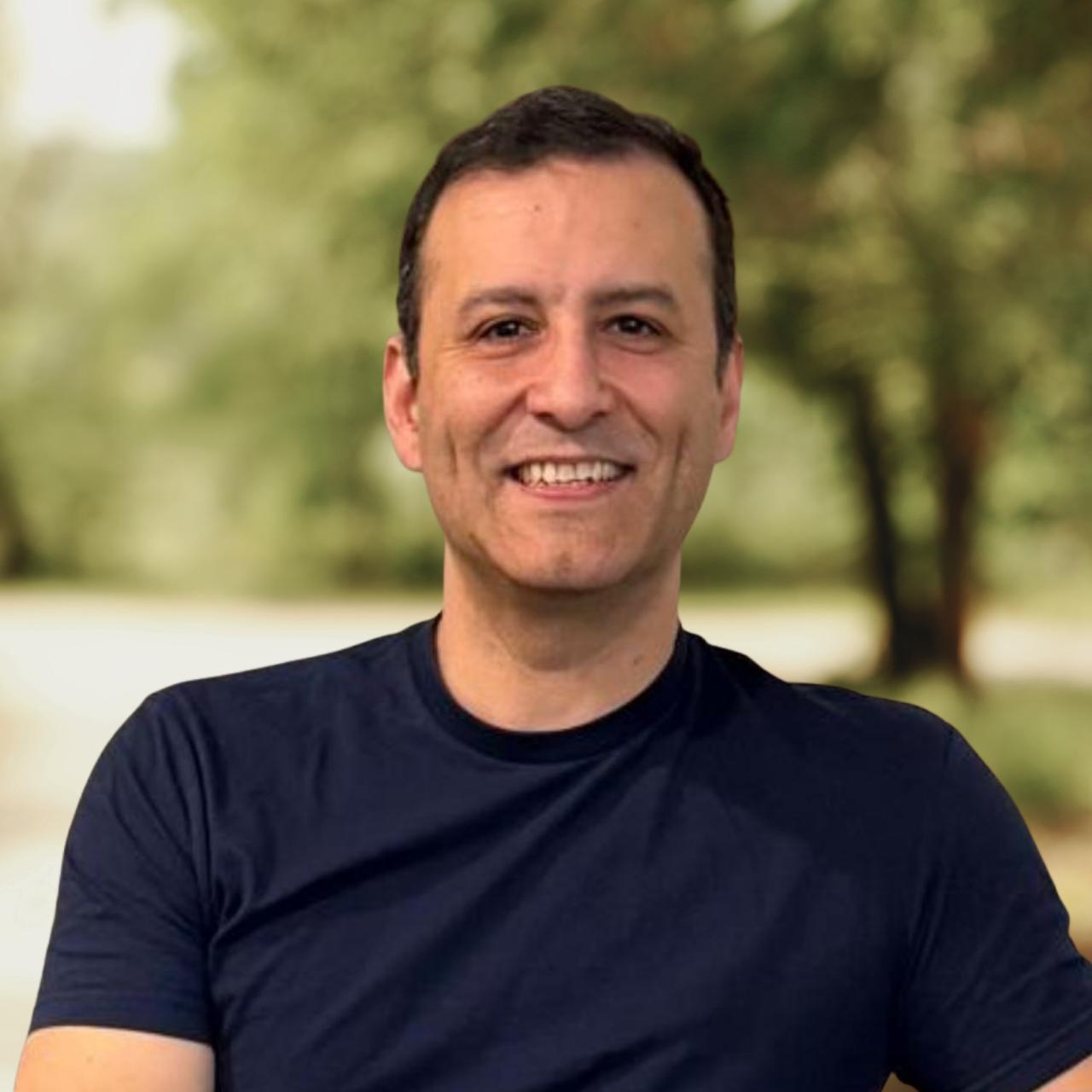
CEO / ScalingCFO
Cruz Gamboa is the Founder and CEO of Ascend Growth Ventures and known as "The Scaling CFO." A former GE Capital executive with over 20 years in corporate finance—including closing an $800 million deal—Cruz now brings CFO-level financial intelligence to 7-figure founders ready to scale without sacrificing their well-being or their people.
Cruz combines his NYU MBA, Certified Scaling Up Coach credentials, and hard-won lessons from his own corporate transformation to help impact-driven CEOs break through the financial constraints holding them back.
His signature offerings include the Scaling Financial Audit, which uncovers the hidden cash and profit levers inside a business, and the Scaling CFO Partnership, a fractional CFO engagement that gives founders the strategic financial leadership they need without the full-time executive price tag.
Cruz's philosophy is simple: profit must serve purpose, and there's no success at the expense of people. When he's not helping founders scale from $1M to $10M+, you can find him making music (with 45+ songs on Spotify) or at home with his kids & dogs.