Alex Buckles - How to Build Partner-Driven Revenue Without Boiling the Ocean (The Co-Selling Playbook)

Want to know how to unlock predictable pipeline through strategic partnerships without turning it into another failed "initiative" your sales team ignores?
In this episode, David Bush sits down with Alex Buckles, CEO of Forecastable and 20-year enterprise sales veteran (with two exits under his belt), to break down the exact playbook for building repeatable, forecasted revenue through co-selling motions.
You'll learn:
• Why most partnership programs fail to generate consistent pipeline (and how to fix it)
• The "Co-Sell Door Opener" framework that gets reps actually USING partner plays
• How to identify the right partners and craft high-value offers that buyers would PAY for
• The biggest mistake companies make when building partner playbooks (hint: don't boil the ocean)
• Measurable metrics to track across the three dimensions of co-selling success
• What to do in the next 30 days to start generating partner-driven opportunities
Alex doesn't hold back on the tactical stuff... from interviewing partners to building account lists to getting CFOs involved in partnerships for the first time.
And David keeps it real by pulling out the practical execution steps you can steal and deploy in YOUR business.
If you're tired of cold outbound being your only lever for growth... and you want to tap into the CAC-crushing power of strategic partnerships... this episode is your blueprint.
Hit play. Take notes. Then go build.
Alex Buckles 0:00
In the next 30 days. It's really about identifying, you know where you where you want to affect change in the business, again, growth, churn, reduction, whatever it is who's the best partner that's most likely to go help me win in that business, whether they've got a large customer base in that business or they just have unique expertise. How can we create a simple co sell door opener that's an experience. Hone in on one little thing. Create an experience. Start sending out communications. It's as simple as that.
David Bush 0:25
Welcome to the Business Builders playbook, the show that breaks down the systems and strategies behind Predictable Revenue Growth to win in business. In each episode, we're diving into the proven strategies that separate the winners who scale from the losers who fail. This show is sponsored by bdr.ai the AI powered business development platform that automates your outbound prospecting so you can focus in on closing deals instead of chasing leads. Let's get started. Welcome everybody. My name is David, and I get a chance to be your host and moderator for this amazing conversation on building a better playbook around the concept of partnerships. And I got a chance to have my friend Alex buckles, CEO of forecastable.com, expert, absolute expert. I think you're going to be blown away in this interview. You're going to get a chance to hear so many great ideas on how to expand opportunities through strategic partnerships. And Alex has got a tremendous experience. Got 20 years in enterprise sales. He's had two successful exits. He's got former military experience, Marines. Is it hoorah? I can't rock, yeah. Nice. Sigma. Is it signify? Is that center? Phi, sorry, I'm getting I'm getting better at it, but, man, I'm so excited to jump into this. I know we've had a friendship, and we've had a chance to, you know, work together on some projects, and I'm so excited to be able to share your education, experience, expertise on strategic partnerships and really understanding how to blow up opportunities when you bring in this concept of partnership. So thanks for joining me today. You're very welcome. Thanks for having me. Well, let's jump in and just talk a little bit about your story. And I know that there's obviously a lot to it, but if you could give everybody kind of a couple minutes summary as to what brought Alex to where he is today, what would be the things that you think that they would benefit from hearing.
Alex Buckles 2:23
Sure that can be a long story, so I'll try to keep it short. But how I got here today, like you mentioned, I've been in enterprise sales for 20 years. Started out after getting out of the Marine Corps, I got into retail sales, and we're selling cell phones for a little bit there. Learned some really great objection handling. I didn't know it at the time. And then I got my first, you know, enterprise. My first professional role was as an enterprise AE, and so I've always, kind of have been on that enterprise side of the house. I work for small companies and large, you know, some startups along the way, lifestyle businesses. And then when I got into the, so then I, as I started getting into the like, the real, you know, true enterprise world that was in the SAP ecosystem. And there I was, you know, with a professional services organization, co selling with SAP reps. And I found out really quickly that not a single one of those reps would care about my existence unless I was helping them, you know, win deals or giving them some type of unique edge that could help them break into accounts. And then subsequently, I ended up in the Adobe ecosystem. I was a top enterprise rep at Marketo just after VISTA had acquired them. And so I rode that all the way through to Adobe acquiring Marketo, and then I went on to run the revenue function at a professional services organization that specialize in marketing automation implementations, large enterprise type, type stuff, and my charter was to double revenue and flip the company in two years. That was the founders objectives, and within a single quarter of us beginning to deploy tightly aligned co sell motions, we had over 40 enterprise AES from Adobe that were feeding us business, and even through covid, when most of our forecasts came to a screeching halt, the fact that that we had all of those Adobe reps, you know, submitting US business, recovered our losses dollar for dollar. We ended up hitting our number in two years, double revenue and flipped. And that's when I realized that all of this stuff is very, very repeatable. And so when I started for castable, we actually started out life as a SaaS company. I thought, you know, I thought I was building or solving all the world's CO sell problems through technology. We built all this stuff. And I'm like, this is exactly what I would want if I were, you know, running co sell on my own as an enterprise rep. And ultimately, come to find out, nobody really knew what to do with the technology, that the market challenge wasn't something that could be solved with tech. They really needed the guidance and the ongoing support around execution and strategy, and so that's what eventually morphed us into a tech enabled managed service. And now we don't sell the tech, we just use our tech internally that we built to go run all the. Emotions that we run with our customers, and that's where we're at
David Bush 5:03
today. Wow, so cool.
Alex Buckles 5:05
And there are so many opportunities inside of the world of CO selling and strategic partnerships. And when people hear the term co selling, can you just define it for those people that might be new to the concept and maybe some of the misconceptions around it. Sure co selling is really where and it doesn't necessarily have to be just sales. I think you know, some of the misconceptions that you're talking about is maybe them thinking that is just a sales activity, you know, where reps are getting together and working deals. And yes, that is the largest part of CO sell. I would love reps to kind of work deals together, but at the end of the day, it's really anytime that a partner can come in and help and, you know, increase upsell, cross sell, reduce churn, drive net new logos, all of those activities, even though you may be working or, you know, co selling with with different stakeholder groups at your partner like usually, co selling happens either in the pre sales org, in The Sales org, or in the customer success and account management org, but again, anytime that a partner can come in and run a motion that drives value on both sides and and we're super aligned on it together, that's really that's co selling for me, and I know that
David Bush 6:15
partnerships have existed forever. So why do you think that CO selling is becoming a top priority for revenue leaders right now.
Alex Buckles 6:23
So it's because the world has shifted. You know, I partnerships is, be right. It's been around forever. Is nothing new, or anything like that. But I feel like, you know, as I think back 10 years ago, like, or even maybe a little less than that, you know, when VC money was readily available and everybody had money, it felt like, because everybody was buying everything and and I feel like partnerships were present, and yes, they were producing, you know, in terms of referrals and resellers and things like that, but, but they weren't produced. There was never really, in my opinion, there's never really any true accountability that was assigned to the partnerships orgs back then. That was like, saying, Okay, well, you need to produce this. We need to attribute revenue to these activities. It was a lot of, there was a lot of just, how do I describe it? There's a lot of partnering and press releases and, like, there's, you know, it was a lot of show and a lot of theater, and not really a lot of actual production. And nobody could really pinpoint and say, yeah, if I invest in my partner, or here's the exact pipeline I'm going to get out of that. And nobody really cared, because they didn't back then. They didn't care about customer acquisition costs as much it was growth at all costs. We have lots of money. Let's go spend. And then that came to a screeching halt. And now, like, cold outbound isn't as effective as it used to be, and that CAC, that customer acquisition cost now is like really attractive to today's companies. And I would say, in the lion's share of our deals, they're CFO involved. And in many of our deals, they're CFO led, where, like, the CFO is the one that came inbound and said, We know that we can do partnerships. We know we have the potential to do it. We've never been able to do it consistently or forecast it accurately. And that's kind of the market opportunity right now. Everybody now. Everybody, not everybody, you know, but most organizations want to go nail this now because of the CAC benefits.
David Bush 8:07
Yeah. Well, I'm sure that there's probably lots of different reasons of why partnerships succeed or fail, but if you could go back to, like, the years of experience and, you know, all of the expertise that you have, what is the biggest reason, or reasons? If there's like two that just consistently show up, of why partner programs fail to generate consistent and predictable pipeline,
Alex Buckles 8:32
it's because of, it's because of lack of of execution ability. That's really what it comes down to, is that a lot of times, you know, you know, a lot of times, like partnership, a lot of partnerships, orgs will will say that, you know, the sales team is not paying attention, and I can't get my sales reps, you know, to do what I need them to do, and that's why it's not working. And that may be true, but they've also never given those sales reps a reason to care, like those sales reps have to wake up when you when a partnership, you know, a partner, professional in your company walks up to you and says, I've got something. It's like, Well, if that, if that rep doesn't smell immediate quarter retirement, say, Yeah, I want to run that in my accounts. Like, that's the visceral reaction that you look for, and it doesn't happen on its own. You can't just go in and, you know, and train or enable on these things for us. That's why, when we created the service, we started doing this for customers. And the key, the most critical piece of it is, is developing co sell playbooks. And you know, what's a co sell playbook? Well, a co sell playbook is when, you know, we sit down with, you know, with a customer or any company, and we start, it's all about executive priorities. Where do we want to grow in? FY 26 what are the pains we're trying to overcome? Do we have churn issues? Do we want to go upsell, cross sell? Are we acquiring companies and maybe we want to go, you know, cross sell or CO sell, together internally with our new acquisition. And as they're and they, you know, they it starts out with those strategic priorities. Then what I do, in my mind, I'm just a sales guy. I've never actually held a partnership's role in my entire career. So I'm like, Okay, you need upsell, cross sell over here, who's, let's say it's in financial services. I'll then ask them, you know, who in your partner ecosystem is, like, the very best, like the most unique subject matter expert you could find that is good at that thing, and they always have an answer, and nine times out of 10, they have an answer, and there's someone that's in mind, and I say, let's get that company and that CEO, or, you know, head of delivery, into the room, typically from usually it's a systems integrator, professional services company, and I do an interview, and the interview process is the most is the most critical piece of the whole thing, because you can't just merge one pagers and think that you've got a value story that you can bring to market. And when I get in there and I start interviewing, I start asking that si or that professional services company, you know, tell me what you think. Why do you think they're unable to upsell cross sell here, what do you what personas are we dealing with? What pain are they feeling right now? And we try to hone in a very, very tight ICP, you know, the more focused, the better. And then we come up with what's called a co sell door opener. And it's like, Okay, what's the hook? Or the thing that the platform company? It could be Salesforce, it could be Adobe SAP. It doesn't matter, like, what's the hook that that sales rep is going to be excited to go email to their target account or their existing customer, and that's that'll help us achieve this thing, and we come up with some exciting offer that allows them, you know, the customer, to have an experience. And that could be pulling data and giving them an output of some sort, but that CO sell door opener should give the customer something of value, that that they want to go and experience. And when that happens, reps start sending out emails. People get excited. They want a part of the experience. And then now you've got a really engaging, wonderful conversation to have, and that's the beginning
David Bush 11:48
of your cycle. Yeah. So it's just simple. I mean, this is pretty much duplicatable from a lot of different aspects. It's list message offer follow up. I mean, it's once you've got those four things, now you have an opportunity to start building out that partnership model. So if this show is resonating with you and you're ready to take action because you want to scale your business faster, smarter with more AI and technology and less labor, check out. Bdr.ai, we help entrepreneurs and executive sales leaders to automate the grind of prospecting so you can focus your time on closing deals and growing revenue where you should be spending your time with AI powered data, digital outreach, automation and done for you prospecting systems, you'll connect with more qualified leads, book more appointments and build Predictable Revenue without adding more hours to your week or the week of your staff. Visit BDR today and discover how our AI prospect finder and digital BDR agents can help you to build your pipeline and your profits. Visit bdr.ai where business builders learn how to automate and scale their playbook If a company wants to go out there and just build partner source revenue, that's repeatable, not random, but they're just looking for the first few foundational pieces that they need to put into place. What would you say that those things are the first
Alex Buckles 13:12
thing they need to put in place if they want partner source revenue? Let's assume. Let's maybe, let's talk about, you know, one segment is like, the folks that don't even have a partnership professional don't like if you're just thinking about partner thinking about partnerships, or maybe you've got a couple partnerships, and now you want to, like, create more repeatability. There's, like, this natural instinct to try to just hire a partnerships person. And most of the, you know, a lot of the partnerships professionals that are, that are out there today, you know, great human beings, and I'm sure they're very capable, but this is a different environment. And like I said, 10 years ago, like you could sign partnerships and have great, fluffy meetings and still, you know, get your bonus every single year. But now it is all about execution. And so, you know, my advice there is to one, focus on the play, the again, just like you said, it's, you know, you got to figure out the offer, the messaging. You got to get it out. You got to report. Reply, and it's got to be exciting and a value, you know, of high value to that to that customer or prospect. And when you figure that offer, it's just a sales play, you know, grab. You can grab a junior AE or even an SDR that has one year of experience, and say, go run this play. Here's what you need to do. Here's the process. Work with these reps at this company, and we're going to run this motion together, and that activity is the very first activity I recommend. And you throw mud at that wall, you know, and on a few different plays, and when you find repeatability, then you hire, potentially, a partnerships professional to come in and help manage all of those activities and build structure around the place.
David Bush 14:39
Yeah, so I mean simple, not easy, right? I mean, it's definitely pretty simple when we're talking about it. It's not always easy and doable, because you have to go out there and you have to refine, and you have to test, and you have to see, you know, what actually pulls, what actually gets a response, what doesn't? And you know, you know, they say that 50% of your time and money and marketing is wasted. And you could just go over there and put it in the garbage can. The skill is learning which half, because you just don't know. You just got to go through the process. So, so if you were to go out there and you were to create a co sell playbook, what does that look like at a practical level? And where do companies over complicated make it to be not usable, or just it doesn't get the results that they desire, because it's just too many steps, too many too complicated, too overwhelming.
Alex Buckles 15:28
Yeah, so the one, so the ones, you know one, I think there are very few companies that are actually developing coastal playbooks. It's very rare that I see that I see a lot of battle cards, I see a lot of random info sheets of some sort, the hand of reps and, like, expect them to be able to go run co sell motions. For me, a co sell playbook, like we said, like earlier, like, it's an interview based process for us. And the output of that is we typically have a play name of some sort. We have really tight ICP, don't boil the ocean. I challenge people all the time. It's like,
David Bush 16:01
that's classic. That's a classic line. Hey, you guys, that's a jotter downer. Don't boil the ocean. I love that.
Alex Buckles 16:08
Yeah, don't, don't boil the ocean. Like, recently, you know, we're chatting with somebody that they had a really cool coastal play, high value, like, great brand, and, you know, selling with a large CRM company. And as I was building the playbook, and it's like, well, what's the ideal customer? Well, it's 50 to 150 sales reps. You know that they, you know, in that size org, but, you know, we can, but it's really like, you know, 10 and I was like, no, no, stop yourself right there. Like a 10 person or a 10 person sales organization is very different than a 50 person sales organization. Let's keep the play focused. And if you keep it focused and like, and you don't have success, or you've exhausted all the people on that list of some sort, you can probably go down, you know, and get to that. But for the initial play, it's about the focus. The second piece, you know, instead of just ICP, is account identification criteria. So I ask a lot of questions in the interviews around like, you know, what? What technologies are they running? What are the pain points that they're having? Are they showing intent somewhere? Because sometimes partners are even sharing intent data and their own, their own stuff, like that. And so, so we have the account identification criteria. We've got ICP. We have trigger events like, what are the activities they're doing? It could be a change in leadership. It could be a new initiative that that we've now uncovered. So we identify any corresponding trigger events, we log all of that data, and then we write down, like, what's in it for both parties. And we we try to align. Doesn't mean coastal motion. Doesn't mean both parties win every single time in terms of, like, you know, not everybody has two open deals the same time that are closing at the same time, but maybe party one or partner A has them as an existing customer, and they know that they're going to reduce likelihood of churn by running this play and getting Partner B, who's an integration partner, into the mix and hooked in, and they're less likely to churn at that point. And so when I'm figuring out, we always write down in the playbook, you know, what's in it for Partner A, okay? Churn reduction, great. That's that's good enough value. What's in it for Partner B, net new business, you know, all that great stuff. And that's kind of the basics of the playbook. And then on the execution side, that's all about the CO sell door opener, which we chatted about earlier, creating that high value experience that that a buyer is almost would be willing to pay for. It's got to feel like it's worth, like, real money. It's got to be high value, and then that coastal door opener is just the messaging that we're using to go share how they can gain access to that experience. When those two things come together and they're tight and they're great, it's a thing of beauty. It works every time.
David Bush 18:34
That's awesome. Well, I know that there's a lot of sales teams out there that resists one more initiative, one more tactic. So how do you get reps that actually adopt and use CO sell motion consistently?
Alex Buckles 18:47
It's about them experiencing their real accounts. It's like, you know, and what we do, you know, last thing a rep wants to do, like you said, is have a new initiative. They don't want to sit through another training session. They like they just want to go, you know, they want to open deals and close them at the highest possible win rate, and we need to focus on that like I was, you know, I've been a 20 year enterprise rep, and I was one of the very worst at, like, anything administrative. I didn't fill in things in CRM, I didn't I didn't like the trainings. I would procrastinate on stuff. So I fit that profile and understand it really, really well. And so the biggest thing for me is don't waste their time. And so, like you get in front of something, you got to give them something they can do today, and accounts that they own today so they can get progress in something this week. And so when we talk about that playbook and that door opener, that is exactly what it is. So when we develop these we, you know, the first thing is, we want to get in front of the sales team. We pull all the account lists that are, you know that that sales team owns that matches the ICP and the account identification criteria and the trigger events, all that stuff. And we say, hey, you've got Mr. And Mrs. Rep, you've got 11 accounts that are highly qualified for this motion. And here's the door opener. Which one are you excited to send this to? Or a few, and you get them to just start sending, you know, these. Light send. This is not some big sequence or cadence. And when they start seeing that, it opens doors. They're like, Okay, but what I've got another, you know, category I want to go I forgot these other 10 accounts. Do you have playbooks for that too? They start asking for more of it. And that's when, you know, you you've got, you've won up, you know, hearts and minds in the in the sales org,
David Bush 20:19
yeah, well, I know that there's probably some metrics that you're going to be looking at early on that kind of evaluates whether or not it's successful or if it's not working. What are the ones that are the most valuable in your mind, that would be measurable metrics? Sure.
Alex Buckles 20:36
So there's really three dimensions to that. There's the like standard SaaS companies. I'm talking like the not the platform, not the big SaaS companies, like the everyday, you know, ISV independent software vendor. They typically get distribution through services companies. Very rarely will they actually get a platform company sales rep to bring them into a deal, unless that platform company sales rep cannot win their deal without you, they're not going to bring you in. So we try to get them into either the pre sales organization so they can get their their solution architected into, you know, day to day deals is kind of a way to back door into the sales org, but the biggest recommendation is going through systems integrators or service providers. That's a partner recruiting effort. There's got to be, you know, a way for for them to recruit, for them to articulate why they should be architecting, you know, their solution into the motions. And that professional services company is usually the one that has the attention of the platform company, sales reps. And so by going to all the SIS and getting your solution architected, you kind of backdoor your way in. So leading into your question, you know, the leading indicator of success there are how many services companies or, you know, members of the pre sales organization do I have active that buy into my story, that are making regular referrals and engaging with me, if I'm a professional services company, the it's always about, you know, getting engagement with the individual contributors at, you know, in pre sales sales or customer Success, slash account management at the large platform companies, and the leading indicators of success there are how many teams that I get in front of where I presented. You know, hey, you know, you know, again, don't boil the ocean when you show up and actually get in front of a sales team and a platform company, again, sales reps, you know, they're short attention span. You better get straight to the point. It's got to be high value. Here's what we do. We're the best at it. We don't boil the ocean. We're like, we're really good at banking and credit unions or whatever it may be. And here are the plays you can run into your accounts. Questions, does anybody have an account right now that fits this criteria? And in that meeting, you'll get pipelined, because they'll be like, Yeah, I've got that. I want to run that play. Great. I'm going to send you a message afterwards. We're going to go run that play together. So leading indicators there are, you know, how many people do we get in front of, and how many said yes, and how many started actually sending out the communications? And then the third dimension is, is the platform company itself? And that comes down to, like, when we work with platform companies that that really go all in, they want to go, you know, take 2030, different service providers that have unique specialties across a wide variety of segments, or, you know, however they're, they're, they're broken out and creating unique co sell place for each of them. And then what you do is you create a menu for the sales reps of the platform company. And so for every co sell playbook we have, we literally just build a spreadsheet and it says, here's the play name, here's a link that'll take you to your account list inside of your own CRM that shows you all of the accounts that qualify for this play this play. Here's your door opener. It's like silver platter menu. Which one do you want to go run? Go ahead and copy paste that message, send it out, and you're good. So the the leading indicators of success there are, how many reps are actually pulling plays and sending out messages? How many partners are they engaging like, that's that's usually the leading indicators? Yeah, well, there's those.
David Bush 23:44
There's three different phases, I think are, or dimensions are really important, I think, to understand and pulling all that stuff together, it's, again, it's not easy. It's fairly simple to talk through.
Alex Buckles 23:56
But where do you like rocket science? There's just a lot. There's none of this is rocket science. Nothing I do is like, super black, boxy. There's just so many little moving parts to make this happen. And that's where I think to your point earlier, when you asked about, like, where, where do people succeed or fail in partnerships? It's that it is really a cross functional thing, especially these large organizations. And almost nobody has an internal function that understands how to drive this cross functional alignment, even though the individual steps are really easy and simple, it's just a lot of moving parts, and we're exceptional at managing the moving parts. Yeah. So when implementation starts to happen, where's the most common area of breakdown? Is it in the partner selection, the targeting messaging, the handoff execution. I mean, there's probably lots of different places where you could see some holes in the bucket, but what would you say your most common breakdowns are on the I guess at the beginning, it's around the strategy for it, you know, like it's developing the CO sell playbooks, like, and that's why we came out with an offering that's $5,000 Dollars. It's like, well, we'll go develop a coastal playbook for one motion. We'll we'll get it, everything ready, messaging, all that good stuff, and we'll monitor the execution of it for 60 days. It's like, the lowest level of can we do something that actually, that actually feels different than what we're doing today? And so nailing that process and then scaling it is really, as I guess, the name of the game there. And then on the execution side, you know, in the execution side, if you you know that that's usually where it falls apart the most, but it's usually because they don't have the foundation. They didn't, weren't using the right co sell playbook. There wasn't a clear rules of engagement, because in that CO sell playbook, we also include what we call a co sell plan, and that really it's nothing more than a joint mutual action plan. Again, not rocket science. It's a mutual action plan, but now it includes a partner. Hey, in this motion, the solutions partner is actually going to do the discovery first, and then we're going to move to this, and then we're going to do demo, and then we're going to align on pricing. And so having those that rules of engagement, I know mutual action plans are like the bane of many reps existence, but like they actually work and it produces meaningful results. And so what
David Bush 26:07
does it look like when you have everything kind of lined up, and you know, co selling execution is just all dialed in, and week to week, and in real life scenarios like, what is the cadence, the accountability and the collaboration between teens?
Alex Buckles 26:20
So cadence, accountability and collaboration. So like, what does that? What does that look like? Well, one, you know, it's, let's say, a professional services org. And I'm co selling with a large platform, which is really common. What we do is we visualize the org chart of every team that we work with at the platform company. So we know, hey, these two enterprise teams are working. We've got three reps in that team sending us business, you know, two reps on this other team, or five CSMs over here. And we keep track of where we have those relationships and who's active. And then it's about coming up with an engagement plan for how do I keep the attention? Because to get referrals, it's really about, yes, you can run co sell playbooks and like, do outbound that way, but to get referrals on a consistent basis, it's all about mind share. And the individual contributors on the front lines are the ones that you that's the mind those are the folks where you want to have your brand in their minds at all times. So when they run into a situation, they think about you. But you can't just show up every month and like, hey, got any deals for me, you know? Like, that's annoying, and that's a quick way to get blacklisted, you know, and to lose, you know, credibility with your partners. So we try to, when we coach people through this, we try to create value added ways to engage. All right, every month we're maybe helping a couple reps, you know. Hey, give me a couple target accounts. I'm gonna do some research, see if I can come up with some plays for you, and let's chat about it. That's a high value activity, or you may deliver assets to them. Don't deliver random marketing crap, like, like, if it's a high value asset, it's focused on something that you think are highly confident that will help that rep, you know, advance a conversation or break into an account. That's a cool asset to go and send, you know, and then it's having Slack channels, you know, or some type of ongoing, some type of system in the background where you can, you know, you can, you know, communicate with one another. Share wins or win wires are a big thing, you know, even though a rep may not be engaging you when they constantly see your name in a Slack channel saying, Yeah, I just want to deal with so and so over here, like, what are they doing differently over there? And you usually start getting some organic
David Bush 28:21
inquiries, yeah, that's great. And I love how the structure that is lined up in such a way where it is something that you could feel like that, yeah, it's, that's, that's doable. I could pull that together. I could pull those pieces together. So as we land the plane here, or you want to add
Alex Buckles 28:35
something, I was gonna, I was gonna touch on. It's not even about the rep doing it, like when we get into the execution, there's, you know, we create as part of our service, we have, you know, human resources that we assign to customer accounts that are named individuals that, you know, they're like sales assistants, and we call them and title them co sell alignment specialist. So that's the name of the role. And having that role internally, whether you're using our service or you just find some type of or you create some type of centralized function in your organization. It's about having somebody that's, that's, that's maintaining the communications with all these folks. Hey, how often are we chatting with so and so? And why aren't we getting over here? And, you know, maybe we promise things in our mutual action plan, who's monitoring for that to make sure that those things get done? Yes, you can rely on the rep. And yes, you as a leader, can sit there and be like, Oh, I pay the rep a lot of money. They're gonna do the things. No, they won't, like a lot of them won't. So when you create that centralized kind of orchestration function around the coastal motion, it stops a lot of the leakage in the relationships and the continued engagement. Yeah.
David Bush 29:37
Well, I know that we have some business owners and revenue leaders right now that are watching this video or listening to this podcast, and they're asking the question, What can we do in the next 30 days to actually create more partner driven opportunities? So what would your response be with that
Alex Buckles 29:55
one, call us but two, two, I mean, in the next 30 days? Is, it's really about identifying, you know, where you where you want to affect change in the business. Again, growth, churn, reduction, whatever it is, could be a segment or vertical that you want to go in, who's the best partner that's most likely to go help me win in that business, whether they've got a large customer base in that business or they just have unique expertise. What are the pains that those potential buyers are feeling right now. And how can we create a simple co sell door opener that's an experience that that buyer would really enjoy and value? And when you craft that and just start sending it out like the best thing you can do is hone in on one little thing, create an experience. Start sending out communications we can get from zero to pipeline in 30 to 45 days, and a lot of cases, because it's just, it's as simple as that,
David Bush 30:48
yeah, well, I'd like to give you an opportunity to tell people why forecastable? Why? Why? Choose forecastable to be the support system that helps this partnership model, sure.
Alex Buckles 31:01
So you know whether you have an exist if you if you don't have an existing team, like, when people hire us at forecast level, they're trying to prove one of two things. They're either trying to prove viability of a new motion like, Hey, I think we can go win over here. But I'm not sure. There is no less expensive way to test it than to try it through us, because we know exactly what we're doing and how to go test things quickly, and we'll fail fast. If the value story doesn't work or or whatever, maybe you're going to know really, really quickly. But we also win very quickly. So when it is awesome and it does land, it usually hits pretty hard. And for those that have existing partner teams, we have plenty of customers that have they know came to us with an existing partner team. We just added, like, we've added sales rigor to their lives. We've given them a new way to engage with their own sales organization and to speak their language in a more meaningful way, through the lens of playbooks and and we give them that execution support. So if they're leveraging our cosa alignment specialist, my team documents every single process that that alignment specialist does, and we make partner professionals feel like they've got six arms instead of two, and they find out that they're just taking a lot more meetings, and whole lot of things in the background are happening on their own, because there are real humans behind it, running it.
David Bush 32:10
Yeah, well, we titled our podcast the Business Builders playbook because we knew that there are lots of different plays and motions and things that can be done, kind of using the football analogy to help an organization to win. And I think that what Alex has shared with us today is a special team, right? Special teams come in and they execute on very specific tactics, and this is an area that can be crucial to your success in the year to come. And so I highly encourage everybody that's either watching or listening to this individual video, to this podcast to be able to go to forecastable.com reach out to Alex's team, have a free strategy session, talk a little bit more about what it is that they can do and how they can help you to execute your playbook or create the playbook for you. So Alex, thanks so much for joining me. It was a pleasure to be able to have a conversation. With you and to learn from
Alex Buckles 33:04
your wisdom. Likewise, thanks for having me. David, I'll see you.
David Bush 33:09
Thanks for tuning in to the Business Builders playbook. If this episode gave you some plays that you can start running in your business today, hit subscribe and share with another revenue leader who's tired of the pipeline grind. Building Predictable Revenue isn't something you figure out alone. Whether you're looking to automate your prospecting with bdr.ai, or you just want to talk through the growth challenges you're facing, reach out. We help business leaders just like you to build systems that actually scale. And if you're ready to stop being your company's Highest Paid Prospector, let's have a conversation. Reach out to us@bdr.ai until next time, let's keep building. You.
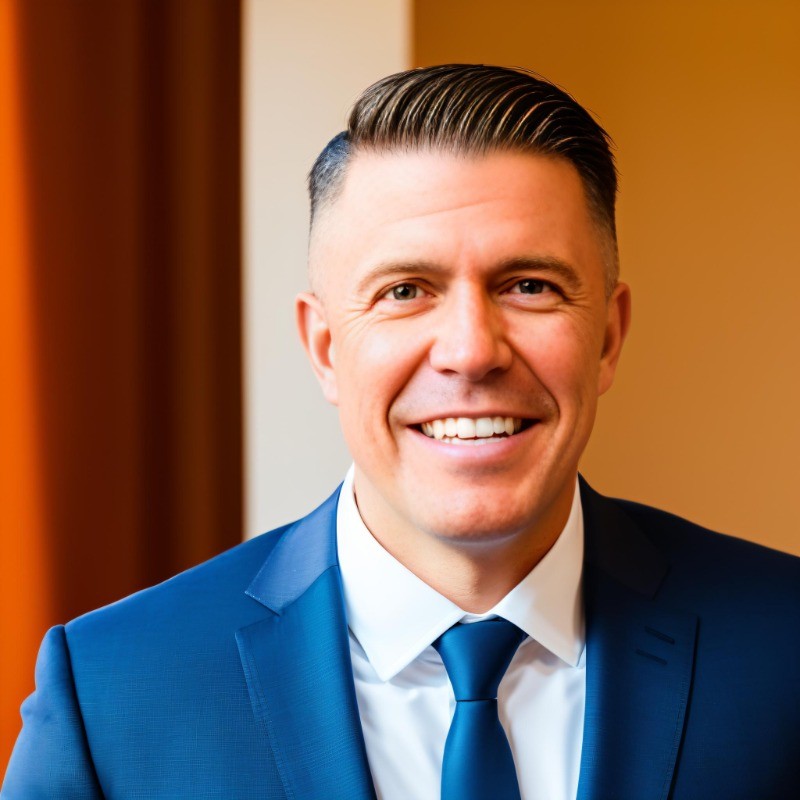
CEO
Alex Buckles is the CEO and co-founder of Forecastable, where he helps B2B companies generate pipeline and open deals faster by operationalizing ecosystem-led go-to-market execution. Forecastable works with sales and revenue leaders to turn existing relationships—partners, customers, and networks—into repeatable, field-level plays that produce results in the current quarter.
Before founding Forecastable, Alex spent more than two decades across technical marketing, enterprise sales, and partnerships, helping companies achieve double- and triple-digit growth. His work focuses on aligning sales execution with real buyer access, replacing expensive, low-conversion outbound motions with practical co-sell strategies teams can actually run.
Alex is a proud United States Marine Corps veteran and father of three. One of his children is on the autism spectrum, which drives his long-term mission through Pathways for Autism to build scalable, financially sustainable infrastructure that helps individuals achieve independence in adulthood.