Mike Richardson - How To Build An Agile Company That Thrives On Chaos (Not Dies From It)

Tired of feeling like your business is one disruption away from disaster?
Mike Richardson spent 23 years obsessing over ONE thing... how to make companies agile enough to turn threats into opportunities.
And in this episode, he's dropping the playbook.
You're gonna learn:
→ Why your meetings probably SUCK (and the one change that fixes them)
→ The "Conversation Flow to Cash Flow" framework that inflects revenue
→ How to future-proof your business when strategic plans expire every 90 days
→ The 13 elements of an Agility Operating System (and which one to start with)
→ Why "only the paranoid survive" is actually GOOD advice (if you do it right)
Mike breaks down the difference between organized chaos and disorganized chaos...
And shows you how to move from "hair on fire" to "holy crap we're actually scaling."
David and Jeff keep it real with stories from the trenches...
Including Jeff's $20M exit after learning to stop babysitting employees and start leading.
This ain't your grandma's leadership podcast.
If you want to build a company that adapts faster than your competitors can blink...
This episode's for you.
Mike Richardson 0:00
The only competitive advantage that we really have that has any degree of permanence these days, everything else is increasingly temporary, increasingly quickly. The only competitive advantage really is our agility, our ability to adapt to rapidly changing circumstances.
David Bush 0:19
Welcome to the Business builder's playbook, the show that breaks down the systems and strategies behind Predictable Revenue Growth to win in business. In each episode, we're diving into the proven strategies that separate the winners who scale from the losers who fail. This show is sponsored by bdr.ai the AI powered business development platform that automates your outbound prospecting so you can focus in on closing deals instead of chasing leads. Let's get started. Hey, welcome everybody. Super excited to kick off today's conversation, and this is going to be a an extraordinary one. I think you're going to be in entertained, and you're also going to be challenged. And it just gives me a distinct pleasure to be able to introduce you to Mike Richardson, Mike's friend. He's been connected to Jeff for over a decade or so, and Jeff had a great opportunity to work with Mike and one of his peer advisory groups, and Jeff will tell a little bit more about that personal experience. But Mike has spent his career at the intersection of engineering leadership and agility, and from managing high stakes aerospace programs to leading fast growth companies and guiding CEOs in peer advisory group, Mike has developed a unique perspective on what it takes to lead in a world defined by uncertainty. Today, he helps leaders future proof their organizations by tapping into collective intelligence and in creating systems of agility that scale. So Mike, we're so excited to be able to jump into this conversation today.
Mike Richardson 1:44
Yeah, it's great to be here, guys. And you know, Jeff just always great to be back in a room with you. And David met you more recently, and we've had a few great conversations. I'm really excited to see where we can take the conversation today.
Speaker 1 1:59
You bet, well, we titled this particular presentation on how agile, agile leaders build resilience, scalable, Future Ready companies. And so I want you to just give everybody a quick little overview of what brought you here today to do what you're doing and to talk about this particular topic so they know understand a little bit more about your background.
Mike Richardson 2:19
Yeah, thanks for that question. You know, one of my favorite ideas is that we live life forwards and we understand it backwards. And what I understand now about my whole career is the long thread of this agility theme, right? And this, this idea of agility, everybody, of course, is, is the ability to adapt in the face of craziness, where the world is changing faster in a more disruptive way than ever before. And by the way, it's about to go exponential with AI, you know, buckle up. You ain't seen nothing yet. And if we're not careful, if we're if we're not agile, then that future is full of threat. The rug is about to get pulled out from under our business model, our enterprise and potentially even our career, and therefore even our life. So if, when, if we're fragile, then that future is full of threat. If we're agile, then that future is full of opportunity, and I started my career. When I look back now, I realize where I first learned, began to learn about this. I started I'm a scientist. I'm a geophysicist, geology, physics and maths. By by my degree, I'm English originally, as you can tell from my accent. I've been in the States 25 years now, but I graduated college as a geophysicist, which was natural training for the oil and gas business. So I ended up working for Shell International, and they had a fantastic graduate intake program where they would put you out in the field for two years. And so I worked on offshore oil and gas drilling rigs for two years, helicopter out, helicopter back, week on, week off. When you're on, you're on 24/7 you sleep if and when you can. And I look back now and I realize, aha, that's where I first started to develop these capabilities and capacities of agility. I then pivoted via an MBA. I did the classic MBA thing in the 80s for two years. I then pivoted into general management and climbed the ladder quickly, and ended up running high technology companies in an air in the aerospace industry, and then I ended up running a division of those companies, and that's what brought me to the USA. In 1999 I'd made three acquisitions over here on behalf of the corporation, and this, this bigger, kind of innovative, strategic concept that I launched, and I was coming here every other week at a certain point in time. So we decided to relocate here, and that was in 1990 Nine and then in in nine, in 2001 911 happened, of course. And post 911 the commercial aviation business, which was the backbone of my business, was in terrible shape, but I was very lucky in that I got my green card two months before 911 by the way, luck is huge in agility, we'll we can talk about that later, if you'd like. Because luck is a lot less random than you think everybody anyway, I got my green card, and so I had options, and so I decided to take the leap in the spring of 2002 and do my own thing. And I asked myself the question, you know, what am I good at? What do I love working at? Where do I think I can make a real difference? And I ended up zeroing in on this concept of agility, enterprise agility, business agility, organizational agility, Team agility, leadership, agility. And I've been, you know, carving that groove ever since, for 23 years now, and early on in that process, I ran into the concept of a peer group, a peer forum, a peer advisory board, and I became, amongst other things, I became a facilitator of those peer forums. I was blessed to have Jeff in one of my peer forums for many years, and it really has become my greatest passion, and the work that I just can't not do. And so that's what I love, and I love talking about it, David, so thanks for asking.
David Bush 6:37
Yeah, well, I know that Jeff has had a lot of great things to say about his experience there, and maybe Jeff, you could share a little bit about your background with Mike, and for all those years, did you pick up any of his English accent?
Jeff Bush 6:50
I tried. It sounds so good. I could just never be that. That's funny. Yeah, the owner of Temecula, Mercedes, Garth Blumenthal is from England, and he's got this polished English accent, and he sells 200 new Mercedes a month. It's always so impressive, you know? I tried it, just couldn't pick it up, you know? But yeah, so anyways, yeah, just like I said, known Mike for for 10 years. I had joined a couple CEO groups when I had my mortgage company. My mortgage company started with just me in a room, and all of a sudden, I've got 70 employees. I'm doing $12 million in revenue. I'm making $3 million a year. I'm 35 years old, and I was, what do they call that, over my skis, you know? I was in over my head. And so somebody talked me into joining the CEO group, and I did it for five years, and it really helped, because I watched a lot of CEOs making dumb decisions like I was making, and then watching the pain of of what they were going through. So I was learning from their mistakes, instead of making them myself. That was the biggest thing for me in that CEO group. And then, you know, the the crash of 2007 I lost my company. It was horrible. I went from making $3 million a year to losing 300,000 and shut it all down and and went through hell for a couple years. And then whatever. Then I start my and I got out of the group because I didn't have a company anymore, you know. And then I start this ad agency, me in the garage, you know, making phone calls, selling junk mail, direct mail, advertising. And, you know, five years later on, you know, 3 million in sales, making a few 100,000 a year. And, you know, 10 employees. So I'm like, I'm gonna join another CEO group. So I joined Mike's group, and then I think for a few years that I was in there with a great group of guys, and again, learning a lot. And I got to take that company up to 20 million in revenue. I made $4 million in 2020 so I finally made more money than what I had made in the mortgage business, which was funny, you know, and and exciting. And it was a lot of money, and 65 employees, and until covid hit, I furloughed 35 employees, went down to 30 employees. Had to navigate through covid, and then somebody comes along and offers me a big check. We want to buy your company. I'm like, perfect timing. I'm done. I want out this covid furloughing, up down. I was just tired. And I always had a dream of exiting a business. I wanted an exit on my resume. I want to have the experience of starting a company and selling it for a big check. So I got a big eight figure check, whatever, five years ago and and then semi retired, and now bought another business and building it again, you know, and back in touch with Mike. It's great. So, yeah, that's a little
Mike Richardson 9:45
Jeff is a Jeff is a walking, talking case study of everything we were talking about a few minutes ago.
David Bush 9:51
David, yeah, well, we're going to dive into this, some of these topics, and the first one I want to kick off with, you know what we're our show is called the Business Builders playbook. And so building future proofing into your playbook. Talk about what that looks like in a real life scenario. Yeah.
Mike Richardson 10:08
So you know, the sort of top line thing that we talk about in a peer peer group is, how do you future proof yourself, not just in business, but also in life, not just, not just, you know, professionally, but also personally. And of course, that is getting harder and harder and harder these days, because, you know, back in the 80s and the 90s and the 2000s you know, if you had a, if you had a strategic plan, you could kind of count on the fact that, well, it'll probably get me through the next three to five years. You know, I might have to tweak it and refresh it a little bit, but it'll carry me through that period. And then I'll, I'll evolve it for the next three to five years. These days, it might not be three to five quarters. It might not be three to five months. It might not be three to five weeks before, your strategic plan is rapidly running out of steam, becoming irrelevant, because the world has already moved on again and again and again, because we live in in the flow now of such disruptive change that is coming at us thicker and faster than ever before. There is no kind of time lapse anymore. There is no breathing space. There is no you know, period. And so we have to be in the flow of future proofing ourselves, which means we got to adapt, and we've got to remain relevant and and we can easily become a dinosaur, you know, bigger faster, sooner than we think, and possibly even bigger faster, sooner than our worst nightmare. And in reality, therefore, whatever competitive advantage we think we have, we probably don't, because that can probably be disrupted more than we think and really, therefore, the only competitive advantage that we really have that has any degree of permanence these days, everything else is increasingly temporary, increasingly quickly. The only competitive advantage really is our agility, our ability to adapt to rapidly changing circumstances, and that means we've got to have an operating system that is agile enough. We haven't. We have an ongoing, dynamic process of an agile strategy process. We have an agile approach to operations, an agile approach to our infrastructure, and most crucially, we have an agile approach to the way we think about our business, the way that we look at our business, and the lens, the window, the worldview, the paradigm with which we frame our business. Do you remember guys back in I think it was 1990 Joel Barker wrote a great book called paradigm shift. We are in a constant flow of paradigm shifts coming at us at warp speed. I did I did a keynote. I'm thinking it was two years ago, maybe three, I think two years ago, I did a keynote down in San Diego, room full of, you know, hundreds of people chat GPT had hit, you know, the world, like three six months earlier, and I asked everybody, by show of hands, who's using chat GPT? All the hands went up in the room. I said, Keep your hand up if you know what GPT stands for, all the hands went down. Nobody in the room knew or had even bothered to research what GPT stands for, generative, pre trained transformer. Everybody. You're welcome. You can now dine out on that, and I'm happy to be of service. And so it's really that, David, how do we stay ahead of the curve, with the paradigm of our business model, with the paradigm of our leadership, with the paradigm of our relevancy for what's coming next?
David Bush 14:20
So if this show is resonating with you and you're ready to take action because you want to scale your business faster, smarter with more AI and technology and less labor, check out. Vdr.ai, we help entrepreneurs and executive sales leaders to automate the grind of prospecting so you can focus your time on closing deals and growing revenue where you should be spending your time with AI, powered data, digital outreach, automation and done for you, prospecting systems. You'll connect with more qualified leads, book more appointments and build Predictable Revenue without adding more hours to your week or the week of your staff. Visit BDR today and discover how. Our AI, prospect finder and digital BDR agents can help you to build your pipeline and your profits. Visit bdr.ai, where business builders learn how to automate and scale their playbook. Yeah, well, there's so many different opportunities for people to see change coming, but it's kind of the whole Who Moved My Cheese back from Spencer Johnson's day of the best selling book, Who Moved My Cheese is that they really do have to adapt, and now change is happening faster than our ability to adapt. I mean, there's so many changes coming at us that how do you actually have focus on what to adapt to, because I we deal with business owners, founders, CEOs, top executive, sales leaders in the big feeling is, is that things are just moving so fast. I'm having a hard time just understanding how to stay relevant, how to stay you know, on top of all of this change, so like a real applicable thing, if you were to go in there and just talk to the leaders that are watching or listening to this particular show. What's one tangible thing that you could say, if you do this? Yep, you would be somebody that would be future proofing their business and would be considered to be agile.
Mike Richardson 16:14
I love that question. And you know, when I'm when I'm doing keynotes or I'm doing a workshop, when, when Jeff was in in my peer forum, I also would go and speak to other peer forums of CEOs all over the world, and I spoke to 400 of them, and I would do like a three, three and a half hour workshop on agility. So whether it's a Keynote or a workshop, I like to sort of bring it down to, okay, then if you hired me to be the CEO of your business and I started on Monday morning, what's the first thing that I would do like a silver bullet? Right? And there's a hush, a hush kiss in the room. The pencils are raised, you know, on the paper, physically or digitally, and they're ready to write down the silver bullet and and what I say is meetings, and you can see the blood drain from their face. They're so disappointed, they put their pens down, they kick back, and it's like, what are you kidding me and everybody, I'm sure your experience is somewhat similar to mine. Let me put it pretty aggressively here, in most businesses, Meetings Suck. They do everybody now, I'm sure there's plenty of exceptions, but they do. Meetings are not a source of agility, they're a source of fragility. They're not a source of traction. They're a source of wheel spin. They're not a source of energy accumulation and compounding and focusing. They're a source of energy dilution. And, you know, over the 20 I took the leap from the corporate world in 2002 as I said, and since then, I've been focused on agility. And over those 23 years, agility has been an exploding universe of inspiration. And all the big consultancy houses now have agility practices. They all push out books and articles and research, even the classical training organizations try to sort of re spray their classical trainings as agile and this, that and the other. And so as that, as that universe was exploding, I sort of embraced that, of course, but I also wanted to cut through all of that complexity and all of that hype and really distill this challenge down to its very essence. And where I got to is this, see to see conversation flow to cash flow. And what I say to companies is this, you show me a company with poor cash flow. I will show you a company with poor conversation flow. You're not talking about the right things in the right way, at the right time, with the right people, with the right flow of meetings, not too many meetings, absolutely not. Not too many meetings, but also not too few, because you have so many avenues of conversation flow that you have to be driving these days to be remaining future proofed, and what is the primary driver of conversation flow in a business meetings. Now, not all conversation flow occurs in meetings. Of course, it happens through email and slack and teams and all of this, but most of the high stakes, cross functional, big decision, conversation flow happens in meetings, and that's why meetings, meetings, meetings are at the heart of your enterprise agility. And if I walked in on Monday morning, the four. First thing I would do unannounced is I would initiate a daily meeting of my top executive team. Now most people think, are you crazy? In the Agile world, we call that a daily scrum. And when I back to when I worked on drilling rigs, we have a daily scrum. How could we not? We're dealing with so many potentially life and death issues that we had a daily scrum to take stock of everything that's in motion. What's the weather forecast, where's the supply boat, etc. And actually, when life gets busier, what Agile leaders understand is we have more meetings, not less meetings, not necessarily more time in meetings, but we meet more frequently, more sharply, more succinctly, and so oftentimes on a drilling rig, if things are not going the way we want, we'll meet twice a day. We'll meet three times a day. We'll meet every hour for two minutes if we need to to re sync with each other and make sure that we are future proofing ourselves, because on a drilling rig, we're going to find out a few moments, a few minutes, a few hours from now, how well we future proofed ourselves, potentially with life and death consequences. And so I took that inspiration into business. I ran a daily meeting of my top executive team every business I ever ran, and I've run a lot. And by the way, if i started running a business tomorrow morning, I would start that again, because I know that when I do that the right way, not the wrong way, when I do that the right way, I can inflect my conversation flow, and that can inflect my cash flow, and everything else can flow from there.
Jeff Bush 22:02
Yeah, now I love what you're talking about there. I remember doing I had five managers, and I did weekly meetings, but every week, here's what we're going to get done this week and move forward towards our goal next week. We have a meeting and we put everybody on the spot. What did you get done for the week? And that peer pressure of the management team. And every time, you know, four managers did their job and were moving forward, and that one manager that wasn't doing anything and started, maybe I I'm not going to show up to the meeting this week. I never had to fire him. The other four managers go. Get this guy out. He's not part of the team. He's not moving things forward. So the the meeting cadence and the accountability was huge. I mean, that's when our company really, when we went from 5 million to 20 million, was when everybody was on the same page, and that came from meetings and accountability, that was huge. And, yeah,
Mike Richardson 22:54
and, you know, I have a theme I use, whether it's a whether I'm talking to an individual coaching client or I'm talking to a group of members, or I'm talking to an executive team that I'm, you know, helping to facilitate. I say, Look, if we're, if we're going to work together, you're going to have a love hate relationship with me. You're going to love me when I cut you some slack, when I give you unconditional support, when I, you know, when I, when I, you know, really put my shoulder to the wheel on your behalf. When we run great meetings that that have, you know, a lot of fun, and we're ideating about really cool stuff, you're going to love it, and you're going to hate it. When I hold your feet to the fire, when I refuse to take the spotlight of something you don't want to look at. When I hold the mirror up to your nose in front of your face, and cause you to look at things you don't want to have to look at. And it's the and proposition of both of those things simultaneously, the love hate, or if you prefer, the tough love, that's where accountability lives. It lives in that zone, right? Accountability is a double edged sword. It's not just the hard side. It is also the soft side, but but if you without accountability, you cannot future proof yourself. You're going to find that out real fast. So well said.
Jeff Bush 24:16
Jeff, Hey, Mike, I got a question for you. You teach that agility is a strategic capability, not just a buzzword, like everybody's sick of buzzwords, but strategic capability. What are the biggest like agility gaps you see in entrepreneurial companies today?
Mike Richardson 24:32
Well, first we just started talking about it, right? Meetings is, how can you turn meetings into a source of agility? The core? Cog in your agile operating system, gearbox, transmission, system, meetings, meetings. Meetings are going to be a core cog. Now I don't mean traditional meetings. I don't mean you know meetings. You know that we often. Experience where people show up late, the meeting runs long. There's no clear agenda. It's not well facilitated. Some people dominate. Some people are passive. A number of people are doing electronics beneath the table. There are no clear action items, and we're just, you know, the only action is to agree the next meeting. I'm not talking about your average meeting in your average company. A friend of mine once came up with a phrase he called that meteocracy. I'm talking about agile meetings. I'm talking about meetings that really flow. They're really productive. They create traction and and people love coming to those meetings because they know that really cool stuff is going to happen, and because I talk about conversation flow to cash flow, I ask people this question at the end of every meeting, I typically ask this question. I ask, what happened to our share price as a result of this meeting? Now, most times they look at me like, I'm crazy. What are you talking about? Share price? We're a private company. We might even be a family business. We don't have a share price. And I say no, but if we did, and it wouldn't be hard for us to come up with a proxy for a share price, would it? There'd be a whole bunch of backward looking things like, Well, what's our revenue, what's our gross margin, what's our profitability, what's our growth trend, right rear view mirror stuff. But even more importantly, we'd be looking through the windshield, wouldn't we, and we'd be getting a sense of potential and sentiment about our future. Are we going to be Victors or victims in this next phase of disruptive change, and actually, that's the bigger driver of our share price, isn't it? Right? That's why that's where you see such volatility in the share price of of a big corporation from day to day to day, their historic numbers haven't changed at all. It's the future sentiment that's changing. And so at the end of the meeting, when I asked that question, and I asked people to give a thumbs up, thumbs sideways or thumbs down, what happened to our share price as a result of this conversation flow that we just had? Do we feel like we were talking about the right things in the right way at the right time with the right people, and the sentiment about our future, we moved the needle a little bit in a positive way, and our share price went up a little bit. Or, you know what? We spun our wheels. We over talked about this. We under talked about that. People weren't really fully here, right? They were doing electronics beneath the table, as a result of which our share price was was flat or possibly even went down. And how do you make it safe enough in that room for people to give you their honest assessment of what just happened? And if someone gives it, you know, a shaky, sideways thumb or a thumb down. It's safe enough for you to ask how come, and they'll give you an honest answer. And now we're talking now we're changing the conversation flow, and now we're changing the quality of it, the quantity of it, and the cadence of it. And that's the secret to future proofing a business.
David Bush 28:23
I can't wait for the participants in this watching this show right now to go into their next meeting and announce the new thumbs up, thumbs down gladiator challenge that it's going to be the upper the down. Just, you know, that immediate feedback. And I think that if you're, you know, writing things down, a jotter downer for today is conversations to cash flow conversation this is lead to an opportunity. And I know that you know that is a pretty simple agility operating system. Is there anything else that you would say that would be installed in an agility operating system for a leader today that would be beyond a meeting and the immediate feedback of a rating of whether or not the meeting led to
Mike Richardson 29:09
cash flow. Yeah, there are actually 13 elements to an agility operating system. Obviously, we're not going to, you know, go through all of them in detail right now. The core one is actually the concept of Agile Infrastructure. And it's that your business systems, your business processes, your software, your ERP, your CRM, increasingly, of course, your AI platforms and agentic, you know, solutions and all those kinds of things will start to kick in mind you, that's a whole journey of its own, but meetings are a crucial element of your Agile Infrastructure, and what your Agile Infrastructure is doing is it's really facilitating the intersection between an agile culture and agile productivity. And what we often. See is that is a very difficult balance to strike, where you get the best of both worlds. What we see in businesses is we see businesses that have a great culture, but they're actually not that productive, or you see businesses that are cracking the whip on the productivity, which means it's not a great culture. I'm not having great much fun around here. So that that intersection between culture and productivity is a very subtle thing, and what we really want is we want an agile approach to productivity, and we want an agile culture. If you were to really strip this away, we're really talking about a culture of agility, and that's why I use the phrase enterprise agility. Business, agility, organizational agility, agility organization wide, organization deep. There are some other crucial elements to an agility operating system, having an agile strategy process that's on all the time. Of course, you do an annual process, a quarterly process, a monthly process, a weekly process, and your agile strategy process is poking its nose into your monthly meetings, your weekly meetings, and your daily meetings, even on a sort of by exception basis, a sense of alignment and accountability for directionally, for what we're doing every moment of every Day. You've got to have an agile approach to goal setting, not least of all, financial goal setting that we call budgeting, right using scenario analysis and that kind of thing, an agile approach to the way you run your operation. And then one of my favorites is we began to speak about this earlier, is what's called Agile mental models. And this sort of speaks to the mental agility that we've got to have to not only keep up with but get ahead of the next paradigm that's emerging in the world, or rather, paradigms plural, that are emerging in the world simultaneously. Because otherwise, if we start looking at our business through an old paradigm lens in a new paradigm world, the lenses that we look through shape, everything, color, everything. Our strategy will be off. Our infrastructure will be off. Our culture, our productivity will be off. It'll be out of alignment, invisibly to us. We won't be able to see it. We won't be conscious of it. So we have to be super, super, super conscious and careful with what are the lenses with which we are looking at our business. And you know, in the world of agility, one of the best sayings is, the future is already here. It's just not evenly distributed. It's out there on the edge of the radar. It's on the fringe of the radar in some other industry, in some other sector, somebody's already doing what you need to be doing. It's out there on the fringe, and so you have to go future hunting on the fringe. What that means is go to some conferences you don't normally go to read some magazines you don't normally read, talk to some people you don't normally talk to, because you've got to expose yourself to the fringe of your radar scope. Otherwise there's a freight train coming in your direction, and you don't see it until it's too late. And that's why the power of peers and the peer experiences and the event that we did, and thank you so much for sponsoring the event. Guys that we did in Temecula here a couple of weeks ago, had 100 C suite executives in the room, invitation only so we were we could make sure they were all peers. That's one of the benefits of doing and very diverse, of course, of doing that kind of thing, or the smaller peer forum that Jeff mentioned he was in, because when you've got a diverse room of CEOs and C suite executives, you're bringing the fringe to you, and now they're able to shine a light from their perspective on your Business, and with a bit of luck, if you surrounded yourself with sufficient diversity, and everybody's shining a light from their angle, there are no shadows left. There are no blind spots left, you've enhanced your radar scope to see what's coming at you. And so it is complex to run an agility operating system, and there are still a few elements I didn't get into yet. It is complex to run it, and therefore, typically, most people, unfortunately, sort of take an oversimplified approach to agility. They just. In like crazy. They're hanging on as best they can, and they're trying to survive. And it takes, it takes a little bit more than that to sort of level up, to scale up, to step up to an agility operating system that isn't just about surviving the future. It's about thriving in the future with the agility needed, such that it's full of opportunity, rather than the fragility. That means it's full of threat.
Jeff Bush 35:26
Mike, I'm gonna lob a question over to you. It's funny, I just got back from a cruise to Cabo, and I came back with this little cold but we're in the baseball on the cruise ship, and I was in one room getting a beard trim and a hot massage facial thing for 50 bucks. But my wife was next door in the other room, and I hear the doctor come in and go, Yeah, you want some Botox? That'll be $3,000 and unfortunately, I could hear the whole conversation, and I was getting nervous. I'm like, Oh dear God, watching the selling going on in the cruise ship, dude, it's a 24 hour infomercial, and because I'm a student of sales and marketing, it was fascinating. They brought out all the lotions and potions, and she had already had the receipt done for $300 all the crap she's gonna sell me to take care of my face. I'm like, I don't use anything on my face. Just trim my beard and get me out of here. But watching their sales process was fascinating. I like to go down to Mercedes at Temecula and just watch how they put you into the ether to buy a $200,000 Mercedes and and, you know, timeshare. It's just fascinating. So, you know, collective intelligence. So my question was going to be, you know, you talk a lot about collective intelligence, you know, it's a concept you champion. You know, how do high performing teams actually harness it day to day? But I also want to lob in one of your CEO groups has a very successful car dealership. I know the owner. He's got a $40 million plane over at the airport. I'm a little jealous my exit wasn't big enough to get a $40 million jet. And then you have a very successful winery and Temecula, and then you've got the the tech app for oil changes. I'm like, what a group? So the collective intelligence that comes out of that group, or the collective intelligence that comes out of your management team. But I love how you said, get out of your own business and go watch someone else and how they do it. Is great advice, and I love doing that that resonated with me. But can you share a little bit about the collective intelligence concept that that you're big on?
Mike Richardson 37:38
Yeah, so, so collective intelligence everybody is almost as big a domain of research as artificial intelligence. It's a thing all of its own. MIT has a center for collective intelligence, and it's the wisdom of crowds, because in a crowd of with diversity, you get all these different angles and perspectives. And you know, everybody's shining a light from there, from their angle. And the story after story after story, whereby a large group, a larger group of UN expert people can actually come up with a better answer than a small group of experts that's called the wisdom of crowds. And I like to use collective intelligence in an evolved way as well these days, in that I say collective intelligence equals Artificial Intelligence plus human intelligence, because now we can embrace this collective this artificial intelligence uprising that's occurring right now. And my point is that as that happens, human intelligence will need to up rise alongside it. It always has with every previous era of technology change, we have to play the game as humans at a higher order level than ever before, and so it invites that idea of a collective intelligence advantage. How are we going to develop and leverage the advantage of our collective intelligence as the convergence of our artificial intelligence and our human intelligence? And it is all fueled by diversity. And so that's why, you know, the best rooms full of people have diverse businesses, industries, perspectives, personality types, of course, gender, ethnicity, age, tenure, all of the forms of diversity that you can possibly get, because that's where the power of peers and the power of collective intelligence comes from. And then it's all about how you leverage it. So in you know, you came to a peer group made up of a mixed bag of different organizations. Of course, you have peer groups inside an organization. Organization, it's your different levels of executive team and leadership team and management team and supervisory teams and functions and departments and business units and all of that kind of stuff. So inside of a business, it's about how you leverage the collective intelligence power of peers. I have a very dear friend who's who's a leading edge global thought leader in this whole domain. His name is Leo batari. He's written four books now, and his latest book is called peer innovation. And it's all about, how do you take the power of peers inside a company, an organization, to turbo charge innovation? And he calls it peer innovation. And you know, I'm a you can tell already, I like to be fairly provocative, right when I'm stood at the front of a keynote stage or a workshop, I like to really be very provocative and hold a mirror up to everybody. And so what I like to do is stand in front of organizations and say, so, are you collectively intelligent as an organization, or are you collectively unintelligent? To put it mildly. I mean, we see so many organizations and teams that are collectively very unintelligent, collectively dumb, collectively stupid. What on earth were you thinking? Or rather, what were you not thinking, or what were you not doing? It is very hard to be future proofed on a sustained basis. The odds are not good. They really aren't. I mean, we've got all the classic stories, right? Blockbuster, BlackBerry, you name it, Nokia, and of course, the favorite one is Kodak. And so being future proof to everybody is making sure that you don't have a Kodak moment in your future. That's what we're trying to do. And what that calls up is that old saying, only the Paranoid Survive. And so we've got to be paranoid everybody about what are we not seeing take shape on the edge of our radar scope, because we're not scanning our radar scope very well. We're not out there on the fringe future hunting, which means there's a freight train coming in our direction. We're going to see it very late. We've got little chance to get out of the way if we're not careful. We are just rearranging the deck chairs on the Titanic. We are going down if we're not careful. And so only the Paranoid Survive. Now, I don't want you to be unproductively paranoid. That's called analysis paralysis. That's No, no, no, no, no. I want you to be productively paranoid. I want you to be in the flow of confident in your future and not confident in your future simultaneously, and make sure that you are fueling that paranoid side of that equation to steer and steer and steer your business onwards and upwards to a sustainable future. Yeah.
David Bush 43:09
Well, I know that. You know psychological safety plays a big role in the whole process of unleashing agility and collective intelligence, but one of the things that Jeff has said in our previous conversations is that you have developed a unique skill of facilitation, and you create an environment for psychological safety so that people can have those honest conversations. But there's, there's an old phrase that I've heard that says, you know, don't give somebody a disease that they don't have. So when you can start to get real with people, and you can start to have this collective intelligence, you can also let information flow amongst people that isn't necessary or it isn't valuable, or it's not leading conversations to cash flow. So how do you protect you know to give psychological safety and give people the reassurance that they can't say the wrong thing in the room, but to also protect the room from things that may flow into the room that aren't necessarily valuable.
Mike Richardson 44:13
Yeah, it's a great it's a great question, and absolutely, psychological safety is the essence of of of culture and the willingness of people to speak up and to be fully real and to be fully them. And so really, yes indeed, it is about sort of creating the conditions for the magic to happen. And actually, in many ways, it's not that complicated. One of the things that we say, especially when people come into a peer group, is hang it all at the door, hang the armor, hang the thick skin, hang the ego at the door. Come on in and be fully you in a humble way and you. So when, when, when you head out of the door at the end of the day, if you need to pick that stuff up, you know, and use it out there. Okay? But often you know, clearly, what you find is that people realize I'm more powerful out there without that stuff. By the way, the number one thing Jeff knows this the number one thing that will cause me to decline to invite someone to join one of these peer groups is an ego where, you know they're going to be the answer person. They're going to be pontificating, you know, they think they're going to be the smartest person in the room. I decline to invite them, and I say this, there's no point inviting you, because the immune system of this group will kick in and spit you out in five minutes, because that just, it just doesn't work. You're going to subtract from the power of peers in that room. Go away and think about that, and if you think you can come back and adapt, then we'll talk again. I don't, I don't have to do that too many times, but there are a few, a few times. And so it's really about the purity of what's in the room and the purpose of what we're about. And that is that there's no dark corner of conversation that we can't have, and we make it psychologically safe enough that anybody can go there. Now, when you form, when you form a new group, like the group I have here in Temecula, Murrieta, we just celebrated our one year anniversary. Members have been coming on progressively. Over the course of the last year. We've now got 17 members in the group here. And you met, you met most of them, Jeff at the event the other day, amongst amongst the 100 people, the 17 were in the room, and you know, typically, you know, two or three months in, one of the members will raise their hand and disclose something, business, professional, personal, life, that sort of opens a trap door and takes the conversation deeper, to a more meaningful place than perhaps before, and that sets the new four. And everybody else now thinks, ah, it's safe to go there, so they follow suit. And then somebody else, at some point in time will open the next trap door, and they'll look down into the murky depths beneath, and they'll go there, and that sets a new floor. And everybody else thinks, Oh, it's okay to go there. And so quite quickly, you get to a place where truly, there's nothing we can't talk about in this group, and I've been doing this work for 23 years. I can't say I've heard everything, but nearly in terms of, you know, the biggest challenges, issues, problems, opportunities, that people have brought in business, professionally, personally and in life. And it becomes a place like no other that they experience, anywhere else, where they feel safe enough to be fully transparent, fully authentic and fully present with what's going on for them, everywhere else that they go, even with their management team, perhaps even with their board, frankly, even with their spouse, partner, significant other, they're not telling the whole truth. You know, it's like if you go to a typical networking event and I walk up to you and I say, Hey, how's the business? You're going to say something like, Oh, it's great. Oh, it's pretty good. And with people I know I'm going to say, No, it's not. I know that it isn't. I knew it wasn't before I asked you the question. It's not uniformly great. It's not uniformly pretty good. There are things going on that in a safer place, like a peer group you'd be putting on the table, and we'd be able to help you navigate through them. Psychological safety is everything in a peer group, in a peer group and in an organization, it is the essence of leadership. It's the essence of culture. It's the essence of mutual trust and respect, without which you're not going to be agile and you're not going to be future proofed.
Jeff Bush 49:26
It's funny when I walk into my wife's horse barn with a bunch of horses and a bunch of cowboys or English, you know, Hunter, jumper riders, they've got this big sign up that says, leave your ego at the door. You know, like insinuating, like, if you walk into the barn with an ego, you're gonna get kicked by a horse, and it's dangerous, and it's funny, if you have that walking into a CEO group, right? It's the ego, but somebody will get vulnerable and say something, and vulnerability kind of opens up the conversation to something deeper, and communication gets better. You know? I think that's couples counseling too, right? If I'm vulnerable, conversation gets a little better than just surface. Ego prevents us from, yeah, moving forward in so many areas of life, that's that's funny, but even in the horse barn, the CEO group, it's all relevant, right?
Mike Richardson 50:16
Yeah, and the and the, the reality that we're up against everybody in business is, you know, to be honest. I mean, let's be honest, right? Most companies do not have the culture they think they do. They just don't. There are exceptions to the rule. There are exceptions to the rule, but in my experience, most companies do not have the culture they think they have, they do not have the psychological safety they think they have. And so it is all about listeners. It is all about how can I lean into that, and how can I how can I fuel that, and how can I close that gap, because that will increasingly be the difference between success and failure, between being a victim and a victor in this world that is accelerating exponentially. If you think this is fast, this is about to be redefined as slow.
Jeff Bush 51:18
That's the truth. So Mike, one, one last question for me and I, David, might have one last one. But if you, if you could give one piece of advice to founders looking to grow a scalable future proof business in 2026 and beyond, what would that be if, kind of a,
Mike Richardson 51:37
yeah, kind of one way to one way to sort of summarize everything we've said is is the biggest myth of all when you're trying to be future proofed and when you're trying to be agile, the biggest myth of all is that startups, small to medium sized businesses and mid market companies are Naturally agile. No, they are not. They are naturally frenetic, hair on fire and seat of the pants. That is not scalable. Period, it might be for a while.
Jeff Bush 52:12
Might be able to get from a million to two in all that chaos, but you ain't getting to 20 or 100 million.
Mike Richardson 52:19
After a while, you will start hitting a glass ceiling. You will start butting heads with it, wondering why you're not progressing. You can't see it, but you can feel it. It's making your head hurt, and you're wondering why we're not breaking through. And you just, you just talked about chaos. And what I invite people to do. These are the other elements of agility. And the other insights of agility is, I invite people to understand one of the one of the central core concepts of agility is the distinction between organized chaos and disorganized chaos. And, of course, life is going to be chaotic. How can it not be When? When you know the disruptive change is increasing exponentially. But there is a world of difference between organized chaos and disorganized chaos. Organized Chaos is fun. It is flow, and it is fantastic to work on a team like that. Disorganized chaos is is burnout. It is frustrating. It is you feel frazzled. And there are very subtle ways meetings being one of them we've talked about to move the needle from disorganized chaos into organized chaos. Those are two completely different worlds. You know, I worked on offshore oil and gas drilling rigs for 300 days and nights. You cannot run a drilling rig in disorganized chaos. It's just not going to end well, very quickly, and you get very few second chances. You have no choice except to find the flow and design the flow and live in the flow of organized chaos. And it means that you you've got to be somewhat structured and somewhat not you've got to be strategic and tactical all the same time. You've got to be long term and short term oriented all at the same time. And I like to use the analogy of in the driving seat of your car, if you think about it, everybody you are expert at this. Every time you drive your car to the office, you are doing all of that. You're a leader and a manager. You're long term and short term oriented, mirror signal maneuver. You're changing the channel on the radio or used to choosing a new podcast. You're making a sofa cell phone call. You're thinking about business life and the holidays. You're able to do all of that. It with hardly giving a second thought in the flow of a journey, usually arriving in the right place at the right time, ready for what's next. So what I say to people is, you're an expert at this. So when you park in the parking lot outside your office and walk inside, why do you leave those skills in the parking lot? How can you take them in with you and develop those same skills in the driving seat of your business, or your role in the business, not just in the driving seat of your car. And so that's, that's the essence of what it what it takes to be future proofed and to be agile.
Jeff Bush 55:36
Yeah, I was gonna share one last thing that just I thought of that might be relevant my CPA who helped me sell my company. I think my legal fees were 200 grand, and my CPA was 50 grand to sell that company. And I remember talking to him. He goes, You know, it's weird, Jeff, this year I'm selling 10 companies for my clients. Normally, I only sell two a year. And he goes, and all these CEOs are telling me the same thing. They're tired of babysitting. And I'm like, that's funny. I'm kind of tired of babysitting all these employees too. And but what he said to me, and he's a CPA, not a real big business guy, and he goes, what I told him is, you didn't realize you signed up to be a professional babysitter when you started your company, and I about fell over laughing, because I'm like, wow, that's kind of true. You know, we don't like that part of it, but that is part of it, you know, and, and if you don't realize that it was just, it was shocking. And he sold 10 companies in 2020 a lot of people were just maybe covid and furlough and all the craziness, the vaccine, President, the interest rates, people were just scared. And like, I think this is my time to get out. And it was, it was just funny that he said that. So, Dave, yeah,
Mike Richardson 56:51
and that opens up, you know, the classic sort of two by two matrix. You know, we talked about the intersection of culture and productivity earlier. You know, sometimes we find people who are very productive but they're not culturally aligned. And, and we find people that are very culturally aligned, but they're not very productive, and everything else in between. And, and we end up sort of characterizing people of A's and B's and C's and all of that, and, and, yeah, but oftentimes what we see is that a players do not necessarily always come together as an A team on paper, the teams look the same, but one team on the field in the Super Bowl manages to click better. They flow better. They adapt better. They find deeper reserves and resiliency. They have the psychological safety to have autonomy and to speak up and to and to make decisions real time on the field, and the other team didn't quite click to that same degree, and the score on the board reflects that. And that's what we're talking about here, is how do you just get this all to click to a higher degree than your next nearest competitor. Yeah.
David Bush 58:04
Well, Mike, you are an expert in creating agile leaders inside of organizations and building and collective intelligence. What would you tell them about your experience in utilizing bdr.ai, and understanding that the new future is going to require us to adapt and to leverage AI and automation and technology at a level that most people are not necessarily comfortable with doing that. So you've had some experience with us. Tell us a little bit more about what that's looked like for you. Yeah, everybody. So when,
Mike Richardson 58:39
when I conceived this big event that we just ran a few, a few weeks ago with 100 C suite leaders up here in Temecula Marietta. You know, I progressively conceived that during this year, and I started reaching out to people to help that together and host it and sponsor it. BD, r.ai here, Jeff and David said, we're in and they said, Mike, we think we can help you by, you know, gifting you an opportunity to trial using our platform for your automated LinkedIn outreach and excuse me, and sequencing of messaging. And it works great. And, you know, I've, I do a lot of things in LinkedIn. I'm very active in LinkedIn. I've always wanted to automate my LinkedIn, you know, outreach to some degree, but, you know, never quite got around to it. And I've heard about other people doing it. I've always intended to explore it, but never quite got around to it. And so when you offered me the opportunity, I jumped at the chance, excuse me, and it worked great. And to just know that that that automation is ticking over 24/7, and. Yeah, you know, I'm going in once a day just to see what's going on, or getting alerts and notifications. You know, it helped me. It really helped me. Have some extra people in that room that I'd never met before, never heard of before, they'd never heard of me before, and yet they were very attracted to come along to the event. And, you know, in getting acquainted with them, you know, we discovered an affinity, and they had a great time. We had a great time. And so, yeah, I think, you know, we talked about Agile Infrastructure, and how can that facilitate the intersection of productivity and culture? And I found that bdr.ai, was a great addition to my Agile Infrastructure to make some really great stuff happen.
David Bush 1:00:52
Great well, we're so honored that you spent some time with us today to talk about these amazing leadership topics, and if anyone wants wants to reach out and find out more about the peer advisory groups that Mike leads, or having him as a speaker at your event. Visit Mike Richardson dot live and you can learn more about the services that he provides. And Mike, it's been a pleasure.
Mike Richardson 1:01:14
It's been great guys. Thanks so much for having me a fabulous conversation. Thanks so much.
David Bush 1:01:22
Thanks for tuning in to the Business Builders playbook. If this episode gave you some plays that you can start running in your business today, hit subscribe and share with another revenue leader who's tired of the pipeline grind. Building Predictable Revenue isn't something you figure out alone. Whether you're looking to automate your prospecting with bdr.ai, or you just want to talk through the growth challenges you're facing, reach out. We help business leaders just like you to build systems that actually scale. And if you're ready to stop being your company's Highest Paid Prospector, let's have a conversation. Reach out to us@bdr.ai until next time, let's keep building You. You.
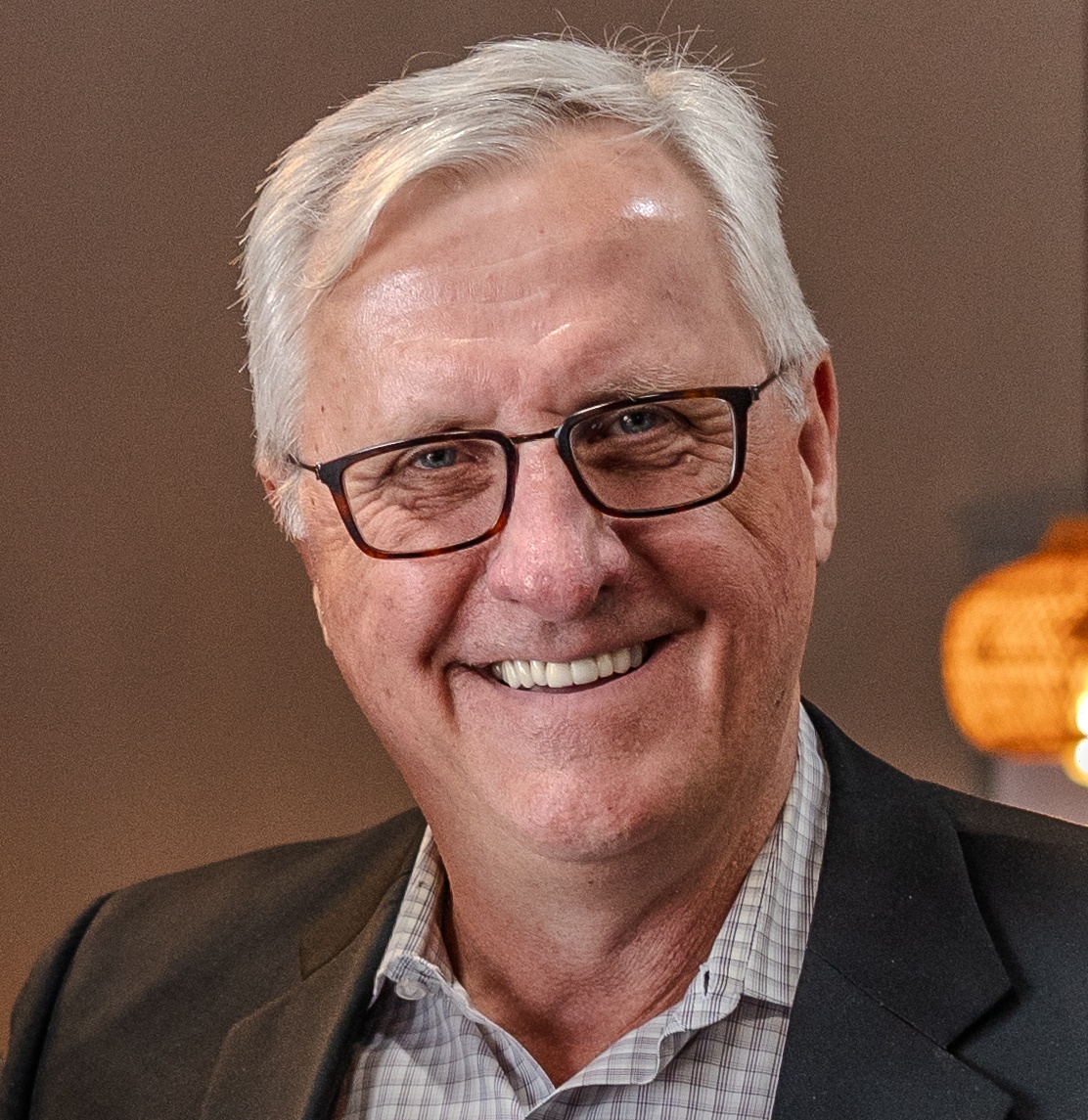
Mike Richardson is a Temecula-based chair, facilitator and advisor bringing local and global perspectives to his work with boards, executive teams and CEOs. For over 20 years, he has worked with governance, advisory, and peer-advisory boards in the for-profit and nonprofit sectors. Earlier in his career, Mike was a serial CEO of global technology businesses, then running the Aerospace division of a British public company—first from the UK (he is originally English) and then from Southern California, where he’s lived for 25 years and is now an American citizen.
Mike is a Partner with REF (formerly Renaissance Executive Forums) building communities of peer-advisory-boards in San Diego, Temecula/Murrieta and Los Angeles. He is Co-Chair for the Americas of the Advisory Board Centre; Co-Chair of the Corporate Directors Forum (CDF)’s Avenue to the Board Room mentor program for aspiring governance board members and is a Governance Board member of the CDF Institute. Mike recently became Chairman of the Board of Wilson Creek Winery.
He is passionate about coaching and facilitating boards, executive teams and CEOs to sharpen strategic focus, elevate collective intelligence, and future-proof their organizations with the agility required in times of accelerating disruptive change.