Doug Greenberg—Stop Guessing Who’s Ready to Buy

What if the reason your outreach isn’t converting has nothing to do with your sales team?
In this episode of Business Builder’s Playbook, host David Bush sits down with Doug Greenberg, co-founder of Data Aviator and a 30-plus-year wealth advisor to founders and business owners, to break down why so many B2B companies are chasing cold leads without realizing it.
Doug explains how AI-powered intent data has moved past the hype phase, why the gap between marketing and sales is usually the real problem, and how founder-led companies can build a predictable pipeline without adding headcount or hours to the week.
Here’s what you’ll learn by watching or listening to this full episode:
* How to tell the difference between a targeting problem and a sales effort problem before it costs you deals
* Why intent data has to be tracked from real behavior instead of statistical guesswork to actually work
* How fast buying signals go stale, and why one client’s results changed when Doug moved their data cycle from 10 days down to 2
* How to build an ICP around real behavior instead of assumptions, including the story of a campaign that was targeting the wrong gender entirely
* Why a single 45-minute conversation can be worth more than 10,000 cold messages
* How to calculate the real ROI on an outreach investment before scaling it
* What a realistic 30-day plan looks like for combining better data, AI, and outreach into one system
* Why patience and professional persistence, not pressure, are what actually close founder-led deals
Doug Greenberg 0:00
Be professionally persistent is what it is that we do, and we just keep showing up, delivering value. That is the the thought process that this is a long game, and the more pressure that the founder or the owner or the salesperson puts on the prospect, the harder it is to close.
David Bush 0:20
Welcome to the Business Builders Playbook, the show that breaks down the systems and strategies behind predictable revenue growth to win in business. In each episode, we're diving into the proven strategies that separate the winners who scale from the losers who fail. This show is sponsored by BDR AI, the AI-powered business development platform that automates your outbound prospecting, so you can focus in on closing deals instead of chasing leads. Let's get started. All right, well, welcome everybody. My name is David Bush from BDR AI, and today I get a chance to be the host and moderator of this exciting Q and A webinar on the topic of stop guessing who's ready to buy? How founder-led B 2b companies use AI intent data and digital outreach to create predictable pipeline. I'm joined alongside me by my friend Doug Greenberg, and he's the founder of Data Aviator, and really become an expert in the area of finding the right people at the right time when they're ready to buy. And Doug, I can't wait for us to jump into some of these questions that were submitted by the participants. We had over 100 people register for the webinar. We've got a lot of people that are interested in this particular topic, so let's let's dive in. And before we get started with the questions, I want to make sure that everybody knows you can submit questions inside of the chat or the Q and A feature. You can also send us questions in the comments if you're watching a recording of this particular session, and we'd love to just answer questions. We'll have all of the details for Doug's contact information, my contact information in the video description if you're watching a recording. So, Doug, let us start off with just a little bit of background on who is Doug Greenberg and what brought him to this place of being an expert on helping people to stop guessing who's ready to buy.
Doug Greenberg 2:12
David, thank you for first putting this together. It's always great to interact and spend time with you. My my background comes from a from a founder basis. I grew up in a family business, you know, always always looking to satisfy to help that customer or client, you know, move move down the day in a better position, right? Whether it's clothing or investments, and really taking holistic approach towards helping them. And so, for 30 plus years, I've been a wealth advisor. Continue to be a wealth advisor to founders and to business owners exclusively. And a friend of mine came to me and said, "Hey, I want to start this this business with you. And I'm I'm an entrepreneur. I'm a founder, and and so it took me about seven months to wrap my my hands around what he was bringing to me, and I was incredibly excited because, as an advisor, I was always looking for people to work with, and I was very targeted, and I was always looking for phone numbers, always looking for a connection of some kind, and so I have used, you know, every single product service out there, and I can tell you over the last three plus years which ones did well, which ones didn't do well, which ones were, you know, better in this area or better in that area, and and when my co-founder came to me with this, and I and I dug into it, I was I was blown away at the foundation that the team used to build this product, this service, this database, and what they were working on. I mean, even the last six months, it's it's just it's just gone, it's just gone, it's exploded in terms of the capabilities, and so I know how difficult it is to get, find, keep one client or customer. It's hard, and and so I wanted to focus my 20% of my day that I wasn't spending on on wealth to see how I could use this functionality to help business owners and founders. I've been doing it my whole life, and now this is just another avenue to to help them in their business.
David Bush 4:39
Yeah. Well, you and I both know that there are so many different advancements that it's getting almost a little bit overwhelming to some people. Just all of the different tools and resources and AI, you know, now you know everybody on their on the block seems to be thinking that they can do something with AI, Gemini, ChatGPT. But why do you think that so many founders of B 2b companies are still relying on random outreach and referrals and only word of mouth to grow? Well, I mean that's fantastic if you can scale with doing that, but many people can't, right?
Doug Greenberg 5:13
Right. You know, I think it's and again, I'm I'm drawing on my my time in working with founders with with Data Aviator, but also as a wealth advisor, you know, I think that most business owners or founders they have a list of five top things they're working on today, this week, until it gets done. They have another five that's coming, and this may be seven or eight on the list. They want to do something. They want to be targeted. They want to do outreach, but to your point, there is a lot of noise. And now, and now, I was on a I was a little bit late, but I was on a webinar earlier, in which I saw a demonstration of a gentleman who built his own system. Took him 120 hours using you know AI, and no business owners are going to do that on their own. They're they're they're just not, and so I think that it's this culmination of noise, desire, but then not knowing how to implement it, and certainly they want to be much more targeted in their outreach because it's it's more efficient, it's less expensive. I spend less time doing it if I'm targeted, and so I think I think where we're headed is this combination of being able to parachute into a company and say, "What are you trying to do, right? I've got these. I've got these things on the shelf, right? You need data. You need leads. You need a system, right? That we're going to bring it together for that business owner. And given the fact that compute has come down, it's going to be even you know more economical for those business owners to be able to do that.
David Bush 7:00
Yeah. Well, I mean, you've had a lot of experience in in this process, but what would you say is the most common sign that a company has a targeting problem, not necessarily a sales effort problem? Anything that you could share?
Doug Greenberg 7:12
Yeah, you know, I think there is in an organization there are a lot of disconnects, and I think one of the disconnects is between marketing and sales. Sales is out there on the front line talking to the ICP. They're being able to determine right the shading between is this an Is this my ideal or is this my ideal? Marketing, on the other hand, you know they sometimes will be at the home office and they aren't in connection with what's going on in the field, and so they can't agree. So I got marketing doing this, right? I got sales doing this, and and sales gets hammered because they're not doing a better job. I mean, you always got to be doing a better job, you know. Status quo doesn't work in sales, and and I think that you you take that piece and then you combine it with the lack of understanding of why some deals close fast, some drag on forever, and so if you have some of these systems in place, it gives you, in my opinion, some extra time to be able to drill into, right? Why this deal close fast? Why'd this take forever? What was the bottleneck, and how can we get around that next time?
David Bush 8:30
Well, another buzzword for the last few years has been intent data. But why should B 2b founders and sales leaders actually care about that right now? Because I think that for a while there was a lot of smoke and mirrors, but now it's getting a lot more sophisticated and it's becoming more and more reliable. So, talk a little bit more about what it is, and then talk a little bit more about how B 2b owners and sales leaders can actually leverage it.
Doug Greenberg 8:58
Well, I'll start with a statistic that Google put out a handful of years ago. They Google found that ads that are shown to people who are already searching for or are interested in a topic perform much better. Okay, kind of makes sense, right? So when you're using those intent ads, they drive about a 30% higher consideration and about a 40% higher purchase intent compared to no intent signals. Now, what what what we've seen to your point, we have seen a number of companies use a statistical model to extrapolate who might be interested, and and and in any statistical model, I have outliers that don't work, and the majority of the people are in the middle, standard deviation, and so what I think we have. Begun to seep again because of compute, and there's a lot of people doing it a lot of different ways. A lot of companies doing it a lot of different ways. There's no one standard bearer that we that that that we have a a disconnect, and in today's in today's modeling, if you have set up your intent data search without using historical references and understanding where the the the industry has come from and where it's going, then you're going to lose a lot of of opportunity. And and what I mean by that is is that you know clearly, cookies were the thing. Oh my God, cookies are great. Cookies are great. And then Apple said no more cookies. Okay, well a lot of people went under because they didn't have that ability to pivot, and so that pivot went a bunch of places. One of them was you know you know tracking IP addresses, and so that became kind of that next place to go. And even those companies that might use IP addresses to track, they still were doing it from a statistical point of view. And I don't believe that you can find Intent data individuals statistically, I think you have to track their behavior legally, track their behavior, and understand where they have been and where they're going to be able to find that correlation between the subjects that they're spending time researching, and then what they buy, whether that be a home. I mean, there's I mentioned this to you in another call. You know, some marketing person was like, "Hey, here's the deal, right? If you can find people that are buying cigars, high-end cigars, they're about to buy a house. Like, okay, I haven't seen it. I haven't seen the math. I haven't seen the correlation, but okay, maybe so. And so, being able to to further refine the data streams for each person is really going to help help businesses target much better.
David Bush 12:16
Yeah. So, sourcing list is obviously a big part of what it is that you do, finding the right variables inside that list is obviously something that is the difference maker. Is there anything that you can share about you know how business owners can identify which prospects are more likely to be in market before they waste time chasing everyone down and just being too broad in their marketing approach?
Doug Greenberg 12:41
Right. Yeah, that's that's that's that's that's the beginning of it. Is who is my ICP? Who is buying my products or services? Who wants to buy my products or services? Who is trying to buy my products or services but can't because I'm not in front of them? And so by flushing out this ICP, we then can delve into things like, like for instance, I I I have a client and and and we do we provide audience lists, and they are focused on brown spot removal, and I started to work with them. I got their ICP. It was kind of a mess. They're all over the place, and and they were giving me the data, and it didn't feel right. And so I was like, "Hey, no problem. Let's test it. Let's run it. And and it turned out that we were showing 50% of these ads to men. Well, you know, after after a month and a half, I look. I'm I'm studying the data, and I'm like, there are no men looking at ads, there are no men buying, so I'm able to go back to them and say, "Hey, here's what we're going to do, right? We're going to change the age, 55 and older. We're going to, we're only going to show ads to females, and so being able to one on the fly, understand and then change to the right ICP given the data you're getting and the field information, and that's that's really really important. But it is continually working to make sure that the audience that's seeing the ads are the highest buyers available, and that they're recent, so we'll go back between two and 10 days to find individuals that are showing some sort of an intent around a good or service. And in this particular case, I was set; they want a lot of data, so I'm sending them every 10. I'm sending them 10 days of data. Well, what happened was is that that that the ninth day, it's now nine days old. They're cold, but crazy as it seems, nine days I've already forgot about the brown spot remover that I wanted to buy. So we changed that and we ran it on a on a every two day basis, and and it was and it was awesome, and it was and we were able to have. Much better responses, better numbers, better performance, just by again understanding the data and understanding how we can tweak the system to provide what that good or service needs, you know, to be shown.
David Bush 15:14
So, if this show is resonating with you and you're ready to take action because you want to scale your business faster, smarter, with more AI and technology and less labor. Check out BDR AI. We help entrepreneurs and executive sales leaders to automate the grind of prospecting, so you can focus your time on closing deals and growing revenue where you should be spending your time. With AI-powered data, digital outreach automation, and done-for-you prospecting systems, you'll connect with more qualified leads, book more appointments, and build predictable revenue without adding more hours to your week or the week of your staff. Visit BDR today and discover how our AI prospect finder and digital BDR agents can help you to build your pipeline and your profits. Visit BDR AI, where business builders learn how to automate and scale their playbook. So that's where what brought Doug and I together is is that Doug has the data and and we have the digital outreach automation to make it simple to engage those individuals and not to make it to be a big heavy lift. So, for those of you that are wondering, how do you pull this stuff together and make it happen so that it happens consistently and predictably? That's what we're doing together. Is we're providing the right data, the right information about the right prospects, because you can't say the right thing to the wrong person, you know, and you definitely can't say the the wrong thing to the right person. So when you're finding those right people, you're definitely going to have a much better outcome. And so that's one of the very first things that we do in partnership with Doug is that we help find the right data, and then we end up enriching that data if we need to enrich it. Get mobile phones, get verified email addresses and phone numbers, and then get that real-time accuracy, and then we put that data into the platform, so that you can begin to start doing this multi-channel outreach approach, so that you're not just depending on one form of communication like email. You're using LinkedIn to build a relationship, to build social credibility, and then you're building out your email and your follow-up messaging sequence, commenting on posts, and all of those things that would be normally around business development, but you're building it out once, and then you're basically repeating it at scale, and you're personalizing it based upon the data that was sourced and and touchpointing those individuals consistently until you get to the point where you can move on and bring in new data. So, with that being said, Doug, I know that you've had some experience with this process personally, and you've had a chance to see what it's like to take really good data and turn it into an automated sequence. What kind of feedback can you share with other business owners who might be a little bit hesitant about AI or automation and sequencing, or maybe they had a bad experience with it. Anything you could share?
Doug Greenberg 18:07
Again, another spot where there's just a lot of noise. I mean, I can rattle off to you this, and I'll just use the broad term sequencer. Okay, yeah, I can rattle those off because I I studied those as well, and you you have you have systems that are built. They aren't built by the people who use them. It's this it's this marketing and sales all over again. Look, I built this great system. Have you ever sold anything? No, never sold anything. But I got this system, and so you know, and they're all quirky and they're all weird. The other piece of it that's important to understand is there is a lot of data available in the world. I get I don't know five or six you know spam emails a day. Hey Doug, would you like a list of? Hey Doug, I can get you a list of, and and and it's it's comical. It is it's comical because number one, you are literally throwing money away because you have zero idea of the credibility, the confidence. Are are they have they ever been checked? Has anybody called to check the phone? I mean, it's noise. And so again, we go back to that business owner who goes, "Got my list of five things. These are driving revenue. Now doesn't want to learn my business. Doesn't understand what I'm trying to accomplish. Doesn't understand my my my ICP. They just have a list, and they're pounding you, as well as maybe 50 others that they're selling that same list to. And so it it is it is it is it is fraught with indecision and difficulty for that business owner. I will share again. You know, Dave and I work with business owners all day long. I've been doing it for for 35 plus years, and I think it's it's putting ourselves in the position of that business owner and going, what is their stress? What's their concern? What's. Issue is it they're not getting good value? Is it that they see it as a waste of time and money? Because again, we're asking them to experience what we're doing with success, but they're not going to see success for let's say six weeks at a minimum. Could be even longer, depending on the sequence and the cycle. Business owners sometimes are impatient, you know, and and business owners think, "Hey, if I'm doing it this first time, this is going to revolutionize my business, and it's not. You know, you think about how you started that business. You got clients from friends, relatives. You got referrals. You know, you bumped into a guy at Starbucks. You started talking. He goes, "Hey, I want to be a client. And now you're going to add another marketing piece to it, you know. And so you have, you know, I I always like to have three to five different marketing outputs going along at the same time because I don't know what's going to hit, what's going to click, and and I would encourage the business owners to to you know take that hour of time to invest in looking at systems like like what you guys have built. I mean, I will tell you firsthand experience, It's it's I'll use the term foolproof, but maybe I shouldn't. But it was very easy. The results that I get, the the daily emails, the the combined inbox, the ability for me to go into the program, the application, the website, and manage everything I need. Answering people, you know, you know, and and and tracking their progress along the sequences, and then once we complete this, we'll have a whole another series of opportunity to share with them all this information. And and you know, look, I was on the phone with an ops manager today at a at a client's company, and he he and I were talking about Claude. And I just said to him at the very end, I said, "Hey, look, Stephen, if you can just spend an hour every night playing with Claude-that was the folks from our call-playing with Claude, just an hour. I don't care what you do, right? You won't break it.
Doug Greenberg 22:20
You will you will be blown away and and you'll get the hook and you'll get the bug, and I think it's the same way with what you and I are doing, because even though you spend a bunch of time up front, it's really not that much. A bunch of time up front, and that's you know time out of my pocket. I'm done, and now I have this system that's running. I've got high quality leads dumping in that fit my ICP because we have 74 columns of data on people, so we can narrow that ICP. We've got a system that works phenomenally well, tracks, stays in front of them, keeps me informed. It's it's it's it's almost silly that if you want to grow that biz, that if you're not doing three or four different things, and this being one of them, you know you really want to think: Am I really wanting to grow my business?
David Bush 23:13
Yeah, some harsh truth there. But let's talk a little bit more about when companies are buying data, building lists, or using AI tools. What are their real challenges when they don't have a clear business development strategy or plan that they're going to execute upon?
Doug Greenberg 23:29
Yeah, and I think that's where. And I think that right there, the the the power of this combination is in being able to deliver. And this is maybe overused term, a turnkey application for that business owner. Because when I will talk to a business owner again, I'm like, "Hey, I've got leads of people who are buying what you're selling, and they go, "Man, that's so great. Send them to me. I'm like, "Okay, well, when can you call them? Well, it'll be a couple weeks. Like, no, I'm not gonna send you a couple weeks, they'll be stale. You got to call them now. I don't have time. And and and what I have started to do is ask them, what if I can just deliver you a cookie cutter approach where we're going to get your your messaging dialed in, we're going to dump your ICP in, and we're going to let it run. Okay, it's going to be all about you. You're going to tell us what to say. You're going to tell us how to how to hook, you know, the people, all of the special words we have on the inside for each, you know, vertical, and and let it run, and see the results. Because in every case, you will experience Increased activity, and if you increase activity, you increase results. Right? Activity breeds activity, and so this combination is maybe one of the easiest that I'm thinking of in order to. Do outreach. It's far easier than than trying to do it on LinkedIn by your. I mean, yeah, I'm not going to go through them all, but it's just it's just far easier.
David Bush 25:09
Yeah. So tell me, if you were to you know guide or coach an executive sales leader on how to prioritize accounts so that their sales team actually spends more time with the right opportunities, what would you be doing with them, or what would you tell them to do?
Doug Greenberg 25:23
Well, that's a great question because I've done it all for myself, and you know, it is about. It's so different today than it was three years ago. I can now take massive amounts of data. I can score. I can rank on any criteria I want, and so it allows me to pull in from a variety of places the data, meld it together, and develop the opportunity set in front of me. And and and and I do it in my LinkedIn. I have a you know once week I have a LinkedIn you know that goes out and says who are my ICP? I got to reach out to them because the technology is there, and I need to be doing that outreach. I'm not expecting somebody who is following me for a long time and reading my things and coming to the webinars to pick up the phone and go, "Hey, I want to be your client. I got to reach out to him or her and be like, "Hey, let's talk about how we grow your business, because that that that's our job, that's our role, that's what's so fun, right?
David Bush 26:34
Yeah. There's a message in here from one of the participants that says, "How can I use AI to personalize outreach without making messages sound robotic, spammy, or generic. And I would just say to that particular person or the people that have that issue is that you know we use this thing called cares and shares. So you know many of you have maybe kind of taken an approach, or you know you've heard of other people, you've seen what other people have done, and they take more of a sells and tells, or sprays and praise, or spams their TAM. You know, their total addressable market just gets you know these generic messages at a high level of volume, and we don't believe that that's the strategy. We believe in AI. We believe in using AI to ideate, but then putting your personal voice into a campaign so that you do have personalization with the capacity of scale and AI augmentation or AI enhancement, and so you know the CARES model is to first capture their attention with something familiar to them, get them to feel more comfortable with you based upon the fact that you went to the same college, you live in the same state, you live in the same community, you went to the same college, you went to the same high school. Find something. You're in the same group. You went to a similar event as they did. Find something that lowers the risk of talking to you and get into conversation with those conversations. So, if you will capture their interest with familiarity, and then align their messaging, or align the messaging that you're sending them to their pain and their problem, or their aspirations and their desired outcome, don't make it to be about you and what you have to offer, and getting time on your calendar, or reading your particular one sheeter, or going to visit your website, don't ask other people to do things for you if you've never made a deposit into them. So align your messaging, and then make sure that you're reinforcing trust by sharing social proof. You know, talking about some of the things that you may have done with other people that they may know, like, and trust, or that you've maybe had awards, or there's testimonials. So you know, if you're talking to somebody that's very specific in an industry, you can say, "I've worked with 27 other people in this industry, and here's the experience that they had. And so, again, 27 may not be enough for some of you, but you get the general idea. Get them to the point where you're reinforcing trust, credibility, and authority, and then engage in conversation. Be relational. Don't be informational and try to get people to book a meeting. Be in a conversation first. Be human. Be authentic. Mention something that references something about where they live or what's something that they've done in their past, or what's something that they've posted recently, and then you can secure the conversation to move it to the next step. So cares capture the attention. The A is to align your messaging with their pain or their problem, and then to make sure you're reinforcing trust, engaging in a conversation, and then securing that next step to move them through the buyer journey, and then the shares is all about just the the library of resources that you have. So you have things like the solutions that you offer, you have helpful insights or expertise and experience, you've got authority assets. PDF documents, videos, white papers, things that are on your website, calculators, or free reports. You've also got things like you know just educational material that's third party. So when Doug was talking, he talked about you know some things that Google did, and that he actually is referencing something that a well known entity is already doing, and he just brought it back to the conversation of how he's doing it, and then just services and solutions obviously would be things that at some point you would talk about because you're sharing them with them. You're not trying to get them to do them. You're just saying if this is something of interest to you, I'd love to have a conversation, and I have found that cares and share models works extremely well. How about you, Doug?
Doug Greenberg 30:45
No, you know, I 100% The the the epiphany that I had a handful of years ago was this notion around having conversations on LinkedIn, and I I spent some time with with this CFO here in town, and we'd spent a couple of weeks together brainstorming around ideas, and and and we had just met, and we were we were on the same wavelength, and and and and it was about shifting my my thought process to this conversational piece, and and the minute I started doing that. I'll talk about the success, but the minute I started doing that, I started to see what terrible messages were being sent to me. I mean, terrible, right? Terrible. Now, doesn't matter where you're located or what you're selling or what you're doing, right? You know, that first message comes across and it's terrible. There, I you know I'm not you know I'm not a person to them. I'm a sale. They don't care about care about me. They don't know what my issues are. I know that that business owner who's got that list of five items he's working on. I know in that five or maybe in that 10, he wants to do more marketing, or or or any marketing, or sell, increase it, whatever. Right? I know that wants to occur because every business owner wants more clients, and they have to think about how to do it. And this right here in the past was really hard to do because you had to cobble it together yourself, and now we bring it together in one model. Now, the success I began to have when I began to treat people, you know, wanting to know who they are, have a conversation, literally have a you know a 45 minute Zoom call with them that lasted you know an hour and 20 because we just were having so much fun talking. That is that is far more valuable than me sending out 10,000. Hey, do you need a list? Right, because because one that's being done to no success, but two I I'm not providing value. Right, I'm I'm I'm not helping them get down the road in a better situation than when I but you know than before I found them, and so and so I'm based in Austin, and we have a very unique word. It's not a unique word, but we have a very unique thing around here called serendipity, and and it happens a lot of places. I get it, but it feels as if when you're in line at South by Southwest, getting into a vent, and you're speaking to someone in front of you or behind you, you're not six degrees or seven. You're like one, and and all of a sudden you met, you have a friend, and you're connected because their best friend is best friends with your best friend, and they're going into, and all of a sudden, you know, you have an incredibly great connection, and that's in real life. And so, wanting to create that same in real life, you know, in a conversation in LinkedIn is is paramount.
David Bush 33:56
Yeah. Well, there is obviously a a need for a scorecard. So just understanding, you know, we're going to spend this money on these lists and this outreach. We need to know, you know, how we're going to measure that. And so this is how we have measured it with inside a BDR. You can go to BDR AI ROI dash calculator, and inside this calculator, you can put in your average deal size. So if your average deal size is 4000 right now, if you're sending out 100 connection requests per month, and you're not booking a lot of meetings doing that strategy, doing 25 connection requests a week, and your closing ratio is 20% that obviously is not going to be a strategy for success, and that's why you've got zero clients and zero additional revenue. But if you take that up to the point where you're sending out 100 or 200 connections per week, you can start to get scale, and now you can get to the point where you can say, "Hey, now let's get to the point where we can say I'm going to get eight to 10 meetings booked." And I'm going to use a 20% closing ratio. So now I'm going to end up having a increase of profit, an annual net profit increase of $45,000. Now I can end up coming back and saying, "Oh, hey, now the investment makes sense. But what are some other scorecard, Doug, that you've seen other clients use to measure their ROI on their and their marketing investment or list investment.
Doug Greenberg 35:26
Yeah, I think this is another area where there's just a lot of noise in terms of again, you know, you have whether it's a sole proprietor or a business that's fully built out with departments. You know, you got some politics in there, and everyone wants their piece, and everyone wants to track what they're doing. You know, but my advice has always been that we want to track at every let's call it decision point or at every action point, because one and and this is just just making sure it all works in the beginning is where you know is everything working? Are all of my steps working? Do I have a fail here? Why do I have a fail there? Well, I'm not going to know it if I'm not tracking that module or that step. So I've got to do that. I also need to do all of that because I don't have a baseline. I have no idea what's good or bad. I know what's good and I know what's in the numbers, I don't l up that baseline to understand my ICP, what I'm selling in my and my and my market. To understand how can I make this, and this is key, and this is what you guys do fondly well is how can I make this most efficient to deliver whatever my goal is, whatever my goal is, and so you know, and that's why you know rather than throw out a bunch of terms, you know, marketing has their terms, you know, sales has their terms, right? But the bottom line is, is that we are wanting to communicate and connect with somebody using some sort of a interaction or sequence, and we need to understand, you know, which how each of those are doing, and how they're doing in total. And so, you know, I I don't know if you're going to show your your your board of info, but it's it's pretty extensive.
David Bush 37:24
Yeah. Well, there's so many different resources that we can use to to track progress. You know, there's obviously the biggest one is what is the net revenue that we're generating from these opportunities, and if you are using the basic filters and structures that we provide, then it's not a guessing game. You're not throwing darts with your eyes closed at a target. You're actually focusing in on a target, and then you're making small little adjustments to get that dart next to the next to the bullseye every single time. And like we say, Doug, is that it's more of a process than it is an event, you know. Business owners want it to happen yesterday, and what we found is is that you know you have to be committed to the process. You know, like Philadelphia 70 sixers had their phrase that said, "Trust the process" many years ago, and I like to tell people the same thing: is is that you have to marry the results and divorce the the work that goes into create the and the goes divorce the work that goes into creating the results. Divorce yourself from the ideas and the feelings and all the things that you have in between where you are today and where you want to be. Commit to the idea of you're going to create the outcome that you desire, and you're going to find a way to figure that out, and you're going to make tweaks because again, data by itself, without a good message, without a good offer, without a good online presence, without a good profile, without a good follow-up system, is not going to be the winning recipe. You got to combine all of the ingredients together. So, Doug, wrap us up today and talk a little bit about a 30-day action plan and what that would look like for a B 2b company that wants to better or combine better data, AI, and outreach to create more qualified sales conversations.
Doug Greenberg 39:09
Week one: figure out exactly who your ideal customer is. I will spend time with marketing separately, with sales separately, with the founder separately. Quick conversations to hear from them who they think it is. We'll also look at you know what are you doing today, and what is it, and and and and what are the results? So we understand you know who you're trying to target. Are you getting them? And then we begin to develop that audience, right? What are the intent fields that we want to focus on and begin to create that list of the very best prospects given our ICP? Now, I have never gotten it right the first time. Not a chance. Not a chance. So I'll create that. They'll test it. We'll look at the results, right, and then we'll go up. We get like like in the brown spots, up. No more men. It's all female, right? And then we begin to reach out to those top ranked groups with just real simple, plain AI, but human edited AI drafted, but some human edited. So it's your voice to begin to do that outreach. Here's what's critical: if somebody replies back to you, I mean, you should be replying back to them as quick as possible, and you're not replying back to them saying thank you. You're replying back to them to engage them in a conversation. Now, as this rolls forward, this ends up becoming again one of your three to five different marketing tools. That once that's tuned and running, then you're able to say, "Okay, it's tuned and running. Now I'm just going to focus on the results, i.e. making sure I'm talking to people on LinkedIn. You know, making sure I'm furthering those conversations, treating them like people, humans, not as a as a sales target. Because once the system gets running, and we're we are every week or every two days rolling new CP clients into into the system, then it becomes almost self-perpetuating.
David Bush 41:28
Yeah, and just to give you kind of an idea of how we do this inside of our platform, this is an example of one of the clients. My son is a client of ours, and so we go in there and we basically source the data. So we've got staffing and recruiting firms, C-suite leaders. We've got 16 169 prospects that have not been sent a connection request. We've got 438, 14 of them received a connection request today. We've got 208 that have connected, and then we've got 67 that have actually replied, and then he's marked three of them as individual leads, and then we've got 43 that are pending that have an action that needs to be taken. Five of them are no longer valid LinkedIn profiles, but he's got a 39% acceptance rate, and he's targeting CEOs, founders, owners of larger staffing and recruiting firms, and he's getting a great acceptance rate. He's got a good reply rate. This is better than what most people would get on an email campaign. And we're continuing to refine the process, and we're moving people from conversation to invitation to demonstration and presentation. And the process works if you work the process, and that's one of the things that I'll just leave you all with today. Is that you know, doing what we're talking about today is is not some mystery formula. It's actually a formula that's been around for a long time. The reason why it's a secret and why most people don't know about it is because most people aren't willing to do the work to make it happen, and when you're working with experts that have done the work and are doing the work and are helping other people to do the work, it's not as much of a lift as if you were to do all of this on your own. So we'll put the contact information for both Doug and I in the LinkedIn or in the description of this event, so you can come back and reach out to us and ask questions. We'd love to just have a conversation with you about your business goals, to even see if what it is that we're doing would be a right fit. Most of the time, it is, but you know, nothing there to sell you. Just more. Let's have a conversation, see if we can end up assisting each other, and if there's an opportunity to do work together, we'd love to have that opportunity. So, any final remarks, Doug?
Doug Greenberg 43:44
You know, I personally am impatient, and so if I were to rely upon one methodology to for outreach, I'd be like a hawk on that one. I mean, oh my god, do I have a click yet? Where's my click? When you be and and and a lot of businesses are the same. I mean, founders are you know they they carry the same mentality, and I think again being able to level set and say this is not going to you know we may get a client tomorrow, but but but like your like like for your son right, he's making that connectivity, he may close a deal in two years from that connectivity he made today. Who cares, right? Because he's going to be there, bird dogging it, offering value, offering service way ahead of the ask, and so that when the current provider messes up, Beau is there, right? And so I think that is that is the the thought process that this is a long game, and the more pressure that the founder or the owner or the salesperson puts on the prospect, the harder it is to close.
David Bush 44:56
Yeah, yeah. Be professionally persistent is what it is. We do, and we just keep showing up, delivering value. This is not about turning an AI agent on all of your prospects and letting AI run your world. We use AI for personalization and amplification, but it's not to be something that be confused with the idea of a fully autonomous agent that's a set it and forget it model because if anybody sells you that, you might as well set it and then just forget any money that you invested in it because it's not coming back to you anytime soon because that just doesn't exist and if anybody tells you that it does look for the fatal flaws because there may have been one person that had success because they just randomly sent the right person a wrong message, and then that right person decided to buy. But make sure you do your due diligence, Doug. It's been great having this conversation with you. I appreciate the way that you approach data and prospecting and business development. And yeah, look forward to having a conversation with anybody that would like to know more about Data Aviator or BDR AI.
Doug Greenberg 46:03
Take care, David. Thank you.
David Bush 46:04
Take care. Bye bye. Thanks for tuning in to the Business Builders Playbook. If this episode gave you some plays that you can start running in your business today, hit subscribe and share with another revenue leader who's tired of the pipeline grind. Building predictable revenue isn't something you figure out alone. Whether you're looking to automate your prospecting with BDR AI, or you just want to talk through the growth challenges you're facing, reach out. We help business leaders just like you to build systems that actually scale. And if you're ready to stop being your company's highest-paid prospector, let's have a conversation. Reach out to us at BBR AI. Until next time, let's keep building.
Author
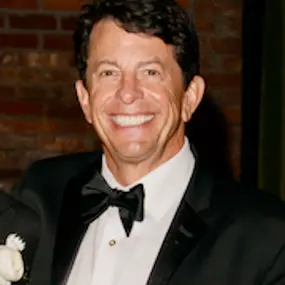
Doug Greenberg is the founder of Data Aviator, a data and demographic analytics venture that turns person-level data exports into buyer intelligence — audience profiling, demographic review, and prospect scoring for B2B teams.
Data Aviator sits alongside several other ventures Doug leads: Pinnacle Wealth Advisory, an SEC-regulated wealth management and investment advisory firm; a fractional CFO role at South Texas Super Foods, a moringa farm startup at Runge River Ranch; and Local Frequency, a daily local-events digest. He runs the operations behind all of them through his own internal automation system.
Doug grew up in Dallas, Texas.