Kevin McCarthy - How To Build A Reliable Client Pipeline Without Networking Nonsense: 3-Step Referral System

If you're sick of the feast-or-famine client rollercoaster...
If you're tired of showing up to networking events with a pocket full of business cards and zero actual results...
This episode's gonna flip the script on how you get clients.
David Bush sits down with 40-year business veteran Kevin McCarthy (author of The On-Purpose Person and creator of My Referral Stream) to break down the EXACT system for turning your warm market into a consistent stream of high-quality clients.
Here's what you'll learn:
• Why most consultants and coaches are sitting on a GOLDMINE of untapped referrals (and how to activate them without being "salesy")
• The "Epiphany Threshold" — how to position yourself so people WANT to refer you
• Kevin's DoDo Dialogue method for answering "What do you do?" in a way that actually starts conversations (not kills them)
• The 3-phase system (Design, Build, Act) that can have you seeing results in 30 days or less
• How to price based on VALUE instead of hours (one conversation netted Kevin an $81 million problem... for a $1,200 speaking gig)
• The "wingman strategy" for introverts who hate traditional networking
• Why selling your "tools" instead of the "roof" is costing you clients
Plus David drops some FIRE on creating "wow moments" that turn clients into raving fans...
And why asking for business cards (not giving them) changes everything.
If you want volunteers, not hostages...
If you're ready to stop grinding and start building a referral ENGINE...
Watch the full episode now.
Kevin McCarthy 0:00
You could probably work your way through a lot of these steps on your own, and I'm delighted for people to be able to do that, because I don't want to see people who left a job have to go back to a job,
David Bush 0:09
somebody that can impact the world to have all of that impact stopped, just simply, because you don't have a system that works, because the system works, not because you're working all the time.
David Bush 0:23
Welcome to the Business Builders playbook, the show that breaks down the systems and strategies behind Predictable Revenue Growth to win in business. In each episode, we're diving into the proven strategies that separate the winners who scale from the losers who fail. This show is sponsored by bdr.ai the AI powered business development platform that automates your outbound prospecting so you can focus in on closing deals instead of chasing leads. Let's get started.
David Bush 0:51
All right. Well, welcome everybody. Hey, we're so glad that you joined the business builders playbook show. I got an exciting show for you today. This is going to be a an enlightening webinar. Enlightening, enlightening webinar. Easy for me to say it's going to be a fast pace. We're going to put Kevin McCarthy on the hot seat. And for those of you who have not read the on purpose person, or the on purpose business, or any of the other massive, successful books, those are my two favorite ones that really kind of got me connected to Kevin 20 years ago. So we've been, we're friends since we were childhood. Childhood is right. We're only 2529 so for those of you who are unaware of all of the massive success that Kevin has had, let me just kind of give you a little bit of a background. He's a consultant and author. He's also the creator of my referral stream. Is it, which is a private consulting program designed to guide independent consultants, advisors and coaches to get more clients through a reliable pipeline of clients through a simple relationship based referral system with over four decades. He's a young cat just still scratching the surface, but four decades of experience guiding business owners consultants, Kevin has had known firsthand how many talented independent professionals struggle to get more clients. He's also the author of no brain picking 26 invaluable perspectives independent consultants need for satisfaction, success and profitability, and he leads the consulting collaborative and online peer community for consultant. So I've been a friend of Kevin's, and he's been a mentor of mine for over 20 years, and so I'm not going to go through all of the formalities. We'll put the show notes together. You have a link to everything that Kevin has ever done, and I highly encourage you go check it out, because he has a wealth of wisdom. And what we're going to cover here in these minutes of an interview are not going to nearly touch the iceberg that he has available in terms of content and the purpose creator. So you can go find your two where two word purpose statement by using this amazing tool that he's created. So without any further ado. Kevin, welcome. I'm excited to get a chance to dive in today.
Kevin McCarthy 3:08
Yeah, it's great to be with you. David, I mean, I've gotten such respect for everything, of who you are and how you have just sort of put it together at after a football, professional football career, and just, you know, speaking, business and everything that you do, you just, you got a great heart. So thank you. It's good to be with you. Like to think, well, like light, like hearted guys, yeah.
David Bush 3:32
Well, we've got 40 years of experience here, so I want to know, in 40 years, you've picked up a lot of ideas and tactics and strategies on how to grow businesses. What led you into that?
Kevin McCarthy 3:48
Well, actually, I'm going to go back and say I've actually been in business since I was nine years old. So I'm 70 years old right now, and that means I've got, really 61 years worth of business background, which sounds almost overwhelming whenever I say it, but I mean, I just have always had I, early on, I discovered this love of taking something and selling it, or the idea of being able to make money with something, delivering a service to somebody. It was, you know, when I when I was 12, I was teaching tennis, believe it or not, it was during the tennis boom, and they needed teachers. And the tennis pro at the local tennis courts said, Kevin, I want you to come in and help me with this. And the next thing you know, he said, take these people and give them private lessons. And next thing you know, I'm hardly very good myself, but I understood the game and the mechanics well enough to teach it. And then, you know, when I was in high school, I was the class president for like ever, and I started a in eighth grade. I started when I was a class president, I started a Coca Cola franchise in the school which the school event. Actually took over, you know, I was one of the first people to sell Coca Cola in schools. I actually approached the local Coca Cola Bottling Company and said, hey, could we put up a fountain? I mean, I went without the school even knowing I was doing this, you know. And I mean, the guy comes to the school, we meet and the general manager of the Pittsburgh where I grew up, the Pittsburgh Bottling Company, comes to my school. I meet them in the lobby. We have this conversation. So this sort of entrepreneurial, creative, you know, pay your way, make some money, was just sort of something that I just really fell in love with and took to at a very young age, and then went to undergraduate and graduate business school because I realized, if I'm going to do this, I have a lot to learn, and I better learn how to do it, at least from an educational point of view, right? And I've also learned there's a whole lot that you don't learn in school that the school of hard knocks teaches you.
David Bush 6:00
Yeah, I'm already thinking about the next book, how to go from selling coke to being a success. No, that that probably
Kevin McCarthy 6:10
wouldn't I was. I was an early coke dealer. I never thought about it that way, but yes, I was, yeah, no, interestingly enough, in the same school as in, there's a Kevin McCarthy who was two years older than I was, and he got thrown out of the school for dealing marijuana back in, the way, back in the 60s, late 60s. How about that?
David Bush 6:30
Yeah, that's not the Kevin McCarthy. We're no, I'm interviewing today, but I'm sure that he could probably write a few books on his pathway too. I'd always like to see the other guys that didn't go on to business school and didn't, I'd love to hear their story. You know, how things turn out? You know, I'd always kind of curious about that, because if I didn't have football, I didn't go to college to play school, I went to college to play football. So football is actually a guide into me. But let's jump into this thing, because you've got so much experience in the concept of developing a referral stream. Why are so many coaches, consultants, struggling to develop clients? Client streams, not only just referrals, but just clients in general?
Kevin McCarthy 7:16
Yeah, I think it's a combination of things. One is today's world. You know, everybody tells you that social media is the way to go, and that if you post and you do all these things, that people are going to find you, but that is basically a cold market strategy. And I'm not against cold market strategies. Want you to hear me. All I'm saying is that if you have people that know, like and trust you, they are your warm market. And you'd be amazed at how many people that, if you were to talk to them and just ask them a simple question, what do you think I do for a living? And if they say, Oh, you're a consultant, then you might say, Well, what do I consult on? And who do I consult with? And I bet 90% you might even ask your spouse, and they don't know the answer to that. And so what happens is, when you have all of these people around you, whether it's at church or whether it's at a little league or football or whatever it is that you're doing your social clubs, and they don't know what you do, or they have a vague idea, they're an untapped warm market. And so all I'm really trying to do is say, if you tap into and educate that market, and there's ways to do it that aren't creepy, and that's really what the my referral stream approach is attempting to do is, is one and help them clarify, really, how to position themselves in the minds of others. And again, a lot of that is choosing language and knowing how to language. It in the in the no brain picking book, I think the second or third chapter is called, don't sell the tools when the client needs a roof. And what happens is, most of us, you know, we say I'm a financial planner or I'm a life coach or I am a this, and that's the tools. These are the tools we use, or I have an assessment tool that I use, whether it's like disc or Myers Briggs, if you're a life coach or even my on purpose.me, tool for clarifying your purpose to two words. You know, if, if people just know me as a guy, that helps people clarify their purpose to two words, that's not all bad for me, but again, it's there's so much more to it than that. But that's the tools I use. The roof is the solution. You know, what do they get? They get protection. They get security. They don't they don't get leaks. They all of these things that are going on. So they don't really care about your tool, whether it's a if it's a nail gun, whether you know, Milwaukee made it, or Makita made it, or Black and Decker made it, they don't care. And yet we care, because we've invested so much into either developing the tool or. Yeah, all we really need to focus on is what are the understanding the result that we can deliver.
David Bush 10:07
So if this show is resonating with you and you're ready to take action because you want to scale your business faster, smarter, with more AI and technology and less labor, check out. Bdr.ai, we help entrepreneurs and executive sales leaders to automate the grind of prospecting so you can focus your time on closing deals and growing revenue where you should be spending your time with AI powered data, digital outreach, automation and done for you, prospecting systems, you'll connect with more qualified leads, book more appointments and build Predictable Revenue without adding more hours to your week or the week of your staff. Visit BDR today and discover how our AI prospect finder and digital BDR agents can help you to build your pipeline and your profits. Visit bdr.ai where business builders learn how to automate and scale their playbook. When you think about the difference between you know people that are out there networking and the ones that are out there actually building a stream of referrals. Where do you define or define the difference? Because there's you know people out there. Well, I'm talking to a lot of people. Well, that's fantastic. Well, talking to a lot of people doesn't develop a sustainable business. You may find some people that need what you have by talking to them, but unless you're actually moving them through a process, that's the way that I look at it. But how do you differentiate between networking and developing a stream of referrals?
Kevin McCarthy 11:37
Yeah, I mean networking is going out and often meeting strangers and then trying to convert them. Where the my referral stream again, once you've met somebody and you've sort of struck a relationship with them, there's no nothing wrong with entering them into your my referral stream database. I mean, to some extent, this is where what you do and what I do are so copacetic, because in your case, you can do massive outreach to cold markets, but the same thing is true, you can do massive outreach to warm markets, and you can schedule certain things that are going on so that you're staying in touch with these people. You're keeping them informed with their permission. And I think it's important to say with their permission, because at some level, if you meet somebody that you know could be a great referral source for you, maybe it's a, you know, if you're a financial planner and you know somebody who's an estate planning attorney, you know, the two of you could really partner together well, and that estate planning attorney might be able to refer you to five other estate planning returning attorneys that they know. And then the other thing that happens so you now are beginning to take your referral, your warm relationships, and inviting them to say, introduce me to who you know. And again, they need to have confidence that you know, that they if they know, like and trust you, but they've not done business with you, that could be a very different thing. So at some level, you might try to say, let me do something with one of your clients and earn the right to do that and demonstrate. And then there's some people where you don't have, you know, a natural overlap. So you're a financial planner, let's say, and somebody is a boat captain. You know, it's like, well, how does that work? Other than the fact that they might have clients that come on and rent their boat and do some things in their wealthy people, but chances are, those people have a financial advisor already, so But nevertheless, that person might overhear a conversation, or might be a part of something, or might know other boat captains that need your help who don't have a financial advisor. Okay, they're just running their boat. So again, this is where you start to look at it, and begin to think in terms of, how do I position myself with the people that I know and that they know me? And again, it's that know, like and trust factor is always present. And the truth is, in my, in my, you know, I've been consulting, really, for, I mean, even with my businesses, I was always doing some sort of consulting or mentoring with people. So I've probably been at that for at least 40 years, as you were saying in a more formal sense. And what I found is 95% of my businesses come from referrals. You know, somebody calls up and says, Hey, Kevin. I mean, I just have a client of mine from Houston, Texas, who said, Hey, I was working out the gym with a guy. He owns his own business, and his business partner just died, and he needs to talk to you. You need to help him out, because he's he's in utter chaos and confusion about what to do next with his business. And that's usually whenever they call me, is when their business is in utter chaos and confusion. Inclusion, and they're just trying to they don't have this the background or the skill set to or the creativity, sometimes to think through, because they know their business, where I've worked with 1000s of businesses,
David Bush 15:16
yeah, so in my referral stream, are you giving them a playbook of a step by step approach, or is it actually a bona fide system? Because I know that there's a lot of people that are curious about Yes, I want a referral stream, but I know how to do referrals, but they're just not happening. I'm not getting the referrals that I want consistently. They come in like bursts. It's like there's a burst of a few, and then there's a big drought. And what would you say to that person?
Kevin McCarthy 15:45
Yeah, I mean, that's because that person doesn't have a system in place. Yes, though my referral stream is a three step system. I mean, first of all, you need to have there's a design phase, there's a build phase, and then there's an action phase. And basically, underneath each one of those is three additional steps. So at some level, you know, if you, if you haven't, designed clearly what your positioning is, and then designed a way to communicate that, and then tied it back, really, to your purpose. Why this is, why this why this is meaningful to me, and what are the stories that are attached to it, regardless of whether you're new to it, you know, most people, if they're brand new to consulting or coaching, it's not because they're they're maybe brand new to hanging their shingle, but they've always been doing this sort of work. It's what they probably did at some level, when they were a kid and they didn't or even through college, people would come to them with seeking their advice or their counsel. That's generally there's the personality type, I think that that were drawn. People are drawn to us for that sort of expertise, and then based on your expertise, you know, all you're doing is repackaging it now as selling it yourself, which is hard. Most people struggle with selling themselves because they feel like I don't want to be a kind of a pimp, you know, pimping myself. But there's ways around that. I mean, one of the really fun ways to do that is, you know, David, you you live in Iowa, I live in Florida, but you have both of us lived in Orlando, Florida, or both of us lived in Pella, Iowa. You could imagine that if you and I went to an event together, and we're each other's wing man, and all we're doing is I understand exactly what you do, and you understand exactly what I do, and we go into a chamber of commerce meeting, let's say, and all I'm doing is saying I'm not I'm not pitching myself at all. I'm asking questions of people and trying to figure out how I can connect them to David. And as soon as I find somebody, I say, you got to meet David. Come here. You got to meet David Bush. He is awesome. He's got this amazing program that can help you rapidly expand your business in a way that you never have before. Because he's taking all of the what seemingly would be grunt work and automating it for you in such a way that you're going to get, you know, solid leads coming in, because that's what you need. And they're like, Oh my God, when kind of talked to this guy, because they're, you know, I've built rapport with them. I'm not pitching them, but I'm pitching David. Then David's out there doing the same thing, and he comes over and says, Oh, you got to meet Kevin McCarthy. You know, you're a business owner, you've got this, or you're a consultant. You need to get in his consultant collaborative. And you need, all of a sudden, you start making connections. So that's how, if you're if you're an introvert, of which I am, borderline introverted, estuary, so I'm just as happy to stay in my office. It's like getting a horse out of the barn. I don't like to go out, but if David calls me and says, Hey, Kevin, let's get together and go do this event together, I'm like, Oh yeah, I'm in and so that's, you know, find a wing man that you can play with, and you'll have a lot of fun doing that at a networking event. And what you don't want to do is stand there with business cards and hand out business cards to people. That's just tacky. I was actually the chairman of the board of a Chamber of Commerce for 13 years, and we all when we saw anybody doing that, we would pull them aside to say, time out, don't do that. That's you're not serving yourself. Well. You're not serving the members. Well, let's then we would give them a little training on what to do in terms of how to build relationships, because you're there to build relationships, not sell products. Once you build relationships, then you earn the right to maybe get a referral, or they might say, you know, I could actually use what you're doing.
David Bush 19:36
Yeah, I found that. Sorry. The best strategy that I ever found was asking for business cards, not giving them. And if I asked for business cards, I collected a lot of opportunities. And I've always found, and I don't know where this is in the design build do, but the fast. You can get somebody to a wow moment, the more likely you are to develop that first referral. So is that in the design and build factor, is it you're doing about ways that you can make, I mean, again, if you have a technology, if you have a process, or you have a personality, or you have social proof, right? So if I came and said, you know, to somebody that is connected to Kevin McCarthy, and I say, Hey, here's a quick little recommendation that Kevin wrote for me that explains why he refers his business owner clients to me for business development. I'd love to have a conversation with you that that credibility factor is a wow factor, or it could be something that's more features and benefits, but how would you figure in the wow factor into the design build?
Kevin McCarthy 20:53
Yeah, well, it's one of the things you're probably familiar with this because of the do do dialog. I call it D O, D O dialog. And in fact, there's a video I have. You can go to do do dialog.com, and you can watch the video. It's probably not appropriate right now for consultants and coaches, but nevertheless, you can translate it. And in the doo, doo dialog, what happens is, you know, you're at an event, and somebody says, What do you do? And what you do is you turn their due into your own do. So, David, if you, if I was you or I was talking to somebody, they would say, Well, do you know how coaches and consultants and independent contractors often struggle to get clients? And they'll go, yeah, so you got a yes and say, Well, I help them with that. And then what are they normally going to say, how? How do you do that? How do you do it? And so now what's going on is, you, you've, you've got a conversation that has begun, and you're not, you want to have short, sweet statements about it, as opposed to boring them to death with all of your tools and technology.
David Bush 22:10
Is the design portion, kind of like getting your phrasing and getting your target market figured out, and then the build is actually the networking and the building of relationships and the potentially posturing, the services and the value that you bring, and finding out how you can add value to others.
Kevin McCarthy 22:28
Well, I mean, basically I can, I can walk you through nine questions, okay, in the design area. The first question is, what matters to me? Because if the work isn't meaningful to you, then why bother? The second one is, what matters to my clients, so what matters to you, and then what matters to your clients, and you're trying to find the intersection of that, because that's where you're going to get paid. The next thing is, what do I do for my clients? Which is kind of the doo doo dialog is a part of that, but it's being able to craft that statement. Then when you get to the build part, it's, you know, a toolkit, which is, how do I equip my team of partners who are going to refer me? So you're now basically saying I figured out what I do, what what clients need. Then what I want to do is I want to equip people. So I need to have a simple document that I can give to a referral source that they can use to introduce me. And it could be as simple as a line, you know, just a line that they could attach in an email so that, you know, and don't ask them to, don't ask them to explain what you do, just ask them to make the introduction and say, I think you need to know David Bush. And then who will refer me? So you now go through your Rolodex, or your database Rolodex, there's an only your contact list, and you you look for the maybe 25 people that you really know would love to help Well, love to see you succeed. That's probably the biggest thing they would love to see you succeed, apart from, you know, if it's, if it's somebody that's just like, you know, a babysitter that you have, apart from that, you know, I don't know, but generally, somebody who's in a working adult, how's that, that would love to see you succeed. And then a tracking system, and then when you get into the act part is, you know, how do I engage with a referral? So I get a referral, how do I engage with them? And that's really having a conversation, which is really more a matter of a series of questions that you are asking you're doing a discovery call, which most consultants are pretty good at doing the discovery call, although I find that most aren't able to push down to an ROI to establish the value proposition, so they can go back and write the proposal. And some of that, there's a certain amount of art to that. There's a certain amount of science to it, which is how to provide. Invoke the the ROI and then almost like
David Bush 25:04
an expert at their topics or the experts at their solutions, but they're an absolute rookie at delivering the value in a quick proposal that gets right down to, how do I justify this expense? How do I justify the time that's going to go into this process of working with this individual? So that's a great point. Is to really clarify that keep going, Yeah,
Kevin McCarthy 25:32
and actually interesting in the no brain picking book, I have two chapters on that. One is the case method, which is a methodology I have for very simply identifying it cases. Tell me what you know. Tell me what your circumstances are. If you solve that, what does it add to you? That's the A. If you don't solve it, what does it subtract and what happens is most, most of the time we come in. And the E is, what does it all equal? Well, the equal is the what do you have to gain and what do you have to lose? So the real value proposition is the total of these two things. And most people will focus on, what do they have to lose, possibly, or what do they have to gain, depending on where you are. But whenever you add the two of these, and you say to them, gee, you know, like I was with somebody the other I was actually doing some coaching with a consultant yesterday, and we were talking about that, and you know, she's trying to figure out what to price, how to price this proposal. And I said to her, Do you do you do realize that if they don't get this right, they may have a five to $7 million problem? And she went, Oh, because she's seeing it as how many hours do I have involved in it, and how much travel will I have. And so she's building it from the cost up as opposed to the value down, and, you know, somewhere in between is that reasonable number that they will that they will pay for. So I'm not, you know, but again, I had a client one time where it was a it was actually a speaking engagement, and this was 30 years ago, and I was charging like $1,200 for it, and the guy said, $1,200 for an hour, you're crazy. And by the time we were done, I had identified for him an $81 million problem. And I said to him, so you got an $81 million problem, and you're not willing to invest $1,200 to have your team. And he goes, When can you be there? You know, but that's, that's the conclusion of a 30 minute, maybe 20 minute, conversation with the guy where I'm digging through very specifically into understanding his problem. And the nice, the nice part of that is when you're digging into them, explaining their problem. You're not selling your tools, services and things. In fact, you almost want to avoid talking about yourself and have it all be about their problems and the questions and the penetrating questions that you can move on to.
David Bush 28:00
So what would you think would be an expected timeframe before somebody could really develop, I mean, doesn't have to be a gushing stream, but what would you say would take in terms of time to start developing a consistent annuity stream of referrals coming into your practice?
Kevin McCarthy 28:17
Yeah, well, I mean, they can actually, I mean, I have the program that I have, I say in 30 days, we'll have you up and running. I mean, I actually, like, in 14 days, I want to have you up and running. In 30 days, we should start to see these results. And after that, you know, you should, in theory, it should start once you prime the pump, get over the learning curve. It should really start to take off on its own, but my goal is to give you at least a 100% return on investment within the first 30 days, or I'll stay with you till you get it. Or I'll refund your money if I feel like you're not, you know, if you're not happy, I'll re I don't, I'm not. I just want satisfied clients. How's that? Yeah, but yeah, if they do it on their own, most people can do this on their own, but they won't. Part of it is they may not know the questions to ask. I mean, I've got, I mean, I've got a little sheet here that they can download and they can walk, right? I mean, I'm trying to give it away, to say, here's the steps. And with AI today, you could probably work your way through a lot of these steps on your own. And I'm delighted for people to be able to do that, because I don't want to see people who left a job have to go back to a job. I want to see that somebody
David Bush 29:40
that can impact the world to have all of that impact stopped, just simply because you don't have a system that works, because the system works, not because you're working all the time. And so right, the idea of actually, you know, moving into that next step, if somebody wants to learn more, and they want to say, I want to. To explore this further. Where would you send them to? Is it my referral stream.com is the best place?
Kevin McCarthy 30:05
Yeah, my referral stream.com is where they can watch a 30 minute webinar. And then there's a, if they want to book an appointment with me, they can do that. And at that point, again, that's a no obligation appointment where I'll help you as best I can, and then the last three minutes, I'll ask you, do you want to work together and do a yes or a no and or not now or whatever again? I'm pretty low, low key about the whole thing, because I don't think it's kind of like you'll appreciate this because I'm a Pittsburgh Steeler fan. Mike Tomlin always says we weren't volunteers, not hostages. And when he's talking about the football players, so if you want out of here, you're out in much the same way. I want clients that are volunteers, not hostages. You know, I really want people that are hungry and they say, Yeah, I'll do what you're talking about. I'll commit the time. I want to see the results. I'm not going to I can't drag you through a process and make you successful. You've got to want to go through the process and be successful. Yeah?
David Bush 31:11
Well, I think that the idea of the whole design, build, do is a proven process for anything, right? I mean, if you create a plan, you know, much better chances of having success if you have a plan, if you're taking a plan that somebody that has spent 40 years of their life refining experience of other compresses time. So I always believe in the idea of taking somebody else's proven plan and refining it to fit your particular situation, and then to be able to get out there and to put it to work, you know, putting it into the process where it's like, okay, now I need to build out this architectural plan. If I've got a good structural architect that's got proven chops that can actually develop a stream of referrals, I just take that architectural plan and then I go out there and I build it, and if that person is willing to build it with me, I have a really high likelihood of building it because they've given me the plan, they've offered me the help to do it. Now, you still got to do it right. You still have to be committed to being consistent, to show up and to carry out the work, even when you're building that foundation, and it's not real exciting, and there's not all these things that are coming out, you have to build it like it's going to come, right? I live in Iowa, so we build we build the Field of Dreams out here. It's like, if you build it, they will come. And a lot of people have used that, Kevin to build a business, people don't come. It doesn't necessarily guarantee that it works in a business system. If you don't have a good message, if you don't have a good service, if you don't have a good personality, if you don't have a good offer, and you're not good at delivering that offer in a way that delivers value to the clients, they won't come but if you do those things, you can build a steady stream of referrals. And there's other things that you can do along the way right, building raving fan moments into your client experience or your customer experience, building raving fan experiences in your referral partner experience. All those things can be added over time. So this next 12 months, if you want to build an annuity stream of referrals, go to my referral stream.com, get connected to Kevin and have that conversation. Explore the resources and all the tools that he has available. And do your research. Go look up the on purpose business and the on purpose person and the chief leadership officer, and all of the major books that have been such a success for Kevin, you'll see that he's serious about being on purpose in all aspects of life, including developing a referral stream. So Kevin, thanks so much for joining up with me today. You delivered a ton of value. Any final words as we wrap up the show today?
Kevin McCarthy 33:57
Well, I'm just appreciative, David of being here with you. I think if there's one thing that I would leave them with is, please, please, please, remember, educate the people that are around you about who you are, what you do, how you serve, why it matters to you to serve these people, and even if you can some of the stories of results that you're able to do. I mean, just give them, because at some level, they're going to remember the story that you tell them more than they're going to remember how you do what you
David Bush 34:30
do, yeah, what you do, for who and why do you do it. Those three things just came out clear today for just hearing you talk about and then the do, do I love the doo doo. That's a great thought. That was something that I heard from you. You know, gosh, 20 years ago, it seems like, and you've always been a great mentor in that regard. So Kevin, keep blazing the trail, keep leading the way, and be on purpose, my friend. Thank you. Take care, everybody.
David Bush 34:59
Thanks for tuning in. Into the business builders playbook. If this episode gave you some plays that you can start running in your business today, hit subscribe and share with another revenue leader who's tired of the pipeline grind. Building Predictable Revenue isn't something you figure out alone. Whether you're looking to automate your prospecting with bdr.ai, or you just want to talk through the growth challenges you're facing, reach out. We help business leaders just like you to build systems that actually scale. And if you're ready to stop being your company's Highest Paid Prospector, let's have a conversation. Reach out to us@bdr.ai until next time, let's keep building You. You.
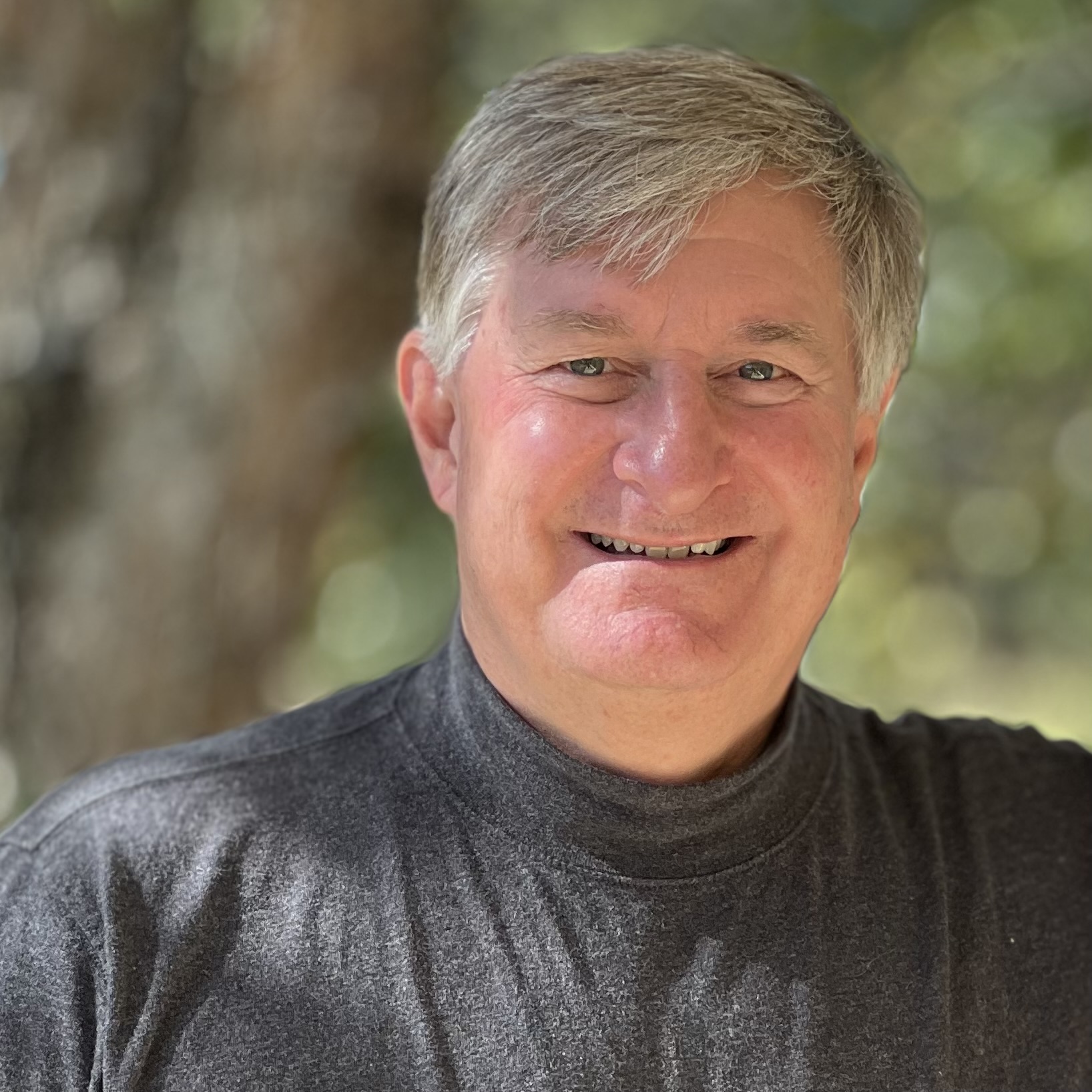
Consultant/Author
Since the mid-1980s, Kevin has consulted with mid-market business owners to increase their profits. Today, Kevin shares his experiences with peer consultants via the Consultant Collaborative and his book, "No Brain Picking: 26 Invaluable Perspectives Independent Consultants Need for Satisfaction, Success, and Profitability."
His best selling books series, "The On-Purpose Person" and "The On-Purpose Business Person" provide a unique and simple method for successfully integrating one's life and work without selling one's soul.